
Best Lightweight Stroller for Newborns (UK Guide)
By BabyTravel UK Editorial Team · Last updated July 2026
Choosing a lightweight stroller for a newborn is about safety and practicality together. A model can be light and still be wrong if recline support, newborn compatibility, or handling stability are weak.
This guide helps you pick models that are genuinely useful for newborn-stage routines without carrying unnecessary weight.
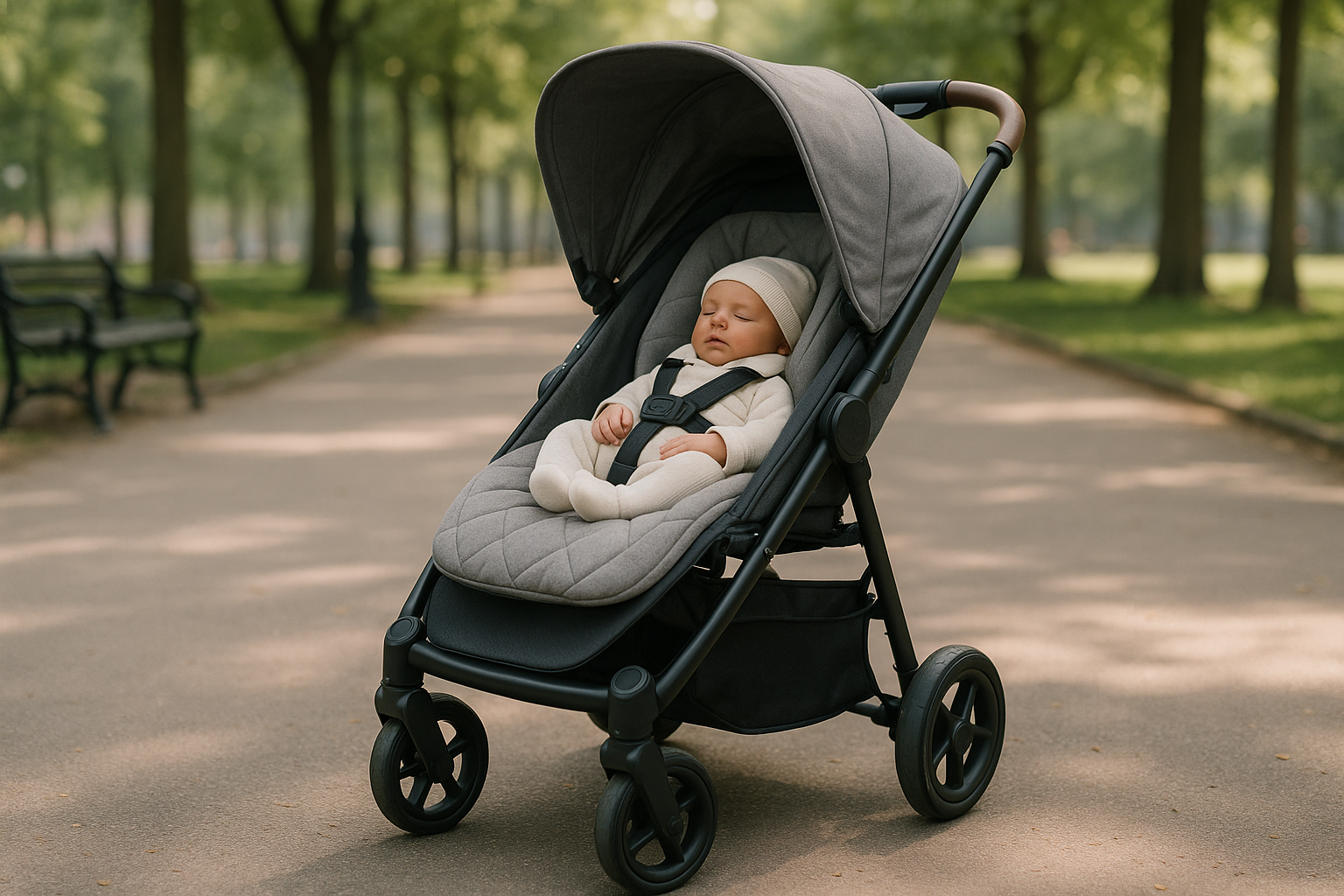
What newborn-safe lightweight really means
- full or near-flat recline support
- stable harness and seat support
- smooth handling over uneven pavements
- manageable fold and carry for carers
Never assume “lightweight” equals newborn-ready. Verify compatibility details for your chosen model.
Top lightweight stroller picks for newborn-stage families
| Category | Product | Best for | Link |
|---|---|---|---|
| Best all-round travel/newborn path | Bugaboo Butterfly | Premium handling with strong everyday usability | Check price |
| Best compact newborn transition pick | Babyzen YOYO² | Portable setup for mixed city and travel use | Check price |
| Best lightweight carry option | Joolz Aer+ | Lower carry strain in transport-heavy routines | Check price |
| Best value practical option | Baby Jogger City Tour 2 | Balanced function at lower entry cost | Check price |
How to choose by newborn routine
📋 Free Baby Holiday Packing Checklist
Enter your email and we'll send the free printable checklist straight to your inbox — every category, ready to tick off before every trip.
Mostly short local outings
Prioritise comfort and easy setup over extreme compactness.
Frequent transport movement
Prioritise carry ease and fold speed while keeping newborn support requirements intact.
Small home storage
Prioritise folded footprint and predictable storage handling.
What to check before buying
- newborn support compatibility and recline behaviour
- carry comfort for your likely usage pattern
- fold consistency under slight time pressure
- wheel stability on your common route surfaces
- real storage fit in home and car path
Common mistakes
- buying by weight label only
- ignoring newborn support details
- testing on smooth floors only
- adding too many accessories too soon
Weight vs comfort trade-off
For newborn stage, comfort and support must stay high priority. The best choice is the lightest stroller that still gives stable support and predictable handling in your routine.
External guidance and safety checks
For travel policy and handling context, use CAA guidance and airline family pages where relevant.
Newborn stage priorities: what should come first
For newborns, safety and support come before everything else. Lightweight matters, but only after compatibility, recline quality, and handling stability pass your checks. The best lightweight stroller is the lightest one that still supports newborn routines confidently.
How newborn routines affect stroller choice
Short local outings
You need quick setup and stable comfort. Very low weight is useful, but support and smooth handling still matter more.
Transport-heavy routines
You need carry ease and fold speed, but never at the expense of newborn-safe support.
Small-home storage routines
You need compact fold and predictable storage handling to keep daily transitions simple.
Compatibility checks that prevent mistakes
- confirm newborn use guidance from manufacturer
- verify recline behaviour and support quality
- check harness usability and fit confidence
- test stability over realistic route surfaces
Skipping these checks is the most common source of early regret.
Weight classes and newborn practicality
Ultra-light class: excellent for carrying, but comfort/support quality must still be validated.
Light class: often the best all-round newborn compromise.
Mid-light class: can improve comfort and steering confidence if carrying load is acceptable.
Real-world test protocol for newborn families
- Fold/unfold three times without rushing.
- Carry with realistic bag load for 20 seconds.
- Push over mixed surfaces with careful control.
- Check comfort and support after 20 minutes.
- Repeat test when slightly tired to simulate real conditions.
This protocol gives a far better decision signal than quick showroom impressions.
When to pay premium vs choose value
Premium is worth it when use is frequent and movement complexity is high. Value options are often enough when routines are simpler and travel frequency is lower. Match spend to friction frequency.
How to avoid overbuying in newborn stage
Buy for your next 6–12 months, not for every possible scenario. Keep setup lean and build from real needs as they appear. This reduces wasted spend and keeps routines manageable.
Parent energy management matters too
Newborn months are tiring. A stroller that reduces handling effort can significantly improve daily quality of life. Choose one that feels calm to use when you are tired. That is a better benchmark than feature count.
Maintenance habits for newborn setups
- weekly wipe-down of wheels and joints
- monthly check on fold lock and fittings
- remove accessories that are not helping
- keep a fixed essentials layout for speed
These habits keep handling quality stable over time.
Policy and travel checks
If flights are part of your routine, cross-check handling guidance through CAA passenger pages and your airline family pages before travel day.
30-day review framework
After one month, score your setup for comfort, carrying effort, and transition speed. If two out of three improve your routine, your decision is likely strong. If not, adjust setup before considering replacement.
Final recommendation
For newborns, choose safe support first, lightweight second. Then optimise for your real movement pattern. That sequence leads to better outcomes and fewer expensive mistakes.
Detailed practical framework for better decisions
When content around strollers feels vague, parents end up making expensive trial-and-error choices. A stronger approach is to use a repeatable framework with clear decision points. This section gives that framework in practical language so you can apply it immediately.
Start by identifying your highest-frequency movement pattern, not your occasional edge case. Most families do better when their setup is optimised for daily or weekly reality. Occasional edge cases can be managed with small process adaptations.
Step 1: Define your top friction points
Write three moments where your current setup feels hardest. Examples include loading into a small boot, folding at a station, navigating crowded areas, or sustaining child comfort on longer outings. This list should be specific and honest.
Step 2: Weight by frequency
Give each friction point a frequency score: high, medium, or low. High-frequency friction should dominate buying decisions. This keeps you from overpaying to solve low-frequency issues.
Step 3: Test under realistic conditions
Run quick practical tests with realistic load and mild time pressure. If a setup works only in ideal conditions, it will likely fail in real conditions.
Decision matrix parents can use immediately
| Question | If yes | If no |
|---|---|---|
| Do you carry frequently? | Prioritise lighter, balanced carry design | Prioritise comfort and stability |
| Do you transfer often? | Prioritise fast, repeatable fold | Prioritise ride quality |
| Do you use tight spaces often? | Prioritise compact width and turning | Prioritise seat/storage comfort |
| Is budget tight? | Prioritise fundamentals over extras | Consider premium only if friction is high |
This matrix keeps decisions clear and avoids overcomplication.
How to compare two shortlisted models properly
- Run the same test route for both models.
- Use the same bag load and accessories.
- Time fold/unfold and loading transitions.
- Record effort level after each run.
- Pick the model that feels more consistent, not just better once.
Consistency predicts long-term satisfaction better than one strong first impression.
Parent energy and decision quality
Fatigue affects equipment choices more than people expect. If a setup feels complicated when you are fresh, it will feel worse when tired. Choose systems that reduce mental load through predictable sequencing and minimal unnecessary steps.
Accessory control strategy
Accessories should earn their place. If an add-on does not save time or increase comfort consistently, remove it. Lean setups usually handle better and create fewer transition problems.
Monthly optimisation routine
- review one recurring friction point
- apply one targeted change
- test change over two outings
- keep or remove based on outcome
This process drives steady improvement without unnecessary spending.
Risk management and policy checks
For travel scenarios, verify official policy details before major trips. Keep screenshots and route notes easy to access. This avoids delays and helps when staff guidance differs between locations.
Final decision rule
The best stroller choice is the one that reduces repeated friction in your highest-frequency routine while keeping comfort and safety standards intact. If that condition is met, your decision is likely strong.
Detailed practical framework for better decisions
When content around strollers feels vague, parents end up making expensive trial-and-error choices. A stronger approach is to use a repeatable framework with clear decision points. This section gives that framework in practical language so you can apply it immediately.
Start by identifying your highest-frequency movement pattern, not your occasional edge case. Most families do better when their setup is optimised for daily or weekly reality. Occasional edge cases can be managed with small process adaptations.
Step 1: Define your top friction points
Write three moments where your current setup feels hardest. Examples include loading into a small boot, folding at a station, navigating crowded areas, or sustaining child comfort on longer outings. This list should be specific and honest.
Step 2: Weight by frequency
Give each friction point a frequency score: high, medium, or low. High-frequency friction should dominate buying decisions. This keeps you from overpaying to solve low-frequency issues.
Step 3: Test under realistic conditions
Run quick practical tests with realistic load and mild time pressure. If a setup works only in ideal conditions, it will likely fail in real conditions.
Decision matrix parents can use immediately
| Question | If yes | If no |
|---|---|---|
| Do you carry frequently? | Prioritise lighter, balanced carry design | Prioritise comfort and stability |
| Do you transfer often? | Prioritise fast, repeatable fold | Prioritise ride quality |
| Do you use tight spaces often? | Prioritise compact width and turning | Prioritise seat/storage comfort |
| Is budget tight? | Prioritise fundamentals over extras | Consider premium only if friction is high |
This matrix keeps decisions clear and avoids overcomplication.
How to compare two shortlisted models properly
- Run the same test route for both models.
- Use the same bag load and accessories.
- Time fold/unfold and loading transitions.
- Record effort level after each run.
- Pick the model that feels more consistent, not just better once.
Consistency predicts long-term satisfaction better than one strong first impression.
Parent energy and decision quality
Fatigue affects equipment choices more than people expect. If a setup feels complicated when you are fresh, it will feel worse when tired. Choose systems that reduce mental load through predictable sequencing and minimal unnecessary steps.
Accessory control strategy
Accessories should earn their place. If an add-on does not save time or increase comfort consistently, remove it. Lean setups usually handle better and create fewer transition problems.
Monthly optimisation routine
- review one recurring friction point
- apply one targeted change
- test change over two outings
- keep or remove based on outcome
This process drives steady improvement without unnecessary spending.
Risk management and policy checks
For travel scenarios, verify official policy details before major trips. Keep screenshots and route notes easy to access. This avoids delays and helps when staff guidance differs between locations.
Final decision rule
The best stroller choice is the one that reduces repeated friction in your highest-frequency routine while keeping comfort and safety standards intact. If that condition is met, your decision is likely strong.
Newborn comfort calibration
Comfort for newborns should be checked in short stages. Start with 10-minute use, then 20-minute use, and monitor support quality, posture stability, and ease of adjustment. This staged check is far more useful than one quick trial.
If comfort drops at longer intervals, prioritise support and handling over minor weight differences. In newborn months, predictable comfort usually brings better outcomes than chasing the lightest possible setup.
Keep your routine simple and repeatable. A stroller that feels easy to adjust when you are tired is often the most valuable choice in early parenting months.
✈️ Free Baby Hand Luggage Checklist
Never forget the essentials. Enter your email and we'll send the free checklist straight to your inbox — one page, every category, ready before every flight.
FAQ
Can newborns use lightweight strollers safely?
Yes, if the model is newborn-compatible and used according to manufacturer guidance for recline/support requirements.
What matters most for newborn comfort?
Support quality, posture positioning, and stable handling matter more than simply choosing the lightest frame available.
Is car-seat compatibility useful for newborn months?
Often yes. It can make short transitions easier and reduce disruption during car-to-stroller movement.
How do I test newborn suitability before buying?
Check recline setup, harness positioning, and comfort over realistic use periods rather than a quick in-store push.
When should I avoid ultra-light options?
If a model feels unstable, poorly cushioned, or awkward to control on your usual routes, choose a more balanced option instead.