
Travel Stroller vs Pram: What's the Difference?
By BabyTravel UK Editorial Team · Last updated March 2026
Many parents end up buying both a pram and a travel stroller, when most families only need one if they choose the right one for their life. The terminology doesn't help. "Pushchair," "pram," "buggy," "stroller" — they're used interchangeably in shops, but they actually describe quite different things. This guide cuts through the jargon, explains the real differences, and helps you work out which one (or which combination) actually suits your family.
Quick answer: travel stroller vs pram
- ✅ Prams are designed for newborns and young infants: lie-flat from birth, larger chassis, better suspension
- ✅ Travel strollers are designed for 6 months and up: upright or reclined seat, lightweight, compact fold
- ✅ Travel strollers are typically 5–8kg; prams typically 10–15kg
- ✅ Prams have bigger storage baskets and better suspension for long walks
- ✅ Most families only need one good travel stroller with a carrycot option, not both
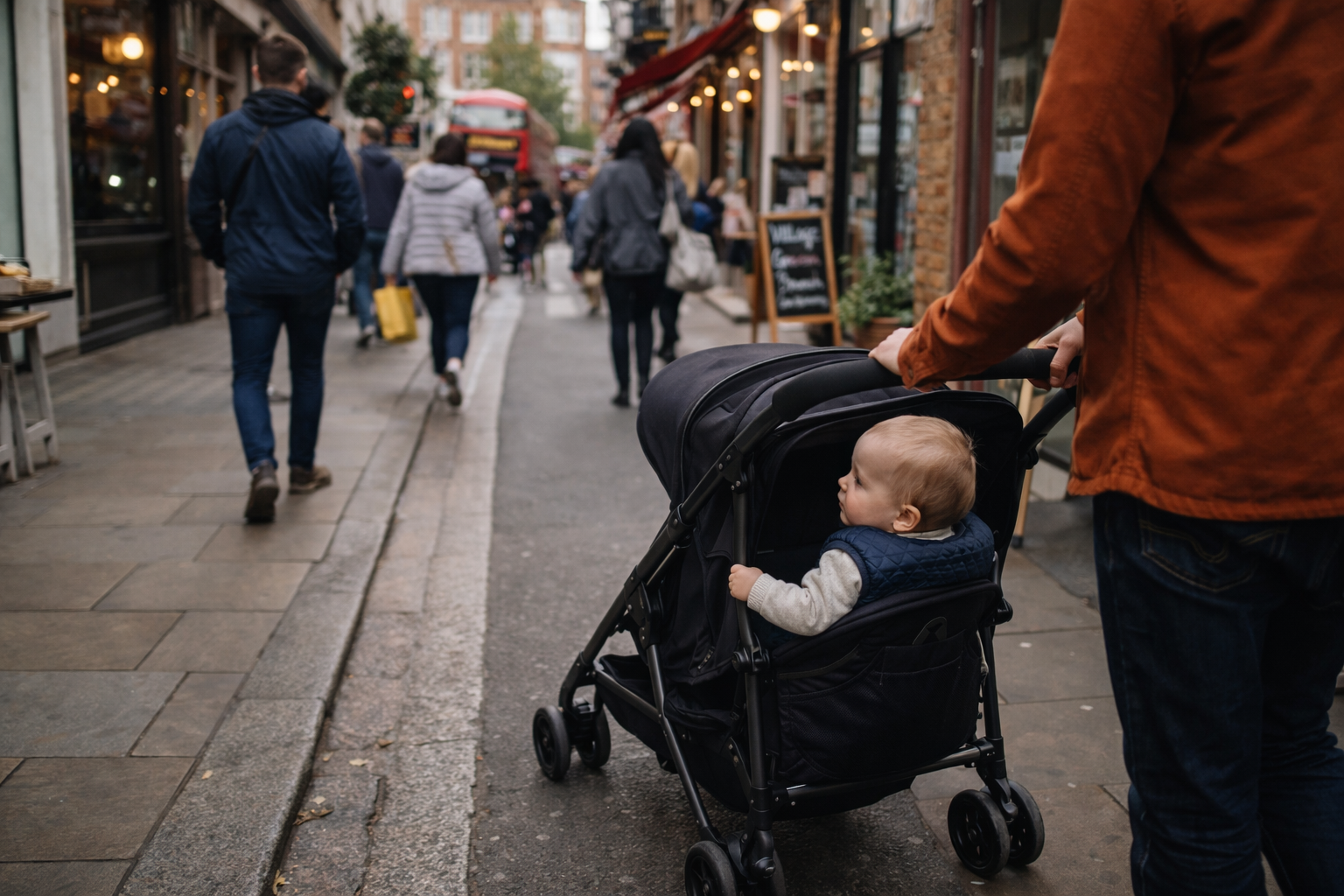
What is a pram?
A pram is a pushchair designed specifically for newborns and young infants. The critical feature is a lie-flat position: either a fixed carrycot that attaches to a chassis, or a seat that reclines fully flat. This matters because newborns don't yet have the muscle control to hold their heads upright; a partially reclined position can cause their head to flop forward, restricting the airway.
Prams tend to have larger, sturdier chassis with bigger wheels and proper suspension systems. This makes them excellent for long daily walks, and you'll feel the difference on uneven pavements, grass, or gravelly paths. The trade-off is weight: a full pram with carrycot typically comes in at 10–15kg, sometimes more.
Storage baskets are usually generous on prams, which is genuinely useful when you're doing a big weekly shop or heading out for the day with a bag full of kit. Most prams are used from birth until around 9–12 months, at which point many families swap to a lighter pushchair.
What is a travel stroller?
A travel stroller is a lightweight, compact pushchair designed with portability as the priority. Most are suitable from around 6 months, when a baby can sit with some support, though several models offer newborn carrycot attachments that extend their use from birth. The seat position is typically upright or slightly reclined, rather than fully flat.
The defining features of a travel stroller are its weight and fold. The best models weigh 5–7kg and fold down small enough to fit in an overhead locker on a plane, slip under a restaurant table, or slot into a car boot alongside a suitcase. For families who use public transport regularly, or who travel by air even once in the baby's first year, this compactness makes a real difference.
Popular examples include the Babyzen YOYO² (around £450–£500) and the Bugaboo Butterfly (around £600). Both are used widely by families who travel regularly and want one pushchair that does everything. For a detailed side-by-side breakdown, see our best travel stroller review 2026.
Key differences at a glance
📋 Free Baby Holiday Packing Checklist
Enter your email and we'll send the free printable checklist straight to your inbox — every category, ready to tick off before every trip.
| Feature | Pram | Travel Stroller |
|---|---|---|
| Age from | Birth (lie-flat) | 6 months (upright); birth with carrycot add-on |
| Typical weight | 10–15kg | 5–8kg |
| Fold size | Bulky | Compact |
| Suspension | Excellent | Good to moderate |
| Storage basket | Large | Smaller |
| Price range | £400–£1,500+ | £150–£700 |
| Air travel | Not ideal — heavy and bulky | Yes — many gate-check or even fit in cabin |
| Best for | Daily local walks, newborns, rural terrain | Travel, city life, public transport, flights |
When to choose a pram
A pram makes most sense if you have a newborn and your daily life involves long walks close to home. If you live in a rural area or somewhere with uneven paths, the bigger wheels and suspension of a traditional pram will give both you and your baby a much more comfortable ride than any lightweight stroller would manage.
It also suits families who won't be doing much flying or long-distance travel in the first year. If baby is mostly in the car or on foot near your home, the extra weight and bulk of a pram is far less of an issue. Some parents find the larger storage basket invaluable for daily use too, particularly if you're doing your food shopping on foot.
That said, if you do go down the pram route, plan for the fact that you'll likely want something lighter once your child is sitting confidently at around 6–9 months. Some families use the pram chassis for much longer, but many find themselves reaching for a lighter buggy by that point.
When to choose a travel stroller
A travel stroller makes sense if public transport is part of your regular routine. Folding a heavy pram on and off a bus or tube is genuinely difficult, especially on your own. A compact stroller that you can fold with one hand while holding your baby with the other is a different experience entirely.
If you're planning any holidays in baby's first year, even a UK break, a travel stroller will serve you far better than a full pram at the airport, in a hire car, or navigating a cobbled European town. Our guide to travelling with a newborn covers the practicalities in detail.
Flat or small home? Storage is a real factor. A compact stroller that folds small enough to stand in a hallway cupboard is genuinely practical in a way that a full pram simply isn't. If you're in a flat without a lift, you'll feel every extra kilogram every single day.
Do you need both?
Many families start with a pram or travel system for the newborn phase, then switch to a lightweight stroller once baby is sitting at around 6 months. This works well if you have the storage space and the budget. The pram handles the early weeks; the travel stroller handles everything from 6 months onwards.
But plenty of families find one good travel stroller with a newborn carrycot attachment covers the full range from birth onwards. It's lighter, cheaper in total, and means you're not managing two pieces of equipment. The honest trade-off is that a travel stroller with a carrycot doesn't match a dedicated pram for suspension quality or flat-lie purity, but for most urban families it's more than adequate.
Pro Tip
If you're torn between a pram and a travel stroller, ask yourself: how much will you actually use this at home versus on holiday or in the city? If the answer is "mostly on holiday or out and about," a good travel stroller will serve you better from day one, and you won't end up buying two.
Travel strollers from birth — is it possible?
Yes, with the right add-ons. Several well-regarded travel strollers offer official newborn solutions: the Babyzen YOYO² has a newborn pack that transforms the seat for lie-flat use, and the Bugaboo Butterfly has a carrycot attachment. These are genuine solutions, not workarounds.
The caveat worth knowing is that a dedicated pram carrycot, designed from the ground up as a sleeping space, provides a better flat-lie position than most travel stroller newborn attachments. If your baby will be spending a lot of time sleeping in the pushchair in those early weeks (as many newborns do), a full pram carrycot is the gold standard. For everything else, a travel stroller with a newborn pack is absolutely workable. See our full guide to travelling with a newborn for more on what works at each stage.
Our top travel stroller picks
| Model | Best for | Weight | Price | Link |
|---|---|---|---|---|
| Bugaboo Butterfly | Premium all-rounder, frequent flyers | 6.4kg | ~£600 | View on Amazon |
| Babyzen YOYO² | Cabin-approved, city use, from birth | 6.4kg | ~£450–£500 | View on Amazon |
| Silver Cross Clic | Budget-friendly compact option | 5.9kg | ~£250 | View on Amazon |
For a broader comparison including budget and mid-range picks, see our full best travel stroller review 2026, our guide to the lightest strollers in the UK, and our roundup of the top cabin-friendly strollers.
✈️ Free Baby Hand Luggage Checklist
Never forget the essentials. Enter your email and we'll send the free checklist straight to your inbox — one page, every category, ready before every flight.
FAQ
What is the difference between a travel stroller and a pram?
A pram is designed for newborns and young infants, with a lie-flat position from birth and a larger, heavier chassis with good suspension. A travel stroller is designed for portability: it's lighter, folds more compactly, and is typically suitable from around 6 months (or from birth with a carrycot add-on). The main practical difference is that travel strollers are far easier to transport on planes, public transport, and into cars.
Can I use a travel stroller for a newborn?
Some travel strollers can be used from birth with an official newborn pack or carrycot attachment. The Babyzen YOYO² and Bugaboo Butterfly are the best-known examples. However, a dedicated pram carrycot provides a purer lie-flat position. For families planning to travel in the early months, a travel stroller with a newborn pack is a practical solution; for families staying mostly local, a full pram carrycot is the gold standard.
Are travel strollers suitable for everyday use?
Yes, for many families a travel stroller is their everyday pushchair from around 6 months onwards. The lighter weight and compact fold make day-to-day life much easier: getting on buses, fitting in car boots, navigating shops. If your daily walks are long and on rough terrain, you might miss the suspension of a full pram, but for most urban and suburban use, a quality travel stroller handles everyday life perfectly well.
What age should I transition from pram to travel stroller?
Most families make the switch around 6 months, when baby can sit with some support and no longer needs to lie completely flat. Some switch earlier if the pram is becoming unwieldy, and some hold off until closer to 9–12 months. There's no fixed rule. It depends on your baby's development and your lifestyle. When you find yourself avoiding certain outings because the pram is too heavy or bulky, that's usually the sign to switch.
Do travel strollers fold smaller than prams?
Yes, significantly. A compact travel stroller folded is roughly the size of a large cabin bag. A full pram folded is more like a large suitcase: still manageable in a car boot, but not something you'd haul onto a bus or fit in an overhead locker. This size difference is the main reason families choose a travel stroller for holidays and city use.
Can a travel stroller fit in a plane cabin?
Some can. The Babyzen YOYO² and a handful of other compact strollers are specifically designed to fit in airline overhead lockers, though policies vary by airline so always check before you fly. Most travel strollers are gate-checked for free, meaning you use them right up to the aircraft door and collect them on arrival. See our guide to top cabin-friendly strollers for which models qualify and with which airlines.
How much does a good travel stroller cost in the UK?
Decent travel strollers start from around £150–£200 for basic models. The most popular mid-range options, like the Silver Cross Clic or Cybex Libelle, sit in the £250–£350 range. Premium models like the Babyzen YOYO² (around £450–£500) and Bugaboo Butterfly (around £600) offer better fold quality, smarter features, and more accessories. For more options, see our compact lightweight pushchair guide.
What's the difference between a travel stroller and a travel system?
A travel stroller is just the pushchair itself: a lightweight, compact buggy. A travel system is a combination of a pushchair chassis, a carrycot (for newborns), and an infant car seat that all clip onto the same frame. Travel systems are heavier and bulkier than travel strollers, but add the ability to transfer a sleeping baby directly from car to pushchair without waking them. Our guide to travel systems and car seat combos covers this in full.