
Travelling With a 6-Month-Old: Tips, Gear & Destinations (2026)
By BabyTravel UK Editorial Team · Last updated March 2026
Why six months is the travel sweet spot — and everything you need to make the most of it.
Six months is often called the travel sweet spot, and it earns that reputation. Your baby can sit up (or nearly), they're fascinated by every new face and sound, and they haven't yet discovered the joys of crawling off in the wrong direction. Many parents choose this age for their first holiday, and it's usually a very good decision.
That said, travelling with a 6-month-old comes with its own considerations — starting solids adds a new layer of logistics, and a baby who weighed 5kg at three months now tips the scales considerably higher. This guide covers exactly what travel looks like at this stage, the gear that makes the biggest difference, and where to go for a genuinely relaxed first trip. For the complete picture, see our first holiday with a baby guide.
Travelling With a 6-Month-Old: Key Facts
- Why this age works: baby sits up, is pre-crawling, and is genuinely entertained by new environments
- New complication: many babies start weaning at 6 months, which adds food preparation to your packing list
- Best trip type: UK cottage with a kitchen, or a holiday park like Centre Parcs
- Gear shift: a travel stroller becomes essential — they're too heavy for carrier-only days
- Routine: established enough to travel with, flexible enough to bend for a week
What's Travel Like at 6 Months?
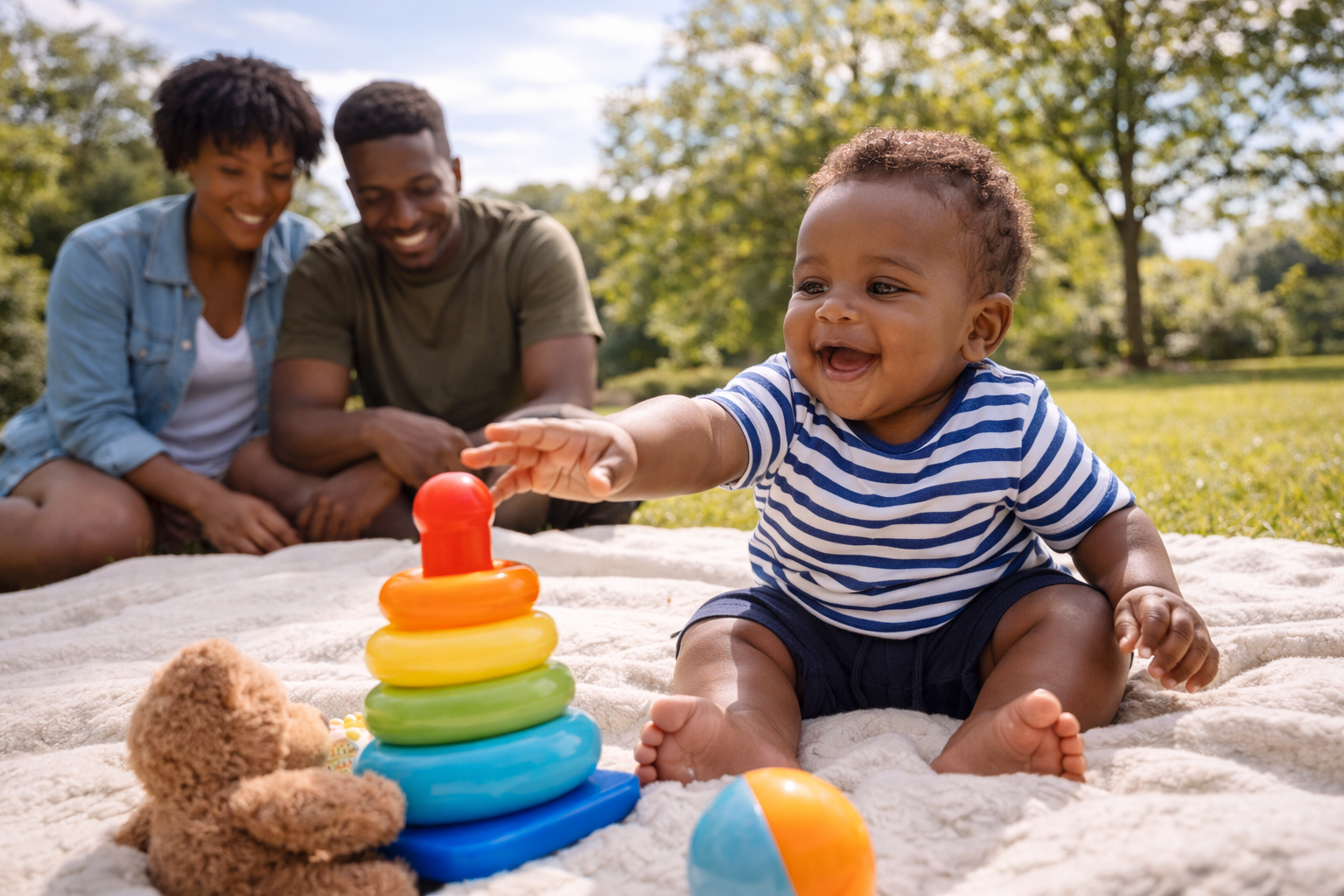
At six months, most babies are sitting up with some support (some independently), batting at toys, babbling, and showing genuine interest in everything around them. They're pre-crawling — which means they stay put on a beach towel or picnic blanket with relative reliability. Many babies are starting on solid foods around this age, and most are sleeping in longer stretches at night, making the holiday sleep situation less of an ordeal than it was at three months.
| Factor | At 6 Months |
|---|---|
| Mobility | Sitting (supported or independent). Pre-crawling. |
| Sleep | Usually 2–3 naps per day. Longer night stretches. |
| Feeding | Breast/bottle plus early weaning (purées or finger food) |
| Weight | Average 7–8kg — getting heavy for carrier-only days |
| Routine | Established but flexible |
| Entertainment | Fascinated by everything. Short attention span. |
What makes six months easier than the newborn phase: your baby has a predictable-ish routine, they can sit in a highchair at restaurants, and they're genuinely engaged by new sights and sounds — a cobbled street, a dog walk, a different ceiling to stare at. They won't remember any of it, but they'll enjoy it.
What makes it harder than three months: they're heavier, so wearing them in a carrier all day becomes tiring. If weaning has begun, you're now managing food as well as milk. And they're more alert — cabin noise doesn't automatically knock them out the way it did at eight weeks.
Pro Tip
Six months is often the last age before stranger anxiety kicks in properly. Many parents find their babies this age are unusually sociable — happy to be passed around at dinner, entertained by waitstaff, and generally easy company in public.
Best Destinations for a 6-Month-Old
📋 Free Baby Holiday Packing Checklist
Enter your email and we'll send the free printable checklist straight to your inbox — every category, ready to tick off before every trip.
The honest answer is that almost any destination works at six months. They're too young to need a beach or a theme park — they just need you, some stimulation, and somewhere comfortable to sleep. That said, some destinations make the logistics considerably easier.
UK Holiday Parks
Centre Parcs is arguably the single best destination for a baby this age. The heated indoor pool has a dedicated shallow baby area, the forest lodges are spacious and self-contained, and you don't need a car once you're there. If budget is a consideration, Haven offers a solid seaside alternative with similar self-contained cabin accommodation.
UK Cottages
A cottage in Cornwall, the Cotswolds, or North Norfolk is ideal for weaning babies — you have a full kitchen, plenty of space, and no one to disturb if the 5am wake-up happens. The key is picking a property close enough to a village or town that you're not completely isolated. For a full guide to self-catering options, see our best cottages for babies roundup.
City Breaks
A 1–2 night city break works well at six months. Your baby will happily nap in the pushchair while you explore — they don't need a separate itinerary. Baby-friendly hotels will typically provide a cot and some will have a baby bath or baby toiletries on request.
First Flight Abroad
If you're considering a short-haul trip — the Algarve, the Canaries, a city in Europe — six months is a reasonable age to try it. Babies this age are often soothed by cabin noise and the motion of the aircraft. A two-hour flight is very manageable. Read our flying with a baby guide for everything you need to know about the airport and cabin experience.
Essential Gear at 6 Months
Your gear needs shift noticeably between three months and six months. The bouncy chair stays at home; the travel stroller moves to the top of the list.
Travel Stroller
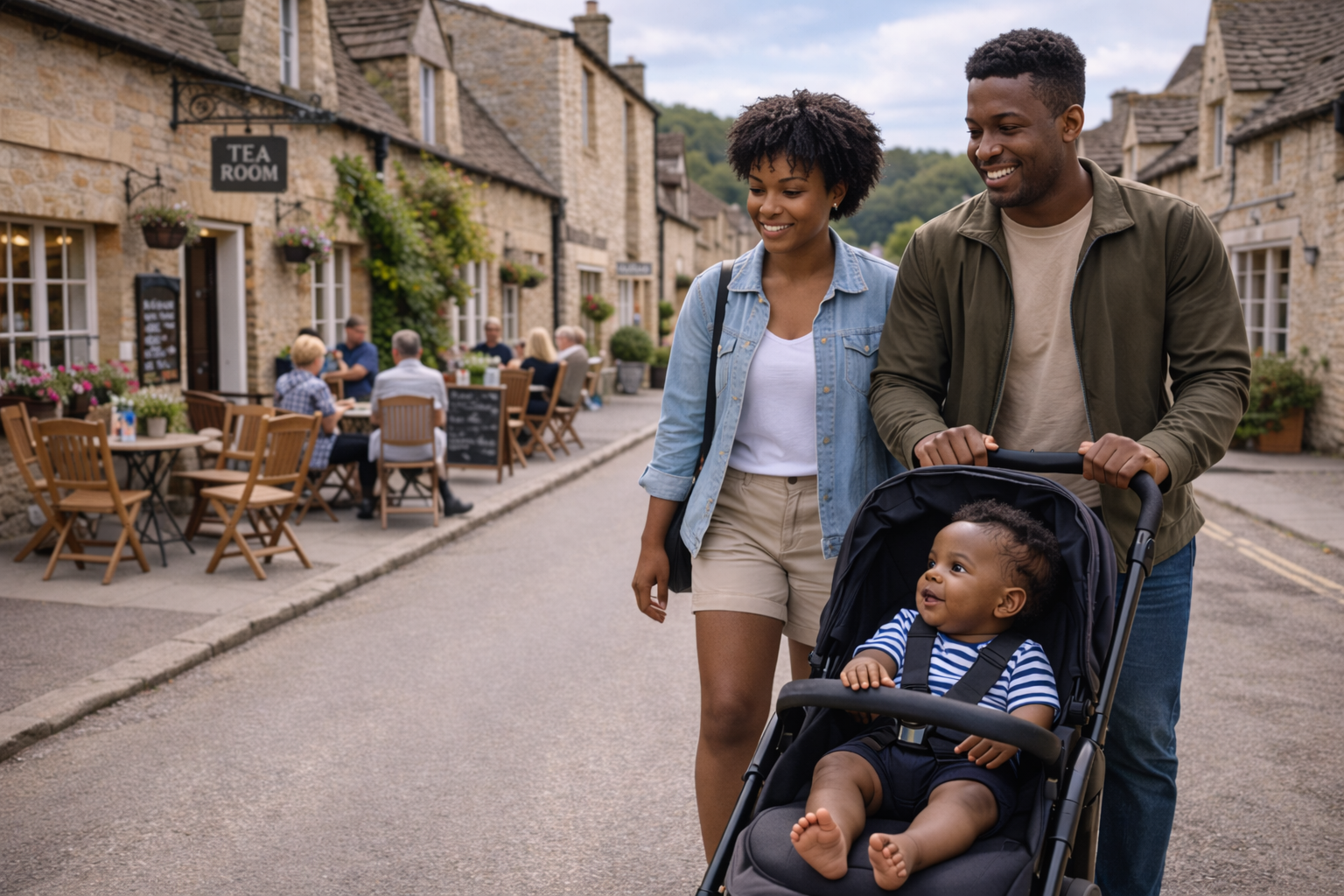
A compact travel stroller becomes essential at this age. Your baby is now too heavy for carrier-only days, and many six-month-olds genuinely enjoy being upright in a pushchair watching the world go by. Look for a model with a decent recline so they can nap on the go. For recommendations at different price points, see our travel stroller reviews and budget pushchair guide.
Baby Carrier
Still useful — especially for airports, busy markets, and anywhere a pushchair can't easily go. At this weight though, you'll want a structured carrier with proper hip and lumbar support rather than a stretchy wrap. See our carrier guide for travel for options that work for 6-month-olds and beyond.
Portable Highchair
This is the new addition to the kit at six months. Most UK cafés and restaurants have highchairs, but when they're all taken or the venue doesn't have them, a clip-on portable seat is a genuine lifesaver. The Inglesina Fast Table Chair clips onto almost any table edge and folds flat — one of the most genuinely useful bits of kit for this age.

Inglesina Fast Table Chair (Portable Travel Highchair)
Clips directly onto table edges. Works from 6 months up to 15kg. Folds flat and fits in its own carry bag. No straps or fixings required — a genuinely clever bit of engineering. Around £60–£70.
Pros: Universal table compatibility, compact fold, easy to clean.
Cons: Doesn't work on pedestal tables without a solid edge; takes a moment to learn the clip mechanism.
Travel Cot & Blackout Blind
Naps are more structured at six months, which means sleep quality on holiday matters more than it did at the newborn stage. A portable blackout blind makes an enormous difference in unfamiliar rooms — see our travel cot guide for cot options and our recommendation below for blocking out light.

Tommee Tippee Portable Blackout Blind
Fits any window using static cling — no suction cups, no marks on glass. Rolls up small. A must-have for holiday accommodation where the curtains are decorative at best. Around £20.
Pros: Works on most window types, leaves no marks, rolls up into a small pouch.
Cons: Very large or oddly shaped windows may need two; doesn't block light around the edges on some frames.
Feeding on Holiday at 6 Months
If your baby has just started weaning, don't put pressure on yourself to maintain the exact same foods you're trying at home. A holiday is not the moment to experiment with new allergens — stick to foods you know they've already had, and lean heavily on food pouches.
Pouches are your best friend when travelling: they're portable, don't require refrigeration until opened, and most babies will eat them without much fuss. Most UK cafés and restaurants will warm one for you if you ask. For breastfeeding parents, nothing changes logistically — it remains the most travel-friendly feeding option at any age.
If you're formula feeding, a pre-measured powder dispenser is the most efficient way to travel. Combine with a travel-ready bottle-warming approach (a thermos of hot water works well for short trips).

Munchkin Miracle 360 Trainer Cup
If your 6-month-old is starting water with meals, this is the cup most used by UK parents at this age. No spout, drinks from any edge, and fully spillproof. Around £9–£12.
Pros: No valves to replace, dishwasher safe, accepted well by most babies.
Cons: Needs a good seal when closing to prevent leaks in a bag.
For guidance on what to give weaning babies when travelling, the NHS weaning guide is the most reliable reference. It's also a useful sanity check if you're not sure which foods to introduce first.
Keeping the Routine on Track
At six months, most babies have a nap and bedtime routine worth protecting. The good news is you don't need to replicate it perfectly — you just need to keep the sequence consistent.
Apply what sleep consultants call "sequence over schedule": same order of events (bath, feed, sleeping bag, white noise, dark room), flexible timing. If the nap happens an hour later than usual because you were at a café, that's fine. If bedtime shifts by 30 minutes, that's fine too. The cues are what matter.
Try to protect one cot nap per day — usually the first or longest nap of the day. The others can happen in the pushchair or the carrier. Bring all your usual sleep equipment: sleeping bag, portable blackout blind, and a white noise machine like the Dreamegg D11 (compact, USB rechargeable, and one of the most effective on the market).
For a full approach to managing sleep away from home, see our routine on holiday guide.
What Most Parents Worry About (And Why It's Fine)
There are three anxieties that come up most often when parents are planning a first trip at this age. All of them are legitimate — and all of them are more manageable than they sound.
"Will the routine be ruined?"
A week of disrupted naps and slightly later bedtimes will not undo months of sleep training. Babies are more resilient than we give them credit for. You may have a few rough nights on return, but most babies resettle within two to three days back home. The routine is a tool, not a law.
"What if they get ill?"
Pack infant Calpol, a thermometer, and your GP's out-of-hours number. For travel within the UK, the NHS is always accessible. For abroad, ensure you have travel insurance that covers your baby — it's a non-negotiable, not an optional extra. A baby this age is unlikely to be seriously unwell on holiday, but a temperature that would be mildly stressful at home feels more stressful in unfamiliar surroundings.
"Is it worth the effort?"
Yes. Six months is significantly easier to travel with than 12 months, when babies are pulling themselves up on everything, refusing to be contained, and developing opinions about what they eat. If you've been putting off a first trip, now is genuinely the time to go.
✈️ Free Baby Hand Luggage Checklist
Never forget the essentials. Enter your email and we'll send the free checklist straight to your inbox — one page, every category, ready before every flight.
Frequently Asked Questions
Is 6 months a good age to travel with a baby?
It's one of the best ages. Babies at six months are pre-crawling (they stay where you put them), engaged by new environments, and often still manageable in a carrier or pushchair for long periods. Many parents deliberately wait until six months for their first trip.
Can a 6-month-old fly?
Yes, with no medical issues. Most airlines allow infants from 7 days old. At six months, babies are usually unfazed by take-off and landing — cabin noise is often soothing. A short-haul flight of 2–3 hours is very manageable. See our first flight guide for practical advice on airports, security, and the flight itself.
What do I need to pack for a 6-month-old on holiday?
The essentials: nappies and wipes, age-appropriate clothing, a portable blackout blind, a sleeping bag, their usual sleep comforter, baby food or formula, the 360 cup if weaning, and a portable highchair. For a full list see our baby holiday packing list.
How do I manage weaning on holiday?
Keep it simple. Stick to foods they've already tried at home — holiday is not the time to introduce potential allergens. Food pouches travel well and most restaurants will warm them. If you're doing baby-led weaning, banana, steamed broccoli, and soft cooked pasta are easily sourced anywhere.
Will travelling ruin my baby's sleep routine?
Unlikely long-term. A week of disrupted sleep may mean a few unsettled nights on return, but babies this age typically resettle within a few days. Bringing all your usual sleep cues — blackout blind, white noise, sleeping bag — and keeping the bedtime sequence consistent will limit the disruption significantly.
What's the best holiday destination for a 6-month-old?
For a first trip, Centre Parcs or a self-catering cottage are the easiest options — you have your own space, a kitchen for weaning food prep, and flexibility around nap times. If you want to go abroad, a short-haul sun destination with a villa or apartment works well. Avoid places where baby needs jet lag adjustment on a short trip.
Does my 6-month-old need a passport?
Yes, for all international travel including within the EU. UK passports for babies take around 3 weeks to process but can be expedited if needed. Apply online via the gov.uk passport service. Your baby will need their own passport — they cannot be added to yours.
How do I keep a 6-month-old entertained while travelling?
Six-month-olds have naturally short attention spans, which works in your favour — a new toy, a different face, or simply a change of scenery holds their attention for longer than it would at home. Pack 2–3 small familiar toys and save one brand new item as an emergency distraction. Most of the entertainment at this age is just the world around them.
Ready to Book?
Six months is arguably the best age for a first trip. Your baby is curious, relatively portable, and genuinely benefits from new experiences — even if they won't remember them. The gear list is manageable, the routine is bendable, and the logistics are nowhere near as daunting as they feel from the outside.
Start with our first holiday with a baby guide for destination inspiration and practical planning, and our complete baby holiday packing list to make sure nothing gets left behind.