
Baby Passport UK: How to Apply Step by Step (2026)
By BabyTravel UK Editorial Team · Last updated August 2026
Getting a passport for your baby sounds straightforward until you're three steps in and wondering whether a primary school teacher counts as a valid countersignatory and whether your phone photo will be rejected because there's the tiniest shadow near the ear. This guide walks you through every step of the UK child passport process clearly — including the parts that catch most parents out — so you can apply with confidence and avoid the delays that push families into expensive fast-track services.
⚡ Quick Summary
- Babies need their own passport for all international travel — they cannot use a parent's since 1998
- Apply online at Gov.uk — faster processing (around 3 weeks) and cheaper (£49 vs £58.50 paper)
- The photo is the biggest hurdle — get it right first time or face delays
- You need a countersignatory — someone in a recognised profession who has known a parent for 2+ years. Not a family member.
- Apply at least 10 weeks before travel — never leave this to the last minute
Do Babies Need a Passport?
Yes — for any international travel, including EU and EEA destinations. Since 1998, every child travelling internationally from the UK must have their own individual passport. Babies cannot be added to a parent's passport or travel document. This applies whether you're flying to Majorca, taking the Eurostar to Paris, or boarding a ferry to Ireland.
You do not need a passport for domestic UK travel (England, Scotland, Wales, Northern Ireland). That said, many parents apply for one shortly after birth anyway — a passport is useful as photo ID, and getting it sorted early avoids a last-minute scramble when you book that first family holiday. If you're planning an early first holiday or aiming to tick off your first European trip, apply at least 10 weeks before travel.
How to Apply for a Baby Passport — Step by Step
📋 Free Baby Holiday Packing Checklist
Enter your email and we'll send the free printable checklist straight to your inbox — every category, ready to tick off before every trip.
The online route is strongly recommended: it's £9.50 cheaper, faster to process, and lets you upload photos and documents digitally rather than sending originals by post. Here's the full process:
Step 1: Start the Application at Gov.uk
Go to the Gov.uk child passport application page. Select "Apply for your child's first UK passport." Create a Gov.uk account if you don't have one. The online form takes around 20–30 minutes to complete if you have all documents to hand — don't start it when you have 10 minutes before the school run.
Step 2: Fill In the Form
You'll need: the baby's full name, date and place of birth, and gender. You'll also need details for both parents — full names, nationalities, and passport numbers. If you're applying as a single parent or if parental responsibility details are complex, Gov.uk will guide you through the relevant section. The form is clear, but set aside time to do it properly.
Step 3: Get the Passport Photo Right
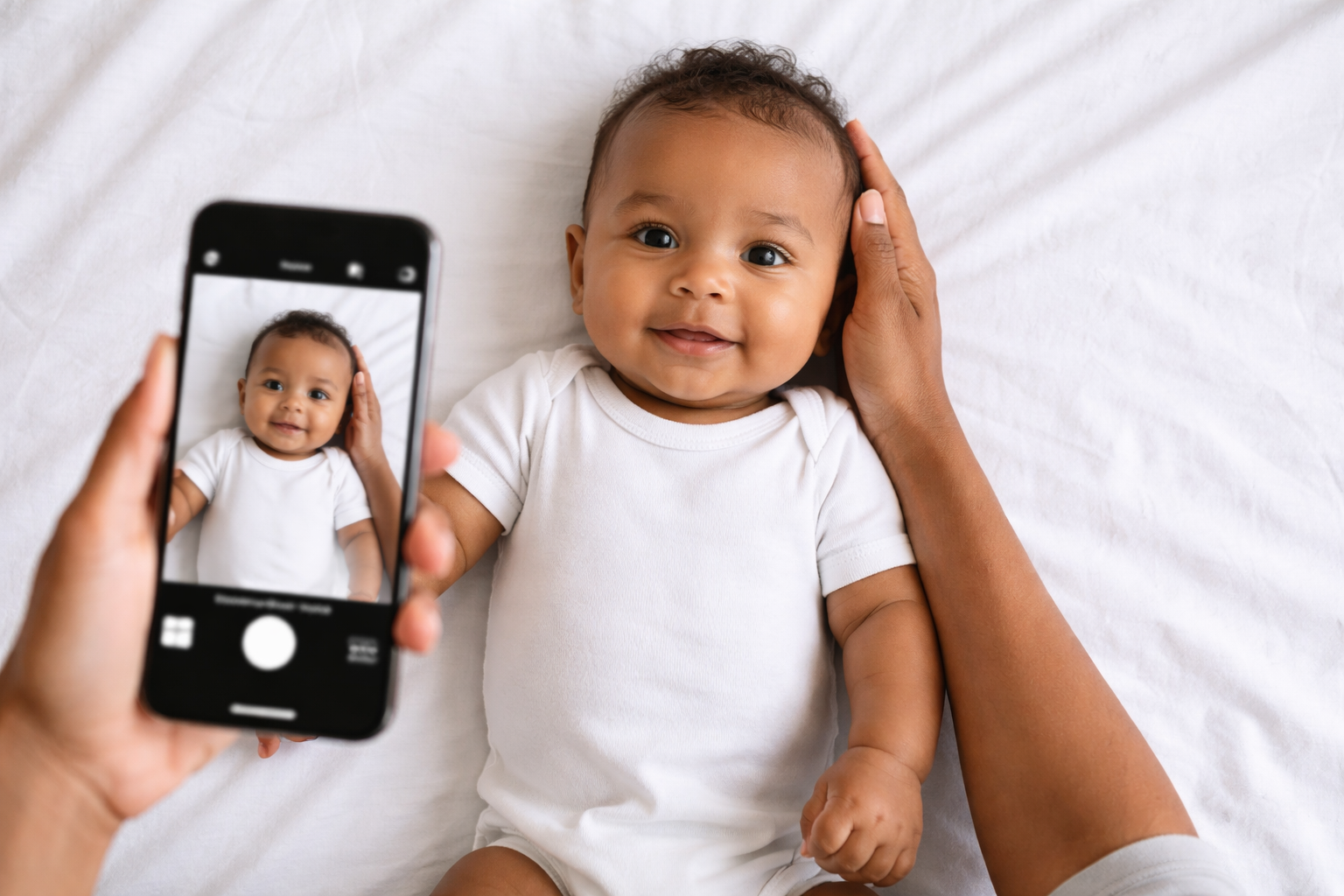
This is where most first-time applications go wrong. The photo must meet strict requirements — see the dedicated photo tips section below. The short version: plain white or light grey background, baby facing directly forward, eyes open, mouth closed, no hands or objects visible, no shadows on the face. For babies who can't sit unaided, the recommended technique is to lay them on a white sheet and photograph from directly above.
Step 4: Find a Countersignatory
The countersignatory must sign the back of the printed photo AND confirm the application on the form. They must have known one of the parents for at least 2 years, hold a valid UK passport themselves, and work in a recognised profession (doctor, teacher, engineer, solicitor, police officer, accountant, and many others). They cannot be a family member or related to the child.
Finding a valid countersignatory is the step that causes the most last-minute stress — identify yours before you start the application, not after. A GP is the most commonly used option if you have a good relationship with your surgery. A teacher, colleague in a professional role, or a family friend in the right profession all work.
Step 5: Gather Your Supporting Documents
You will need the baby's full birth certificate — this is the long A4 version issued by the General Register Office, not the short-form extract. Many parents make the mistake of submitting the short certificate. They are not the same document. You'll also need both parents' passports. If there are any name discrepancies between your documents (for example, if a parent's name changed after the birth certificate was issued), include a brief explanatory letter.
If you're travelling solo with your baby or you and your child have different surnames, our Single Parent & Different Surname Travel Pack includes ready-to-use consent letter templates and a supporting documents checklist — £7.99 as an instant download.
Step 6: Pay the Fee
Online applications cost £49 (2026 rate — check Gov.uk for the current fee before applying). Paper applications cost £58.50. Payment is by debit or credit card online, or by cheque for paper applications. The fee is non-refundable if the application is rejected due to incorrect information or photos.
Step 7: Submit Documents
For online applications, you can upload photos digitally and post supporting documents using the prepaid envelope provided. Original documents are returned to you — they won't be lost. For paper applications, post everything together. Track the envelope if you're sending original passports — use Royal Mail Special Delivery for peace of mind.
Baby Passport Photo Tips
The photo is rejected more often than any other part of the application. Here's how to get it right at home — or when to let the professionals handle it.
Want the full walkthrough? Our step-by-step guide to taking a baby passport photo at home covers the exact phone method, what the passport office accepts for babies, and the common mistakes that get photos rejected.
DIY at home: Lay baby on a white sheet on the floor (against a white wall also works). Stand or kneel directly above them. Use natural daylight from a window — no overhead flash, which creates shadows. Take 40–50 shots during a calm, awake moment and pick the best. You need: eyes open and looking roughly forward, mouth closed, no hands or objects in the frame, no dummy, no toys, no shadow on the face or background, and a plain white or very light grey background.
When to go to a shop: Boots and Timpson both offer baby passport photo services for around £8–£10. A trained assistant can position baby correctly and their equipment meets the technical spec precisely. If your baby is particularly wriggly, sleepy, or uncooperative, this is worth every penny of the fee versus a rejected application.
Pro Tip: The best window for DIY photos is 30–60 minutes after a feed, when baby is awake but content. Avoid nap-adjacent windows when they're fighting sleep — eyes half-closed is an immediate rejection. Have one person gently hold baby's attention while the other photographs.
Processing Times and Costs
| Service | Processing time | Cost (2026) | Notes |
|---|---|---|---|
| Standard online | Around 3 weeks | £49 | Recommended — cheapest and fastest standard option |
| Standard paper | Up to 10 weeks | £58.50 | Only use if unable to apply online |
| 1-week Fast Track | Around 1 week | Around £120 | Appointment required at a specified passport office |
| Premium (same day) | Same day (appointment) | Around £170 | For genuine emergencies only — limited appointments |
The realistic advice: apply standard online and build in plenty of lead time. Fast Track and Premium services exist for genuine emergencies — an unexpected family trip, a bereavement abroad — not because you left the application late. Premium appointment slots fill up quickly during peak holiday booking periods (February and September–October).
Common Mistakes That Delay Applications
These are the reasons applications get held up or returned — listed in roughly descending order of frequency.
- Wrong passport photo. By far the most common issue. Baby's eyes closed, a hand visible at the edge of the frame, a shadow across the face, a coloured background — any of these will cause rejection. Read the Gov.uk photo requirements before taking the photo, not after.
- Short birth certificate submitted instead of the full one. The short-form birth certificate (a small document with basic details) is not accepted. You need the full A4 birth certificate issued by the General Register Office. Order one in advance if you don't have it to hand — allow a few days.
- Ineligible countersignatory. The most common errors: using a family member (not allowed under any circumstances), using someone who hasn't known the parent for the full 2 years, or using someone who doesn't hold a valid UK passport themselves. Confirm all three criteria before listing them on the form.
- Name mismatches between documents. If your name appears differently on your passport versus the birth certificate (maiden name, middle name used differently), the passport office will query it. Include a brief covering letter explaining the discrepancy.
- Missing signature. The countersignatory must sign the back of the photo, and both the applicant and countersignatory must sign the form where indicated. Missing signatures return the whole application.
Full Application Checklist
| Step | What you need | Common mistake |
|---|---|---|
| Online application | Gov.uk account, all personal details to hand | Starting without all documents ready — the form times out |
| Passport photo | White/light grey background, eyes open, no shadows | Eyes closed, hand in frame, shadow on face — most common rejection reason |
| Countersignatory | Known parent 2+ years, valid UK passport, recognised profession, not a family member | Using a relative, or someone who hasn't known the parent long enough |
| Birth certificate | Full A4 long-form birth certificate from GRO | Submitting the short-form extract — not accepted |
| Parents' passports | Both parents' current passports (or relevant travel documents) | Name discrepancy between documents — needs a covering letter |
| Payment | £49 online / £58.50 paper (2026 rates) | Paying for paper when online is faster and cheaper |
| Signatures | Countersignatory signs photo reverse and form; parent signs form | Missing countersignatory signature on the photo itself |
Renewing a Child's Passport
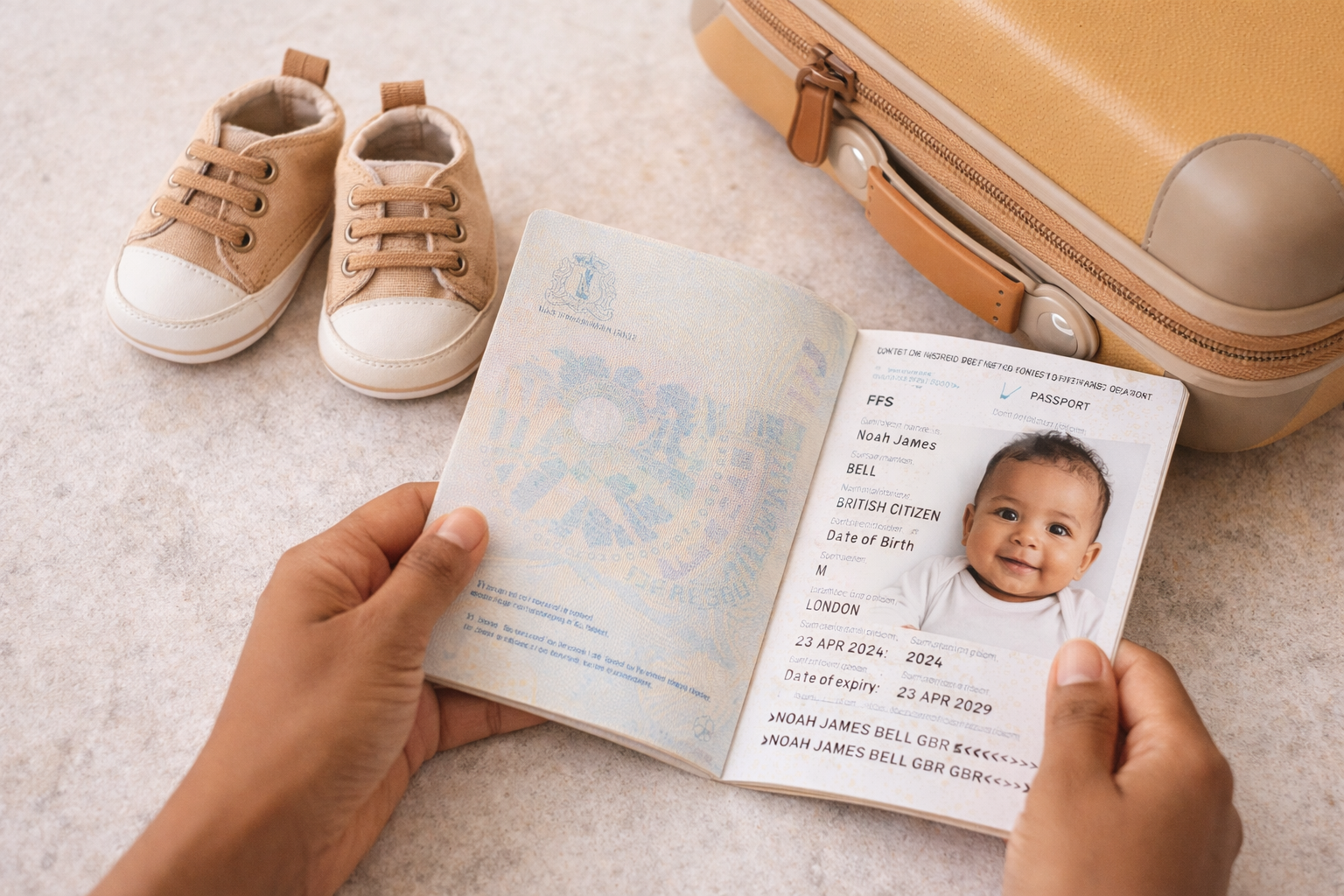
Child passports last 5 years — not 10 like an adult passport. If your baby's first passport was issued in 2026, it will expire in 2031. The renewal process is similar to a first application, with one significant catch: the passport office will check whether the child is recognisable from their previous photo. For babies renewing at age 5 — having looked completely different for roughly four and a half of those years — the answer is almost always no. You will very likely still need a countersignatory for a child's first renewal.
Before booking any international trip as your child gets older, check the passport expiry. Many countries require at least 6 months' validity beyond the travel date — a passport expiring in August is not valid for a September trip to many destinations. Get into the habit of checking passport expiry dates at the same time you book travel, not the week before departure. See our holiday packing checklist for a pre-travel document check.

Family Travel Document Organiser
Keep passports, insurance docs, and boarding passes in one place
Once you have multiple passports, travel insurance documents, and boarding passes to manage at an airport, a dedicated family travel wallet pays for itself in reduced stress. The best ones hold 4–6 passports, have a separate slot for boarding passes and travel insurance, and fit in a coat pocket or changing bag strap pocket. A minor purchase with an outsized impact on airport morning chaos.
- ✅ Holds 4–6 passports — grows with the family
- ✅ Separate slots for insurance docs, boarding passes, and currency
- ✅ RFID-blocking lining on most models
- ❌ Bulkier than individual passport holders — but worth it with a baby in tow
✈️ Free Baby Hand Luggage Checklist
Never forget the essentials. Enter your email and we'll send the free checklist straight to your inbox — one page, every category, ready before every flight.
Frequently Asked Questions
How long does a baby passport take in the UK?
Around 3 weeks for a standard online application. Paper applications can take up to 10 weeks. A 1-week Fast Track service (around £120) and a Premium same-day service (around £170) are available for urgent cases by appointment. Apply at least 10 weeks before your first trip — earlier is always better, and first passports can occasionally take longer during busy periods. Don't book non-refundable flights until the passport is in your hand.
How much does a baby passport cost in the UK in 2026?
£49 for an online application, £58.50 for paper. The Fast Track service costs around £120 and Premium around £170. Child passports are valid for 5 years rather than the 10 years of an adult passport. Always verify the current fee on Gov.uk before applying — fees are updated periodically.
Can a baby travel on a parent's passport?
No. Since 1998, every child must have their own passport. Babies cannot be added to a parent's passport regardless of age. A baby without a valid individual passport will not be allowed to board an international flight. There are no exceptions for very young babies.
Who can countersign a baby passport application?
Someone who has known one of the parents (not the baby) for at least 2 years, holds a valid UK passport, and works in a recognised profession — doctor, teacher, solicitor, engineer, accountant, police officer, and many others. They cannot be a family member or related to the child in any way. They sign both the back of the photo and the application form. Find yours before you start — this is the step most parents leave too late.
What documents do I need for a baby passport?
Baby's full birth certificate (long form, not the short extract), both parents' passports, a compliant passport photo, and the countersignatory's details. If there are any name discrepancies between your documents, include a covering letter. The Gov.uk form will prompt you for everything — have all documents ready before you start.
How do I take a baby passport photo at home?
Lay baby on a white sheet on the floor. Stand directly above. Use natural light from a window — no flash. Take 40–50 shots and choose the best one where the eyes are open, mouth is closed, and there are no hands, shadows, or objects in the frame. A phone camera works well. Alternatively, Boots and Timpson offer baby passport photo services for around £8–£10 — worth it if your baby is particularly wriggly.
Can I use my phone for baby passport photo?
Yes — the HMPO digital photo service lets you take a photo on your phone and submit it online. The photo must meet strict requirements: plain cream or light grey background, no shadows, baby's eyes open and facing forward. It's trickier than it sounds with a newborn, but many parents manage it at home. Check the Gov.uk photo requirements before you start.
What are the most common reasons a baby passport is delayed?
Rejected passport photo (far and away the most common issue), wrong birth certificate (short form instead of long form), ineligible countersignatory, name mismatches between documents, and missing signatures. Getting the photo right is the single biggest factor in a smooth application — check the Gov.uk photo requirements before you take or commission the photo.
How long is a child's passport valid for?
5 years. Child passports do not receive the same 10-year validity as adult passports. This means a passport issued at birth will expire before your child starts school. Check expiry dates at the same time you book any international travel — many countries require 6 months' validity beyond the travel date, so an "almost expired" passport can still cause problems.
The Bottom Line
Getting a baby passport is straightforward if you prepare in the right order: identify your countersignatory first, get a compliant photo second, gather your documents third, then complete the online application. Apply at least 10 weeks before travel and you'll have plenty of margin for any queries. Once the passport arrives, your baby's world opens up — and there's a lot of it worth showing them. Start with our first holiday guide and our flying with a baby guide for everything you need for that first trip.