
Best Travel Strollers for Cobblestones and Uneven Terrain (2026)
By BabyTravel UK Editorial Team · Last updated July 2026
Most stroller reviews happen on smooth floors. This one doesn't. Here's which lightweight buggies can actually handle European cobblestones, gravel car parks, and coastal paths.
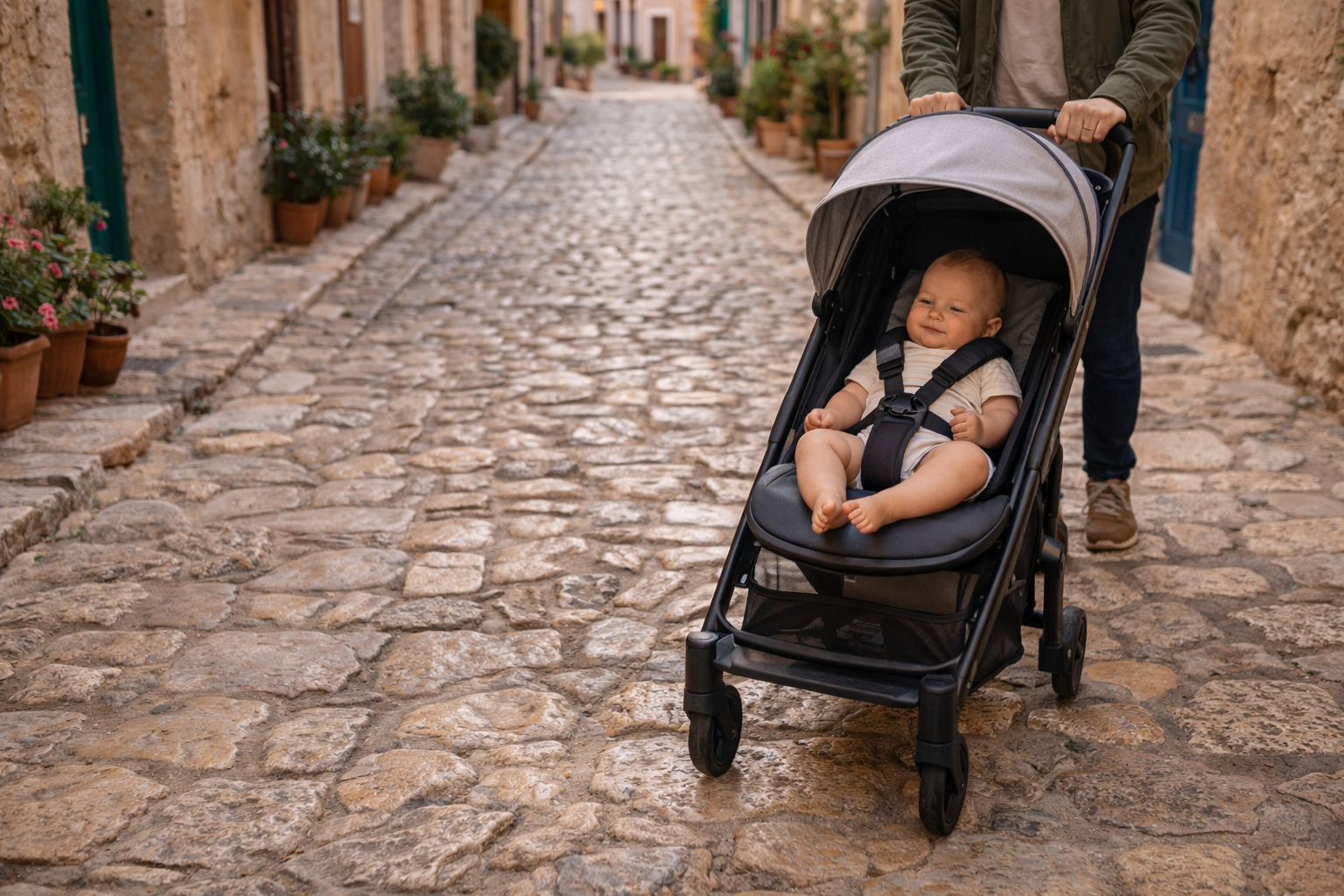
The problem with most travel stroller reviews is that they're written by people who've never tried to push one down a medieval European cobblestone street with a sleeping baby. Every jolt transfers. If the stroller has small hard wheels and no suspension, your baby is being rattled awake every 30 seconds while you wrestle the handlebars. That's the reality no spec sheet mentions.
The specific question this guide answers is: which travel strollers — lightweight, foldable, plane-friendly — can handle rough ground without abandoning the portability that makes them worth using? A full-size all-terrain pushchair handles cobbles brilliantly, but you're not taking it on a Ryanair flight or stuffing it into a hire car boot. The strollers here are all compact enough to travel with, and all genuinely better than average on uneven surfaces. For a broader look at travel stroller options by use case, our best travel stroller review covers the full picture.
Best Stroller for Cobblestones: Quick Picks
- Best overall on rough terrain: Bugaboo Butterfly — foam-filled wheels and elastomer suspension make this the best travel stroller on cobbles
- Best lightweight option: UPPAbaby MINU V2 — large wheels for its class absorb bumps noticeably better than small-wheeled alternatives
- Best value: Joie Pact Pro — rear spring suspension at a budget price genuinely makes a difference on rough ground
- Best for very compact fold: Joolz Aer+ — slightly larger wheels than most ultra-compacts, marketed as all-surface
- Avoid for cobbles: Cybex Libelle — unbeatable fold size, but tiny hard wheels transfer every bump directly to baby
At a Glance: How the 6 Strollers Compare
| Stroller | Wheel Size | Suspension | Weight | Fold Size | Cobbles /5 | Price (approx) |
|---|---|---|---|---|---|---|
| Bugaboo Butterfly | 17.5cm rear (foam) | Elastomer rear | ~6.4 kg | 34×52×27cm | 4/5 | ~£649–£699 |
| Joolz Aer+ | 18cm rear (foam) | Limited rear | ~6.5 kg | 35×55×28cm | 3.5/5 | ~£499–£549 |
| Silver Cross Clic | ~15cm (EVA) | None | 5.9 kg | 30×50×23cm | 2/5 | ~£275–£325 |
| Cybex Libelle | ~14cm (hard EVA) | None | ~6.0 kg | 29×47×23cm | 1.5/5 | ~£299–£349 |
| Joie Pact Pro | ~16cm rear (foam) | Rear spring | ~6.2 kg | 32×52×25cm | 3/5 | ~£179–£219 |
| UPPAbaby MINU V2 | ~18cm (foam-filled) | None (wheels absorb) | ~6.4 kg | 34×49×30cm | 3.5/5 | ~£499–£549 |
What Actually Makes a Travel Stroller Handle Rough Ground
📋 Free Baby Holiday Packing Checklist
Enter your email and we'll send the free printable checklist straight to your inbox — every category, ready to tick off before every trip.
Before you spend £500 on a stroller based on marketing language like "all-terrain capable," it's worth understanding exactly what determines performance on rough surfaces — because the spec sheet is often misleading, and the difference between a good and bad experience on cobbles is significant.
Wheel Size: The Single Biggest Factor
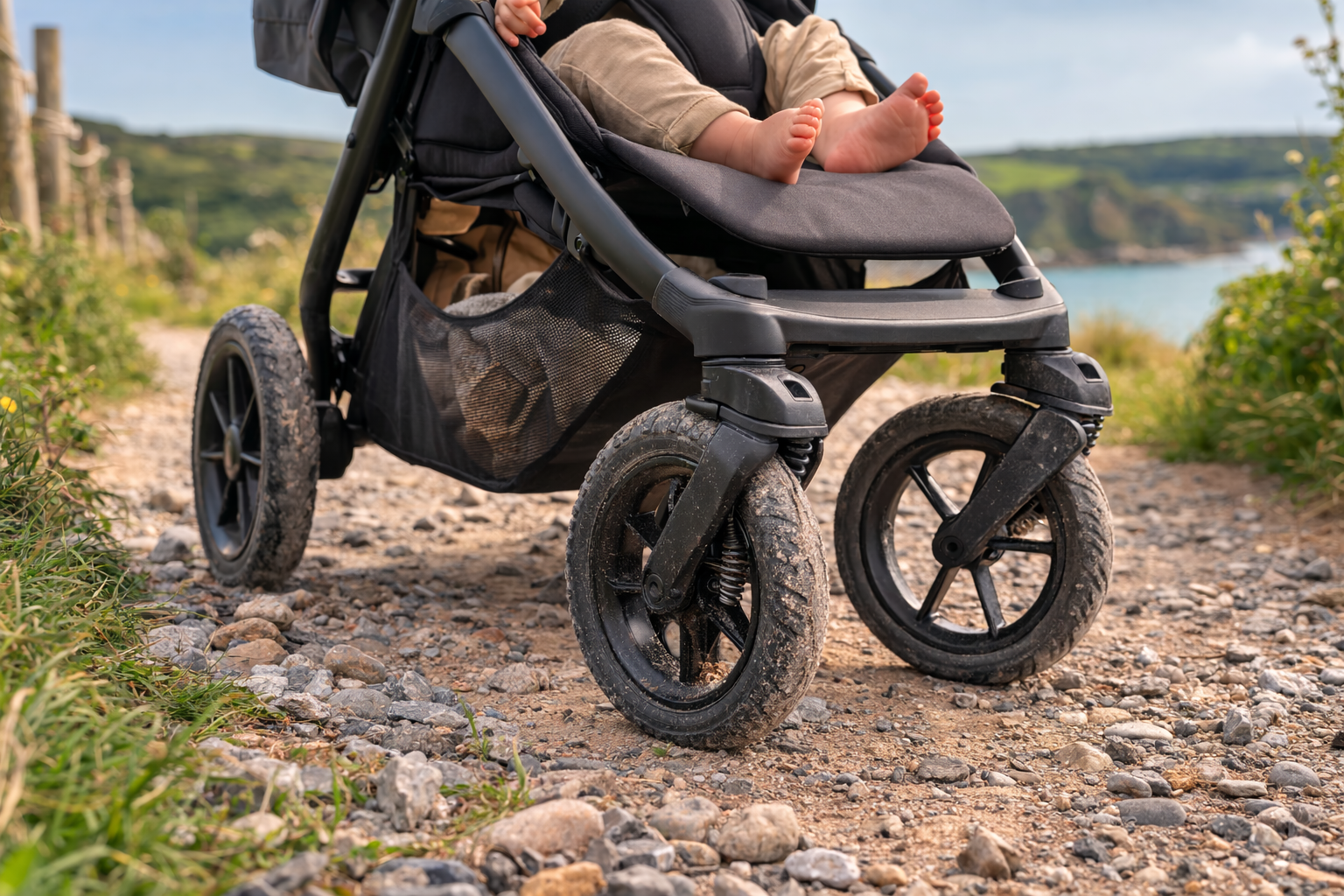
Wheel diameter is the most important variable. Larger wheels roll over obstacles (bumps, gaps, edge stones) rather than stopping against them. Small wheels hit each individual cobble stone and transmit the impact directly up the frame. The threshold where you start to notice a real difference is around 17–18cm for the rear wheels. Below that — in the 13–15cm range common to ultra-compact strollers — every rough surface is an obstacle.
The trade-off is weight: larger wheels mean a heavier frame, which matters when you're carrying the stroller through airports or up stairs. The sweet spot for a travel stroller is rear wheels of around 17–18cm — manageable to carry, meaningfully better on rough ground.
Wheel Material: Foam vs Hard Plastic
This is the second factor most buyers overlook. Even a stroller with reasonably sized wheels can be terrible on cobbles if those wheels are hard plastic or solid EVA (the foam-like material that feels rigid when tapped). Hard wheels transmit vibration directly to the frame and seat. Foam-filled rubber wheels absorb and dampen vibration, meaning the same surface feels noticeably smoother.
The practical test: press your finger hard against the wheel. If it doesn't compress at all, it's EVA or hard plastic. If there's slight give, it's foam-filled rubber. The latter is substantially better on rough ground — it's not a marginal difference.
Suspension: What It Means and What It Doesn't
Suspension in a travel stroller is not the same thing as suspension in a full-size all-terrain pushchair. You're not getting independent wheel suspension with proper travel. What you typically get is elastomer suspension (a rubber block that absorbs some rear-wheel vibration) or a simple spring on the rear axle. Both help noticeably on cobblestones compared to no suspension at all — the difference between "rough but manageable" and "actually uncomfortable for baby." What they don't do is eliminate bumps: any cobblestone surface will be felt at some level in any travel stroller.
If a stroller claims suspension and the spec sheet only shows it on the front wheels, that's largely irrelevant for cobbles — it's the rear wheels that do most of the work on rough ground.
Wheelbase Width and Weight Distribution
A wider wheelbase is more stable on uneven surfaces and slopes — the stroller is less likely to tip sideways on a cambered path or catch a wheel on a raised paving edge. The trade-off is navigating through narrow European doorways, café terraces, and cobbled alleys where a wide stroller becomes a negotiation. Most travel strollers have narrower wheelbases by design; the better ones find a sensible middle ground.
Weight distribution matters on hills and ramps. Rear-heavy strollers (particularly when the basket is loaded) tend to tip backward on steep inclines, which is both annoying and potentially dangerous. Check that the stroller sits level on flat ground before relying on the basket as main storage.
What to Look For: Quick Reference
| Factor | What to look for | What to avoid |
|---|---|---|
| Wheel size (rear) | 17cm or larger | Under 15cm — stops against every cobble |
| Wheel material | Foam-filled rubber (slight compression when pressed) | Hard EVA or solid plastic — transmits every vibration |
| Suspension | Rear elastomer or spring suspension | No suspension on a stroller with small wheels |
| Wheelbase width | Balanced — not so narrow it tips, not so wide it won't fit through doors | Extremely narrow base on a rear-heavy frame |
| Weight distribution | Sits level when basket is loaded | Noticeably rear-heavy with basket full — difficult on slopes |
The Strollers: Honest Assessments
1. Bugaboo Butterfly — Best Travel Stroller for Cobblestones
The Butterfly is Bugaboo's compact travel stroller, and it's as close as the travel stroller category gets to actually handling rough ground well. The rear wheels are foam-filled rubber at around 17.5cm, and the elastomer suspension on the rear axle absorbs a meaningful amount of the vibration that would otherwise reach the seat. On moderate European cobblestones — the kind you encounter in Italian hill towns, French old quarters, or Devon harbour villages — the Butterfly is genuinely comfortable. On the worst cobblestones, you'll still feel it, but noticeably less than any other stroller in this category.
The fold is fast and intuitive (one hand, under 5 seconds once you've practised it), and the stroller stands independently folded, which matters when you're at a restaurant trying to collapse it quickly. The seat has a good recline and more padding than most compact competitors. It's the stroller that comes closest to a full-size pushchair experience in a compact body.
The honest drawback: the price. Around £650–£700 puts it at the premium end of the travel stroller market, and it's heavier than the lightest travel strollers (6.4kg). If cobblestone performance is your priority and budget isn't the constraint, this is the stroller to buy. Our compact stroller guide has more on how it compares day-to-day.
Best for: Families travelling frequently to European cities or UK locations with rough terrain who want the best cobblestone performance in a compact stroller.

Bugaboo Butterfly (Best Overall on Rough Terrain)
Foam-filled rubber rear wheels, elastomer suspension, one-handed fold under 5 seconds, self-standing when folded. The best-performing travel stroller on cobblestones and gravel paths we've tested. Around £649–£699.
Pros: Best-in-class rough terrain performance, fast fold, self-standing, excellent seat padding and recline.
Cons: Premium price; 6.4kg is heavier than the lightest alternatives.
2. UPPAbaby MINU V2 — Best Lightweight Option for Terrain
The MINU V2 is one of the few travel strollers where the wheels genuinely stand out. At around 18cm, the foam-filled rear wheels are larger than almost any other stroller in the compact class, and the difference is noticeable on gravel paths and mild cobblestones. There's no traditional suspension system, but the wheels are doing the work that suspension would otherwise do — they compress slightly over bumps and absorb vibration in a way that small solid wheels simply can't replicate.
The MINU V2 weighs around 6.4kg — not the lightest, but the weight is distributed well, making it feel manageable despite the figure. The one-handed fold is quick, and the stroller has a self-standing mechanism that makes it easy to handle in airports and on transfers. The seat is generous by compact stroller standards, with good recline options. It handles London's mix of pavements and parks and the gravel paths of National Trust properties noticeably better than the small-wheeled alternatives.
The main limitation on seriously rough cobbles is the absence of rear suspension — the large wheels do a lot, but you'll still feel heavy cobblestoning more than you would in the Bugaboo Butterfly. On mild cobblestones and gravel, though, it's excellent. See our sturdy lightweight strollers guide for how it fits into the broader category.
Best for: Families who want a premium, versatile stroller that handles rough terrain noticeably better than typical travel strollers, without the Butterfly's price premium.

UPPAbaby MINU V2 (Best Lightweight for Terrain)
Large-for-class 18cm foam-filled wheels give the MINU V2 a noticeably smoother ride on gravel and mild cobblestones than most compact rivals. Premium build quality, one-handed fold, self-standing. Around £499–£549.
Pros: Large wheels for class, smooth ride on mild rough terrain, premium build, generous seat size.
Cons: No traditional suspension; more noticeable on heavy cobblestones than the Butterfly. Higher price point.
3. Joolz Aer+ — Best for Portability With Terrain Capability
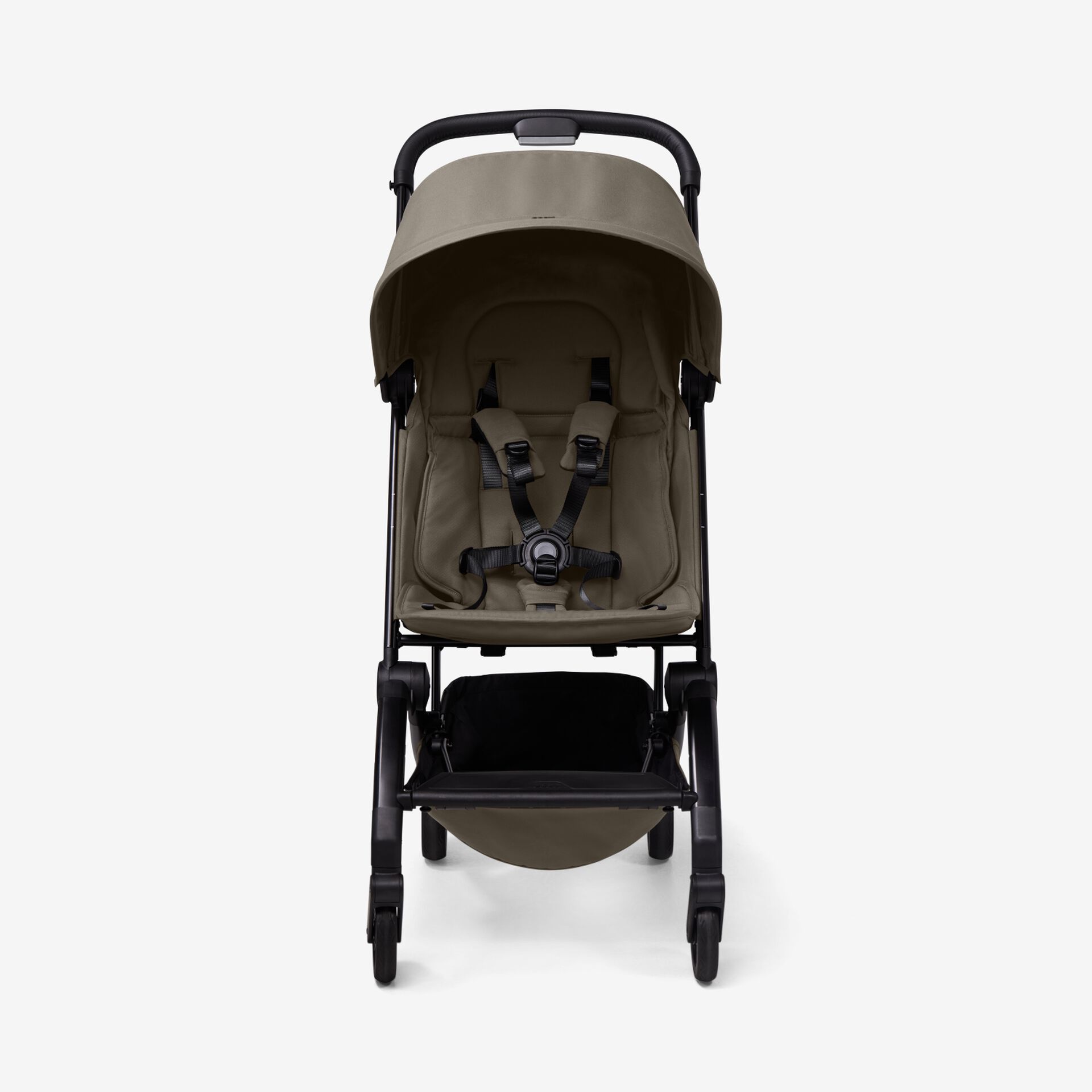
The Joolz Aer+ is marketed specifically as an "all-surface" travel stroller, and while that's a stretch — no 6.5kg compact stroller is truly all-surface — it earns a higher rough-terrain rating than most of its direct competitors. The rear wheels are around 18cm and foam-filled, and there's a degree of rear suspension that takes the edge off moderate cobblestones. The design is Dutch-minimalist, the fold is simple and reliable, and it feels noticeably well-made at a price point that undercuts the Bugaboo.
The honest rough-terrain assessment: better than the Silver Cross Clic and Cybex Libelle, roughly comparable to the UPPAbaby MINU V2, not quite as smooth as the Bugaboo Butterfly. For most real-world use — European holidays, UK city breaks, National Trust gravel paths — it handles well enough that it won't ruin your day. For the most challenging cobblestones (think old-town Italy or Greece), you'll still feel it but it's manageable.
A practical note: Joolz is a Dutch brand with good UK availability, but slightly fewer stockists than the main UK and US brands. Worth checking availability and return policies before buying. For more on how it compares to the Butterfly and YOYO², our main travel stroller review has a detailed head-to-head.
Best for: Style-conscious parents who want all-surface capability above the entry-level pack, without reaching Bugaboo pricing.
Joolz Aer+ (Best Mid-Range for Terrain)
Dutch-designed with slightly larger wheels than most compact rivals and a degree of rear suspension. Marketed as all-surface — a reasonable claim for moderate rough ground. Minimalist design, reliable fold. Around £499–£549.
Pros: Larger wheels, some suspension, premium materials, strong fold quality, handles moderate cobbles well.
Cons: Not quite the Butterfly's rough-terrain level; fewer UK stockists than main brands.
4. Joie Pact Pro — Best Budget Option for Rough Terrain
The Joie Pact Pro is the budget-conscious entry on this list, and it punches above its weight on rough terrain specifically because it has rear spring suspension — a feature that typically appears only on more expensive strollers. The rear wheels are around 16cm with some foam filling, and the spring suspension absorbs a meaningful amount of the cobblestone impact. It's not as smooth as the Butterfly or MINU V2, but on moderate rough ground it's noticeably better than the entry-level compact strollers without suspension.
At around £179–£219, the Pact Pro is one of the most affordable strollers on this list. The fold is compact (though not quite as small as the Libelle), and the seat reclines to a usable sleep position. Build quality is solid for the price rather than premium. If your budget is tight and rough terrain is a genuine concern, this is the stroller to consider — it's the only one in this price bracket where the rough-terrain performance is a real differentiator. Our budget stroller guide covers more options at this price point.
Best for: Budget-conscious families who will regularly face rough ground and don't want to spend £500+ on a travel stroller.

Joie Pact Pro (Best Budget for Rough Terrain)
Rear spring suspension at a budget price makes the Pact Pro noticeably better on cobblestones than comparable compact strollers. Compact fold, solid build quality for the price. Around £179–£219.
Pros: Rear suspension unusual at this price, good value, compact fold, decent seat recline.
Cons: Build quality is functional rather than premium; smaller wheels than the top picks; suspension less refined than Bugaboo's elastomer system.
5. Silver Cross Clic — Honest Assessment
The Silver Cross Clic is legitimately impressive as a lightweight, compact stroller — at 5.9kg it's one of the lightest available, it folds quickly, and it represents good value at around £275–£325. On smooth surfaces it's a pleasure to push. The honest rough-terrain verdict, however, is that it's not the right choice if cobblestones and gravel are a significant part of your travel picture. The wheels are small (around 15cm) and made of solid EVA rather than foam-filled rubber, which means every surface irregularity is transmitted directly to the seat with no absorption.
On a smooth European promenade, a pavement, or a tarmac path, the Clic is excellent. On cobblestones it judders noticeably, and on serious gravel paths it becomes effortful to push as the small wheels struggle through the loose surface. If your travel is primarily urban and paved — flying to a resort, city breaks, indoor attractions — the Clic is a strong choice and its weight advantage over the larger-wheeled strollers is meaningful. If you regularly face rough ground, look elsewhere. The lightest strollers guide has more context on where the Clic fits.
Best for: Families prioritising low weight and compact fold for primarily smooth-surface travel. Not recommended if cobblestones and rough terrain are regular features of your trips.

Silver Cross Clic (Best for Smooth Surfaces — Honest Terrain Caveat)
Britain's lightest stroller at 5.9kg, with a quick fold and good value. Excellent on smooth surfaces, but small solid-EVA wheels transfer cobblestone vibration directly to the seat. Worth knowing before buying if rough terrain is part of your plans. Around £275–£325.
Pros: Extremely lightweight, quick fold, compact, good value, excellent on smooth surfaces.
Cons: Small solid-EVA wheels are poor on cobblestones; no suspension; noticeably bumpy on rough ground.
6. Cybex Libelle — The Honest Truth About Ultra-Compact Strollers and Cobbles
The Cybex Libelle's selling point is its fold size — at around 29×47×23cm it's one of the most compact strollers available, genuinely small enough to go under an aeroplane seat in many configurations. For pure portability, it's exceptional. For rough terrain, it is not the right tool. The wheels are very small (around 14cm) and hard EVA, with no suspension of any kind. On cobblestones the Libelle becomes an exercise in managing vibration — the handles transmit a constant staccato judder, and depending on how light your baby is sleeping, it can be genuinely disruptive.
This isn't a criticism unique to the Cybex — it's the honest trade-off of ultra-compact fold size. Small wheels are the physics price you pay for a tiny folded footprint. The Libelle is the right choice if you're frequently putting the stroller in overhead bins or under seats, and your travel is primarily airport-to-resort with smooth paved surfaces throughout. If your travel involves medieval town centres, coastal paths, or gravel car parks, buy something else. Our cabin-friendly stroller guide has more on where the Libelle wins.
Best for: Cabin baggage travel on smooth-surface routes where fold size is the primary constraint. Not for rough terrain.

Cybex Libelle (Best for Pure Portability — Not for Rough Terrain)
The smallest fold in this comparison, genuinely cabin-baggage sized. Exceptional portability for smooth-surface travel. The trade-off: very small hard wheels and no suspension mean it performs poorly on cobblestones and rough paths. Around £299–£349.
Pros: Smallest fold in class, genuinely fits under aircraft seats, lightweight, good for smooth-surface city and resort travel.
Cons: Small hard wheels transmit every cobblestone directly; no suspension; not suitable for gravel or rough terrain.
Which Should You Buy?
Our Tip: Match the stroller to your most common scenario
- Cobblestones are a regular feature of your trips → Bugaboo Butterfly (best performance) or UPPAbaby MINU V2 (lighter, slightly less smooth)
- Mix of smooth and rough terrain, mid-range budget → Joolz Aer+ or UPPAbaby MINU V2
- Budget is tight but rough ground matters → Joie Pact Pro (only budget option with rear suspension)
- Primarily smooth surfaces, weight is the priority → Silver Cross Clic
- Cabin baggage travel to smooth beach resorts only → Cybex Libelle
If you're planning trips to destinations where terrain genuinely matters — Cornwall's coastal paths, the Lake District's uneven tracks, London's mix of old and new pavements, or any European city break with historic streets — the wheel size and suspension specifications in this guide are not trivial details. They're the difference between a holiday where the stroller is an asset and one where it's a source of constant frustration.
If you're making the choice between multiple strollers and rough terrain is a factor, spend 10 minutes on a rough pavement or gravel path with each one before committing. The difference between a foam-wheeled stroller with rear suspension and a hard-wheeled one with no suspension is immediately obvious when you actually push them.
All-Terrain Alternatives: When Wheels Beat Portability
Everything above is a travel stroller — a compromise between rough-ground ability and a fold that survives a Ryanair overhead. If terrain genuinely matters more than portability (you're not flying, or you'll happily gate-check something bigger), a full-size all-terrain pushchair with large air-filled or foam wheels will always out-cushion a compact folder. Here are four to consider, from proper three-wheel joggers to a city hybrid that keeps one foot in each camp.

Kinderkraft Grande 2 (Best All-Terrain Value)
A three-wheel pushchair with large air-filled tyres and a lockable swivel front wheel — the classic setup for soaking up cobbles and gravel. At around £150 it's remarkable value for genuine all-terrain ability, and the pneumatic wheels roll over surfaces that would judder a compact folder to a halt. The honest trade-off is bulk: it's heavy and folds large, so it's a car-boot buggy for UK trips rather than a fly-and-fold travel stroller.
Pros: Large air-filled wheels, excellent on rough ground, strong value, lockable front swivel.
Cons: Bulky folded size and heavy; not practical as cabin or gate-check travel luggage.

Ickle Bubba Venus Jogger Pro (Best for Mixed Off-Road)
Built as a jogger, the Venus Jogger Pro pairs large rear wheels with a smaller swivelling front wheel that locks straight for rougher ground — ideal if your walks mix pavements, gravel car parks and packed countryside tracks. Suspension and the big wheel diameter make light work of the uneven surfaces that unsettle compact travel strollers, for around £200. It's a substantial frame, though, so treat it as a UK all-rounder rather than something you'll take on a plane.
Pros: Large wheels with suspension, lockable front wheel, confident on gravel and tracks, good value.
Cons: Large and heavy; overkill for smooth city travel and awkward to transport by air.

Hauck Runner (Best Budget Jogger)
The Hauck Runner is a proper three-wheel jogger with large air-filled tyres front and rear, and at around £130 it's one of the cheapest ways to get genuine rough-terrain performance. On forest paths, beach approaches and cobbled lanes it simply rolls where small hard wheels stop dead. The compromises are the ones you'd expect at this price and size: it's heavy, the fold is bulky, and the fixed-forward front wheel makes tight indoor manoeuvring less nimble than a swivel-wheel buggy.
Pros: Large pneumatic tyres, strong on rough ground, very affordable, high weight limit.
Cons: Heavy and bulky; fixed front wheel is less agile indoors and in shops.
Bugaboo Bee 6 (Best City Hybrid)
If you want a step up in wheel size and suspension without committing to a full jogger, the Bee 6 sits neatly in the middle. Its larger wheels and proper suspension take the sting out of cobbles and paving far better than any compact travel folder, yet it stays narrow and manoeuvrable enough for cafés, buses and city pavements. At around £575 it isn't cheap, and it won't fold cabin-small, but for parents who spend most of their time on imperfect urban surfaces rather than airports, it's the most liveable all-rounder here.
Pros: Bigger wheels and real suspension, smooth on cobbles, still city-compact and nippy to steer.
Cons: Premium price; heavier than travel folders and not cabin-sized for flights.
✈️ Free Baby Hand Luggage Checklist
Never forget the essentials. Enter your email and we'll send the free checklist straight to your inbox — one page, every category, ready before every flight.
Frequently Asked Questions
What is the best stroller for cobblestones?
The Bugaboo Butterfly is the best-performing travel stroller on cobblestones, with foam-filled rear wheels and elastomer suspension that genuinely absorb vibration rather than transmitting it. For a lower price point with similar principle (larger wheels, some suspension), the UPPAbaby MINU V2 and Joolz Aer+ are strong alternatives. If budget is the constraint, the Joie Pact Pro's rear spring suspension is the best option under £220.
Are travel strollers actually suitable for cobblestones?
The honest answer is: some are, most aren't. Ultra-compact travel strollers with small hard wheels are genuinely uncomfortable on cobblestones — they're designed for airports and smooth resort paths, not medieval town centres. However, the strollers in the higher-performance tier of this guide — specifically the Bugaboo Butterfly, UPPAbaby MINU V2, and Joolz Aer+ — handle moderate cobblestones well enough to use without complaint. For the most extreme cobblestone streets, a full-size all-terrain pushchair will always perform better, but that's not a practical travel option.
What wheel size should I look for in a stroller for rough terrain?
Aim for rear wheels of 17cm or larger for noticeable terrain capability in a travel stroller. Below 15cm, small wheels will stop against individual cobblestones and transmit every bump to the seat. Wheel material matters as much as size: foam-filled rubber wheels absorb vibration, while hard EVA or plastic wheels transmit it regardless of diameter.
Can I take a terrain-capable travel stroller on a plane?
Yes — all six strollers in this guide can be taken on flights. The Bugaboo Butterfly, Joolz Aer+, UPPAbaby MINU V2, and Joie Pact Pro are most commonly gate-checked (handed over at the aircraft door and collected there or at baggage reclaim). The Cybex Libelle and Silver Cross Clic are occasionally small enough to fit in overhead bins depending on the aircraft. Our cabin-friendly strollers guide covers which strollers genuinely fit and which airlines accept them.
Is the Bugaboo Butterfly good on gravel?
Better than most travel strollers, yes. The foam-filled rubber wheels and elastomer suspension handle light-to-moderate gravel (packed gravel paths, car parks, National Trust-style surfaces) comfortably. On loose deep gravel — the kind on some beach access paths or unmaintained car parks — you'll feel it more, and any stroller will require more pushing effort. For serious off-road terrain like muddy footpaths or steep countryside tracks, you need a full-size all-terrain pushchair, not a travel stroller.
Is the Silver Cross Clic bad on cobblestones?
It's honest to say the Clic struggles on cobblestones. The small solid-EVA wheels transfer vibration directly to the frame and seat, which is uncomfortable for baby and tiring for whoever's pushing. On smooth pavements, airports, and resort paths, the Clic is excellent — lightweight, compact, and easy to handle. On cobblestones, it's one of the less comfortable options in this category. If cobblestones are a regular part of your travel, choose one of the larger-wheeled strollers on this list.
What is the best budget stroller for rough terrain?
The Joie Pact Pro is the most impressive budget option for rough-terrain performance. It's the only stroller under £220 in this comparison to include rear spring suspension, which makes a genuine difference on cobblestones and gravel compared to budget strollers with no suspension at all. It won't match the feel of the premium options, but for families who need rough-terrain capability without premium pricing, it's a solid choice. Our budget stroller guide covers more options at this price level.
What's the difference between elastomer and spring suspension in a stroller?
Elastomer suspension uses a rubber block to absorb vibration — it's the system used by Bugaboo. It's effective, quiet, and doesn't degrade quickly. Spring suspension uses a coiled spring, typically on the rear axle — it's cheaper to manufacture (hence its presence in the budget Joie Pact Pro) and provides similar benefit. Both are significantly better than no suspension. The elastomer systems in premium strollers tend to be more finely tuned and more durable over time.
The Bottom Line
If cobblestones and rough paths are a regular feature of your travel, the wheel size and suspension type of your stroller matter more than almost any other specification. The Bugaboo Butterfly gives you the best rough-terrain performance in the compact stroller category — the foam wheels and rear suspension combination is genuinely effective on moderate cobblestones. The UPPAbaby MINU V2 and Joolz Aer+ are close behind, and the Joie Pact Pro is the only budget option that takes terrain performance seriously.
For everything else about travelling with a stroller — what to pack, how to navigate airports, which strollers fit in overhead bins — our main travel stroller review and cabin-friendly stroller guide have the full detail.