
How to Clean Travel Stroller Wheels: A Complete Guide
By BabyTravel UK Editorial Team
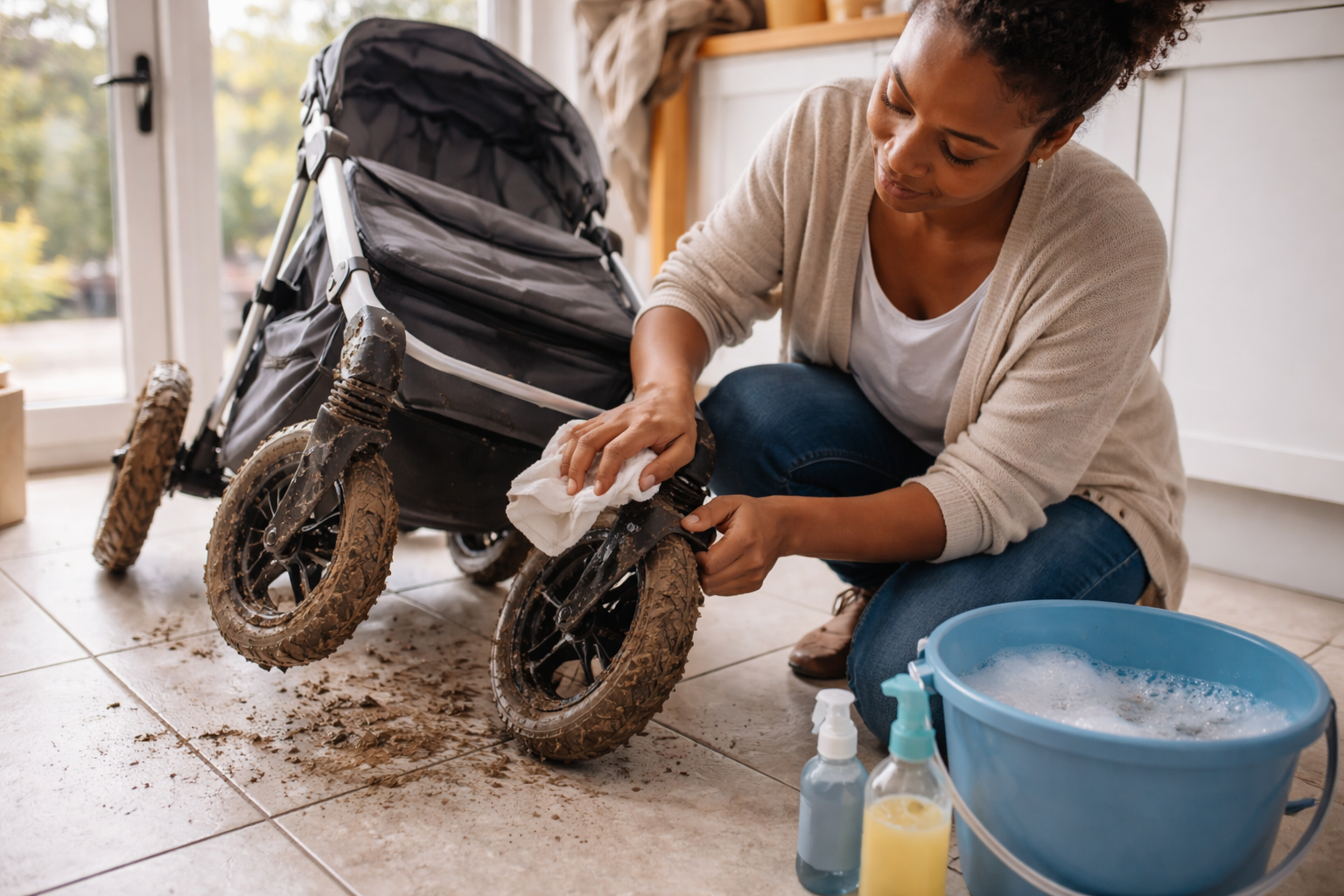
If your travel stroller has ever been near a UK beach, a festival campsite, or an airport baggage belt, you'll know exactly how filthy those wheels can get. Sand embeds itself in the treads, mud dries rock-hard in the grooves, and stray hairs wrap themselves around axles until the whole thing starts grinding. This guide covers everything you need to know about how to clean travel stroller wheels — from a five-minute post-outing wipe to a full deep clean that gets the axles running like new.
Quick Answer: How to Clean Stroller Wheels
- A quick clean takes under 10 minutes: remove loose debris, scrub with warm soapy water, rinse, dry
- For a deep clean, detach the wheels if possible and soak briefly to loosen caked-on mud
- Use mild washing-up liquid only — avoid bleach or harsh chemicals near your baby's pram
- Lubricate axles with silicone spray or WD-40 after each deep clean
- Quick wipe-down after every muddy outing; full clean every 2–3 weeks; deep clean every 4–6 weeks
- Always clean after a flight — airport conveyor belts leave greasy residue on wheels
Why Travel Stroller Wheels Take Such a Beating
A travel stroller is built for life on the move — cobbled European streets, sandy beaches, muddy festival fields, airport terminals. Unlike a day-to-day buggy that mostly covers school runs and smooth pavements, a travel pushchair sees a wildly varied range of surfaces. That's a lot of opportunities for grime to accumulate.
Dirty wheels aren't just unsightly. Build-up in the treads can reduce grip on wet surfaces. Hair and thread wrapped around axles creates drag and, over time, can damage the wheel bearings. Sand is particularly corrosive inside mechanisms — it acts like fine sandpaper with every rotation. Regular cleaning isn't just about appearances; it genuinely extends the life of your pushchair and keeps it performing safely.
The good news is that keeping on top of it doesn't require specialist products or much time. With the right approach, a quick maintenance clean takes less than ten minutes — and a proper deep clean rarely takes more than half an hour.
What You'll Need
You don't need a specialist kit. Most of what you need is already in your kitchen:
| Item | What It's For | Notes |
|---|---|---|
| Warm water | Loosening dirt and mud | Lukewarm is ideal — avoid very hot |
| Mild washing-up liquid | Cutting through grease and grime | One or two drops; never use bleach |
| Old toothbrush | Cleaning treads, grooves, and axles | The single most useful tool in this process |
| Microfibre cloth | Wiping down smooth wheel surfaces | More absorbent than regular cloths |
| Dry towel | Drying wheels before storage | Prevents rust on metal axle components |
| Silicone spray or WD-40 | Lubricating axles after cleaning | Apply sparingly; wipe off excess |
| Scissors or seam ripper | Cutting through hair on axles | Cut before pulling — never pull first |
| Bucket or bowl | Mixing soapy water | Optional — a running tap works too |
Step-by-Step Guide to Cleaning Travel Stroller Wheels
📋 Free Baby Holiday Packing Checklist
Enter your email and we'll send the free printable checklist straight to your inbox — every category, ready to tick off before every trip.
Step 1 — Clear loose debris first
Before you introduce any water, remove loose mud and debris by hand or with a dry brush. Tap the wheels firmly against a hard outdoor surface to dislodge dried mud — it cracks off surprisingly easily when it's fully dried. Run a dry toothbrush around the tread grooves to clear out loose grit. This saves a lot of time and prevents muddy water from spreading everywhere once you start washing.
If there's hair wrapped around the axles — an extremely common problem, especially if anyone in the house has long hair — use a small pair of scissors or a seam ripper to cut through it before trying to pull it free. Pulling without cutting can damage the axle seal and makes the process twice as frustrating. Work all the way around the full circumference, then clear the cut strands with a toothbrush.
Step 2 — Check whether your wheels are removable
Many travel strollers — including popular models like the Bugaboo Butterfly, Babyzen YOYO, Silver Cross Jet, and Baby Jogger City Tour 2 — have click-off or quick-release wheels. Check your manual: if yours detach, remove them before washing. It makes the whole process considerably easier and means you can properly clean the inside of the wheel hub and the full length of the axle.
If your wheels don't detach, don't force them. You can still clean them thoroughly while attached — it just requires a bit more patience around the axle area. A bent toothbrush helps reach in behind the wheel to clean the axle surface.
Step 3 — Scrub the wheels
Mix a small amount of washing-up liquid into a bowl of warm water. Dip your brush or cloth into the soapy water and work methodically around each wheel:
- Start with the tread — scrub in the direction of the grooves, not across them
- Move to the rim and sidewall of each wheel
- Use the toothbrush for tight spots around spokes, where the wheel meets the hub, and around any bolt heads
- If the wheels are detached, also clean the inside face that normally sits against the axle
Don't submerge foam-filled (puncture-proof) tyres for extended periods — they can absorb water internally, which takes a very long time to dry out and can cause the foam to deteriorate. A thorough scrub and rinse is all they need.
Step 4 — Clean the axles and wheel mounts
This is the step most parents skip, but it makes the biggest difference to long-term performance. Use a damp toothbrush to scrub around the full axle area — this is where hair, thread, and fine grit accumulate fastest, and where wear happens most readily. Even sixty seconds of attention here makes a noticeable difference. If the wheels are fixed, wrap a damp cloth around the axle and work it back and forth to lift the grime.
Step 5 — Rinse thoroughly
Rinse all soap residue off the wheels. Washing-up liquid left in the treads actually attracts more dirt — and any residue near the axle can gum up bearings over time. A garden hose on a gentle setting is ideal; otherwise, two or three jugs of clean water work fine. Make sure you're rinsing the axle areas too, not just the visible tread surface.
Step 6 — Dry completely before storing
This step matters more than most parents realise. Towel-dry the wheels as thoroughly as you can, then leave the stroller somewhere well-ventilated to finish air-drying before folding and storing. Metal axle components rust quickly when stored damp — particularly in a car boot over autumn and winter. A stroller that's properly dried after each clean will last years longer than one that's folded away wet.
Step 7 — Lubricate the axles
Once everything is clean and dry, apply a small amount of silicone spray or a drop of WD-40 to each axle. Spin each wheel several times so the lubricant distributes evenly, then wipe off any visible excess with a dry cloth. This step alone makes a significant difference to how smoothly the stroller rolls — particularly on older or well-used pushchairs where the axles have started to drag.
Quick Clean vs. Deep Clean — When to Do Each
| Clean Type | How Often | Time Required | What It Covers |
|---|---|---|---|
| Quick wipe-down | After every muddy or sandy outing | 5 minutes | Wipe visible mud; dry |
| Standard clean | Every 2–3 weeks | 15–20 minutes | Full scrub, rinse, dry |
| Deep clean | Every 4–6 weeks | 30–40 minutes | Remove wheels, clean axles, lubricate |
| Post-travel clean | After every flight or long trip | 20–30 minutes | Full clean + check for damage |
Cleaning Different Types of Stroller Wheels
Not all wheels are the same, and different materials need slightly different approaches.
Plastic wheels
The most common type on lightweight and budget travel strollers. They wipe down easily with a damp cloth and handle the brush-and-soap method without any fuss. One watch-out: plastic can become brittle if left in very cold conditions after a thorough soaking, so always dry them well before storing the stroller in a cold garage or car boot, particularly over winter.
Rubber-tyred wheels
Found on many mid-range and premium strollers. These handle cleaning well — a firm brush can be used without risk of scratching. After cleaning, check the tyre walls for any cracks or bulging, which indicates the tyre needs replacing rather than just cleaning.
Foam-filled (puncture-proof) tyres
Common on many mid-range lightweight pushchairs. Wipe clean with a soapy cloth; don't soak. The foam inside is porous and takes a very long time to dry if saturated, which can cause internal deterioration and an unpleasant smell. A thorough wipe-down is all they need.
Air-filled (pneumatic) tyres
Found on all-terrain buggies. The most robust to clean — they handle a firm scrub and a proper rinse without issue. After each clean, check the tyre pressure and inspect for any embedded grit, small stones, or thorns that could cause slow punctures over the following days.
Dealing With Stubborn Mud and Sand
A UK winter means stroller wheels are going to get properly caked. If the mud has dried rock-hard, don't start scraping immediately — a blunt tool on dried mud can scratch plastic and score rubber. Instead, soak the dried mud briefly in warm water (five minutes in a bucket is enough), then it will loosen and come off far more easily with a brush.
Sand is a different challenge — it gets into every crevice and embeds itself further the longer it sits. After a beach trip, rinse the wheels as soon as possible after leaving the beach. A garden hose is ideal for this initial blast. Follow with a soapy scrub, a second rinse, and thorough drying. Pay particular attention to the axles: salt and sand together are highly corrosive to metal components, and this combination accelerates wear faster than almost anything else.
Pro Tip
Keep a packet of baby wipes and a small dry cloth in your pushchair organiser for quick wheel wipe-downs when you're out and about. Two minutes with a wipe after leaving a muddy park prevents thirty minutes of scrubbing at home.
Protecting Your Stroller Wheels During Air Travel
Airport baggage handling is particularly brutal on stroller wheels. Conveyor belts are coated in grease and oil from luggage, and the hold environment means your pushchair might end up resting on the floor of the cargo area for hours. The wheels that come back from a flight are almost always the dirtiest they'll ever be — and then they go straight onto your clean car seats and hallway floor.
A gate check bag is one of the simplest and most effective solutions. You pop the folded stroller into the bag at the departure gate, the wheels are fully enclosed during handling, and when it comes back up at arrivals your stroller is exactly as clean as you left it. It also protects the frame from scratches and dings in the hold. If you fly regularly with your pushchair, it's genuinely one of the most useful accessories you can buy — far more so than many gimmicky travel add-ons.
For more on flying with a pushchair, including what to expect at the gate and how different airlines handle strollers, see our guide on taking a stroller on a plane.

When to Replace Stroller Wheels
Regular cleaning extends the life of your wheels considerably, but it can only do so much. Watch for these signs that replacement is needed:
- Flat spots or visible warping on the tyre surface — the wheel will never roll smoothly again
- A persistent wobble that doesn't resolve after cleaning and lubricating
- Cracking or splitting in the rubber tyre walls
- Worn-smooth tread where there should be grooves
- A grinding noise that persists even after thorough cleaning and lubrication
- A wheel that no longer locks securely onto the axle
Most stroller manufacturers sell replacement wheels as spare parts — check the brand's website directly or contact their customer service. For popular travel strollers like the Bugaboo Butterfly or Babyzen YOYO, replacement wheels are readily available and cost a fraction of a new pushchair. Sourcing spare parts is almost always the right choice before buying new.
If your stroller is older and spare parts are no longer available, it's worth checking whether it's still meeting safety standards — the Royal Society for the Prevention of Accidents (RoSPA) and Which? both publish guidance on pushchair safety that's worth reviewing.
On the topic of keeping your travel kit in good shape, it's also worth reading our guides on the best pushchair organisers for UK parents and the most practical cup holders for strollers — both make day-to-day life with a pushchair noticeably easier.
✈️ Free Baby Hand Luggage Checklist
Never forget the essentials. Enter your email and we'll send the free checklist straight to your inbox — one page, every category, ready before every flight.
Frequently Asked Questions
How often should I clean my travel stroller wheels?
Give them a quick wipe-down after every muddy or sandy outing, and do a full clean every two to three weeks. A thorough deep clean — including lubricating the axles — every four to six weeks keeps everything running smoothly. Always clean thoroughly after a flight, since airport conveyor belts leave greasy residue that transfers onto car seats and floors.
Can I use a pressure washer on stroller wheels?
It's best to avoid it. High-pressure water forces grit and moisture into wheel bearings, accelerating wear rather than preventing it. It can also crack plastic hubs and damage foam-filled tyres. A garden hose on a gentle setting is fine for rinsing off loose mud; a bucket and brush gives you much better control for the actual cleaning.
What soap is safe to use on stroller wheels?
Mild washing-up liquid diluted in warm water is ideal. It cuts through grease and mud without damaging plastic, rubber, or foam components. Avoid bleach, solvent-based cleaners, and antibacterial sprays containing harsh chemicals — they can degrade rubber over time and may leave residue that's harmful if your baby touches the wheels.
My stroller wheels are still squeaking after cleaning — what should I do?
Squeaking after cleaning almost always means the axles need lubricating. Apply a small drop of silicone spray or WD-40 directly to each axle, spin the wheel to distribute it, then wipe off excess. If squeaking persists, check for grit trapped inside the wheel hub, or check whether the wheel has worked slightly loose on its mount.
How do I remove hair wrapped around stroller wheel axles?
Use small scissors or a seam ripper to cut through the hair before pulling — pulling without cutting first risks damaging the axle seal and makes the process far more frustrating. Work around the full circumference, then clear the cut strands with a dry toothbrush. Worth doing every few weeks before it builds up into a solid mass.
Can I put stroller wheels in the dishwasher?
Not recommended. Dishwasher heat can warp plastic wheel components and degrade rubber tyres. It can also damage bearings inside the wheel hub. Hand washing with warm soapy water takes ten minutes and is far kinder to the materials — and it lets you concentrate the cleaning where it's actually needed.
How do I clean stroller wheels after a beach trip?
Rinse the wheels as soon as possible — sand embeds itself further the longer it sits. A garden hose is ideal for the initial blast. Follow with a soapy scrub using a brush on the tread and axle areas, then rinse thoroughly and dry well. Salt and sand together are particularly corrosive to metal components, so the axle area deserves extra attention after any seaside visit.
Will cleaning my stroller void the warranty?
Routine cleaning with mild soap and water won't void any reputable manufacturer's warranty. Using harsh chemicals, pressure washers, or prolonged soaking could potentially cause damage outside the warranty scope. When in doubt, check the care instructions in your stroller's manual — most brands publish maintenance guidance on their websites too.
Keeping on Top of It
Clean stroller wheels really do make a difference to how much you enjoy using your pushchair — and to how long it lasts. A five-minute wipe-down after a muddy park, a full clean every couple of weeks, and a proper deep clean every month or so: that's genuinely all it takes. If you're heading off on holiday, our guide on things nobody tells you about travelling with a baby has plenty more practical tips for keeping your gear in good shape on the road.