
Baby Holiday Safety Tips: Your Complete Guide for 2026
By BabyTravel UK Editorial Team · Last updated March 2026
Taking your baby on holiday is genuinely exciting — but it comes with a specific set of worries that non-parents simply don't have. From safe sleep in unfamiliar cots to sun protection and what to do if your little one gets ill abroad, there's a lot to think about. This guide covers the practical safety essentials so you can actually enjoy your holiday rather than spending it anxious.
- Get a GHIC card for your baby before any EU/EEA travel — it's free and takes minutes
- Always bring a travel first aid kit stocked for babies, including a thermometer and infant paracetamol
- Follow the same safe sleep rules in travel cots as you would at home — back to sleep, nothing loose in the cot
- Babies under 6 months should have zero direct sun exposure — shade and UV clothing only
- Babyproof accommodation on arrival, before you unpack anything else
Before You Go: Pre-Holiday Safety Checklist
Most holiday emergencies can be avoided with a bit of preparation before you leave. Think of this as a safety-focused layer on top of your normal packing.
Documents and Insurance
Your baby needs their own passport for international travel, and it needs to be valid for at least 6 months beyond your return date for most destinations. Apply early — processing times can stretch to 10 weeks in busy periods. If you're travelling within Europe, apply for a free UK Global Health Insurance Card (GHIC) for your baby at nhs.uk. It covers emergency medical treatment in EU countries and several others.
Travel insurance is non-negotiable. Babies need their own cover — either as part of a family policy or their own. Read the small print on medical cover limits. A baby hospitalised abroad for even a few days can run up bills that dwarf the cost of most policies. You can compare family travel insurance options at Holiday Extras, which allows you to filter for policies that cover babies and young children.
Vaccinations and Health Advice
Check the TravelHealthPro website for your specific destination at least 6–8 weeks before departure. Many European destinations require no extra vaccinations beyond the UK schedule, but tropical or developing-world destinations may need additional jabs — and some aren't suitable for very young babies. Your GP or a travel health clinic can advise based on your baby's age. Don't rely on advice more than a couple of years old — recommendations change.
Pack a Proper Baby First Aid Kit
Don't leave this to chance. Pharmacies abroad can be hard to find, and UK brands like Calpol may not be available. Pack your own. See our full guide to baby travel first aid kit essentials for a complete list — at minimum you need a thermometer, infant paracetamol, infant ibuprofen (3 months+), antiseptic wipes, plasters, rehydration sachets, and any prescription medication your baby takes regularly.
Safe Sleep on Holiday
This is where the most anxiety lives, and it's worth getting right. The rules for safe baby sleep don't change just because you're on holiday — but the environment does.
Which Cot to Use
If your accommodation provides a cot, check it carefully before use. Look for: a firm, well-fitting mattress with no gaps around the edges, a sturdy frame with no loose parts, and mesh or slatted sides for airflow. If anything looks worn, loose, or damaged, ask for a replacement or use your own travel cot. Many parents simply bring their own travel cot for total peace of mind — you know its condition, you know the mattress fits, and you're not relying on what a stranger has left.
Safe Sleep Rules in a New Environment
The Lullaby Trust guidelines apply wherever your baby sleeps. That means: always on their back, in a clear space with no pillows, duvets, bumpers or soft toys, in a room temperature of around 16–20°C. The biggest mistake parents make in holiday accommodation is assuming the bedding provided is safe — hotel cot duvets are not appropriate for babies under 12 months. Bring your own sleeping bag instead.
Controlling the Sleep Environment
Holiday rooms are often brighter and noisier than home. A portable blackout blind and a white noise app or machine can make an enormous difference. Keep the cot away from windows where direct sun or draught might be an issue, and away from balcony doors. If you're in a warm destination, a lightweight sleeping bag rather than blankets gives you more control over your baby's temperature.
If your baby already struggles to sleep somewhere new, try setting up the travel cot at home a week before your trip. A few nights in their own room getting used to it can make a significant difference once you arrive.
Sun Safety for Babies
📋 Free Baby Holiday Packing Checklist
Enter your email and we'll send the free printable checklist straight to your inbox — every category, ready to tick off before every trip.
UV exposure is one of the most underestimated risks for babies on holiday, particularly in Mediterranean or long-haul destinations. Baby skin is thinner and more vulnerable than adult skin — even on overcast days, UV levels can be high enough to cause damage.
Under 6 Months: Zero Direct Sun
Current NHS guidance is clear: babies under 6 months should not be exposed to direct sunlight. That doesn't mean you can't go outside — it means shade, a sunshade on the pushchair, and UV-protective clothing are non-negotiable. A lightweight pram parasol or clip-on sunshade is worth every penny in a hot destination.
Over 6 Months: SPF 50+ and Shade
For older babies, use SPF 50+ baby-specific sunscreen on all exposed skin, reapplying every two hours and after water. Dress them in UV-protective clothing where possible — many brands now sell UPF 50+ swimwear and tops. Keep them in shade between 11am and 3pm when UV is at its peak. Keep a wide-brimmed hat on them whenever they're outside — yes, even when it's cloudy.
Health and Hygiene Abroad
Stomach upsets are the most common holiday illness for babies, usually caused by changes in food, water, or hygiene standards. A few simple habits reduce the risk significantly.
Water Safety
In many non-European destinations, tap water is not safe for babies. Use bottled still water for any formula preparation and to rinse bottles or dummies. In countries where the tap water is technically drinkable, it may still upset your baby's digestive system simply because of differences in mineral content — bottled water is still the safer choice. When swimming, try to prevent your baby swallowing pool or sea water.
Food Safety
If your baby is weaning, be cautious with buffet food that's been sitting out for extended periods. Stick to freshly prepared hot food where possible. Avoid raw or undercooked eggs, unpasteurised cheese, and street food from vendors with no visible hygiene standards. Wash your own and your baby's hands frequently — pack a good antibacterial hand gel for situations where soap and water aren't available.
Temperature and Dehydration
Babies are much more susceptible to dehydration than adults, and it can escalate quickly in hot weather. Breastfed babies may feed more frequently in heat; formula-fed babies may need extra cooled boiled water between feeds (check with your health visitor for age-appropriate guidance). Look for signs of dehydration: fewer wet nappies than usual, dark urine, sunken fontanelle, dry mouth, and unusual lethargy. If you're concerned, seek medical help promptly.
Babyproofing Your Holiday Accommodation
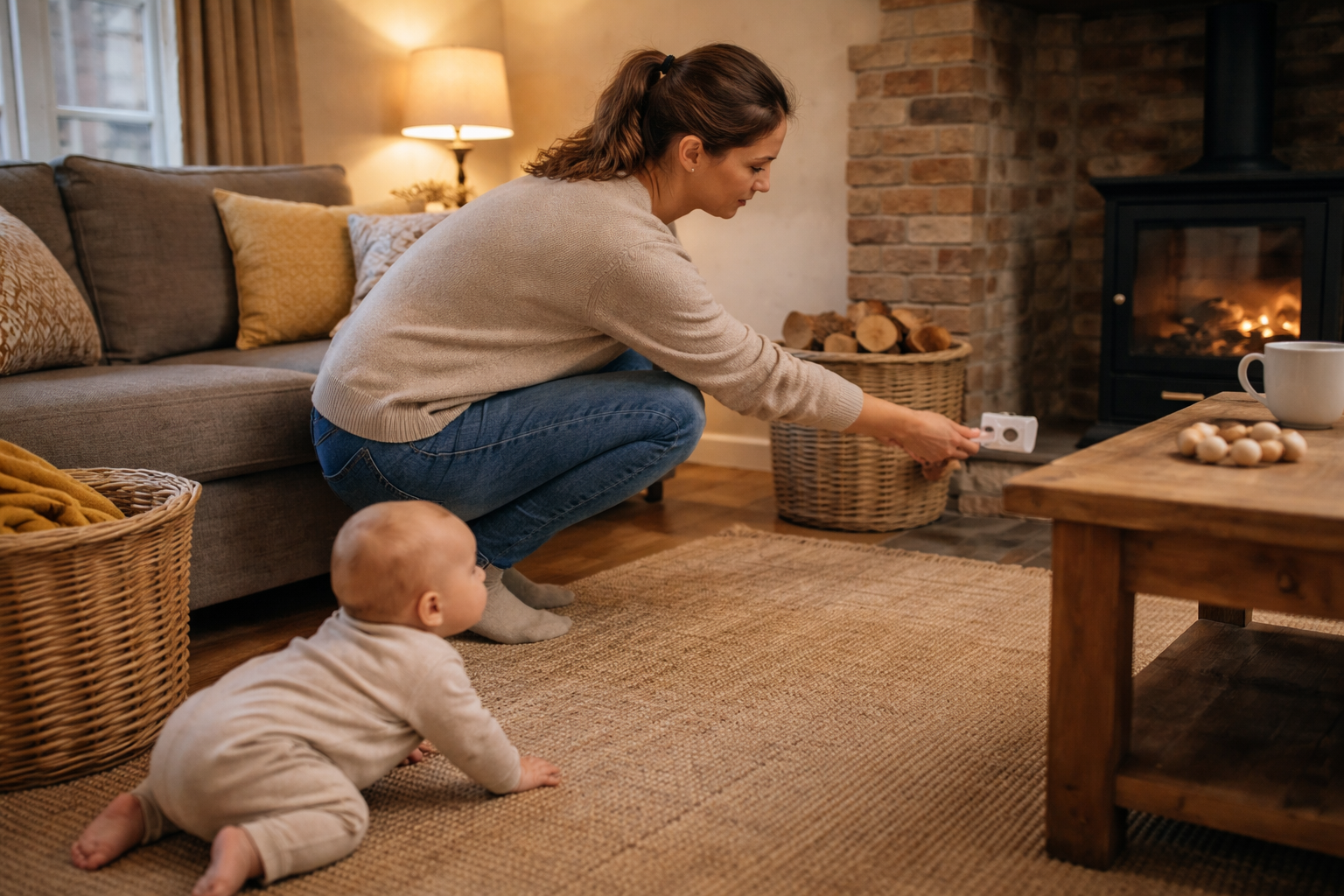
Holiday homes and hotel rooms are not designed with babies in mind. A five-minute safety audit on arrival can prevent a lot of stress. Our full guide to babyproofing a holiday cottage goes into much more detail, but here's the essential walkthrough.
| Hazard to Check | What to Look For | Quick Fix |
|---|---|---|
| Plug sockets | Uncovered sockets at floor or low level | Bring socket covers from home |
| Balcony/terrace | Wide balustrade gaps, unlocked gate, low railings | Keep door locked; request room change if unsafe |
| Pool access | Self-closing gate not functioning, low fence | Alert accommodation; never leave baby unattended near water |
| Cleaning products | Accessible under-sink cupboards, cleaning trolleys | Move products up high; ask for cupboard locks |
| Sharp corners | Low coffee tables, fireplace surrounds, metal furniture | Corner guards (pack a few), or rearrange furniture |
| Cot condition | Worn mattress, loose parts, inappropriate bedding | Request replacement or use your own travel cot |
| Loose cables | Floor-level cables from lamps or TVs | Cable-tidy or tuck behind furniture |


Keeping Baby Safe in Transit
Getting to your destination safely is the first challenge. Whether you're flying, driving, or taking the train, there are some basics to keep in mind.
Flying
On planes, babies travel on your lap (under 2) or in their own seat with an approved car seat. If your baby is on your lap, the seatbelt loop provided by the airline must be used during takeoff, landing, and whenever the seatbelt sign is on. During turbulence, hold your baby securely. Bring more nappies, formula, and spare clothes than you think you'll need — delays happen. For a more detailed guide to the airport and flight day itself, read our advice on travelling abroad with a baby.
Car Travel
Never compromise on the car seat. If you're renting a car, book the car seat in advance — don't rely on availability on the day — or bring your own. Check that it's correctly installed before you set off. Take regular breaks on long drives to check on your baby, allow for feeding and nappy changes, and never leave your baby in a parked car, even briefly, in warm weather.
What to Do If Things Go Wrong
Even with the best preparation, babies get ill on holiday. Knowing what to do in advance is far less stressful than figuring it out in a panic.
- High temperature: A temperature above 38°C in a baby under 3 months, or above 39°C in older babies, requires urgent medical attention. Use the GHIC or travel insurance to access local healthcare promptly.
- Diarrhoea and vomiting: Focus on hydration with rehydration sachets. If your baby can't keep fluids down, or shows signs of severe dehydration, seek medical help.
- Allergic reaction: If you're in a country where you don't know the language, carry a translated allergy card for your baby if relevant.
- Lost medication: Keep a photo of prescription labels on your phone. Most countries' pharmacies can assist with emergency supplies given a prescription copy.
- Medical emergency: In EU countries, 112 is the emergency number. Save the local equivalent for wherever you're travelling.
Before you travel, locate the nearest hospital or medical centre to your accommodation and save it in your phone. You'll almost certainly never need it, but having it costs nothing.
✈️ Free Baby Hand Luggage Checklist
Never forget the essentials. Enter your email and we'll send the free checklist straight to your inbox — one page, every category, ready before every flight.
Frequently Asked Questions
What should I include in a baby travel first aid kit?
A baby travel first aid kit should include infant paracetamol, infant ibuprofen (for babies over 3 months), a digital thermometer, plasters, antiseptic wipes, a saline nasal spray, antihistamine syrup, rehydration sachets, and any prescribed medications. Keep it in your hand luggage for easy access. Our detailed guide to baby travel first aid kit essentials has a printable checklist.
Can babies go in the sun on holiday?
Babies under 6 months should have zero direct sun exposure — shade, a pram sunshade, and UV-protective clothing only. For older babies, use SPF 50+ baby sunscreen, keep them in shade between 11am and 3pm, and dress them in UV-protective clothing with a wide-brimmed hat. Even on overcast days, UV levels can be high enough to cause harm.
Is it safe to travel with a newborn?
Most airlines accept babies from 2 weeks old, and for UK breaks there's no medical restriction. For international travel, check with your GP first, particularly regarding vaccinations and any destination-specific health risks. The main concerns are infection exposure and the physical demands of long journeys — both very manageable with sensible precautions.
Do I need travel insurance for my baby?
Yes, always. Babies need their own cover — either included on a family policy or separately. For EU travel, also get a free GHIC for your baby at nhs.uk — it covers emergency healthcare in most European countries. A GHIC doesn't replace travel insurance but can significantly reduce costs if you need medical treatment.
What vaccinations does my baby need before travelling abroad?
Check the TravelHealthPro website for your specific destination at least 6–8 weeks before you travel. European destinations usually require nothing beyond the UK schedule, but tropical or developing-world destinations may need additional jabs. Your GP or a travel health clinic can advise based on your baby's age and your exact itinerary.
How do I babyproof a holiday accommodation?
Do a quick walkthrough on arrival before unpacking: check plug sockets, balcony barriers, pool access, under-sink cupboards, sharp corners, and cot condition. Pack a small bag of portable safety items — socket covers, corner guards, a door jam — and you can address most hazards within 10 minutes. Our full guide to babyproofing a holiday cottage has a printable checklist.
What is the safest way for a baby to sleep in a hotel or holiday cottage?
Use a proper travel cot rather than the provided hotel cot where possible — you know its condition and the mattress fits. Follow the same safe sleep rules as at home: back to sleep, clear sleep space, no pillows or loose bedding, room temperature 16–20°C. Bring your own sleeping bag rather than relying on hotel bedding.
How do I keep my baby safe around pools on holiday?
Never leave your baby unattended near water, even for a moment. Use a CE-marked baby swim vest rather than armbands. Check that pool fencing is secure with self-closing gates. Keep babies out of pools until at least 6 weeks old and only use properly chlorinated pools. Rinse your baby after swimming to remove chlorine from their skin.
Holidays with a baby are genuinely wonderful — the early years are a brilliant time to travel before routines become more rigid. A bit of preparation means you can spend the trip enjoying it rather than worrying. Safe travels.