
Best Travel Steriliser for Baby Bottles UK 2026
By BabyTravel UK Editorial Team · Last updated August 2026
Packing for a trip with a baby involves a long list of "but what do I do about…" moments — and sterilising is near the top of that list for bottle-feeding parents. The good news is you do not need to haul your entire home steriliser in the boot. Cold-water tablets, microwave bags and compact portable units all work well, but the best option depends almost entirely on the facilities at your accommodation.
This guide compares the main baby travel steriliser options sold in the UK, including what each one needs, how much space it takes and where it works best. If you have no guaranteed microwave, cold-water tablets are the safest all-round choice; if you are staying in self-catering accommodation, reusable microwave bags are usually faster.
- Best overall for travel: Sterilising tablets (Milton or similar) — work without electricity and weigh almost nothing
- Best for self-catering: Microwave steriliser bags — reusable, fast and flat enough for hand luggage
- Best compact unit: The Milton Mini for a dummy or one teat at a time
- Best for several bottles: A compact microwave steriliser where microwave access is confirmed
- For flights: Pre-sterilise bottles and seal them — or use cold water tablets in a bowl at your destination
- NHS guidance: Sterilise all feeding equipment until 12 months old
Do You Actually Need a Steriliser When Travelling?
If your baby is under 12 months, yes — the NHS recommends sterilising all bottles, teats, and feeding equipment until your little one reaches their first birthday. That recommendation doesn't pause while you're on holiday.
If you're exclusively breastfeeding with no bottles, you don't need a steriliser at all — though you'd still want to sterilise a dummy if you use one. And if your baby is over 12 months, you can relax: thorough washing in hot soapy water is sufficient.
For the rest of you — especially parents of younger babies who are bottle-fed or combination feeding — read on. The right travel steriliser can be genuinely tiny and hassle-free. Have a look at our 10 things nobody tells you about travelling with a baby for other lessons learned the hard way.
Comparing the Four Main Types
There are four main approaches to sterilising on the road. Each has its place depending on where you're travelling and how you're set up. Sterilising and warming solve different jobs, so use our portable bottle warmer comparison if you also need a way to warm expressed milk or ready-to-feed formula away from accommodation.
| Method | How It Works | Best For | Needs | Approx. Cost |
|---|---|---|---|---|
| Cold water tablets | Dissolve tablet in water, submerge equipment for 15–30 mins | Any trip, especially abroad | Container + water only | Around £3–£5 for 100 tabs |
| Microwave bags | Add small amount of water, microwave 90 seconds | Self-catering, hotel with microwave | Microwave access | Around £6–£8 for 5 bags (reusable ×20) |
| Portable microwave steriliser | Compact unit, add water, microwave 4–6 mins | Regular UK travel, self-catering | Microwave access | Around £15–£30 |
| UV steriliser | UV light kills bacteria without water or heat | Compact travel, dummies, soothers | Power source (some USB) | Around £25–£60 |
Cold Water Sterilising Tablets
📋 Free Baby Holiday Packing Checklist
Enter your email and we'll send the free printable checklist straight to your inbox — every category, ready to tick off before every trip.
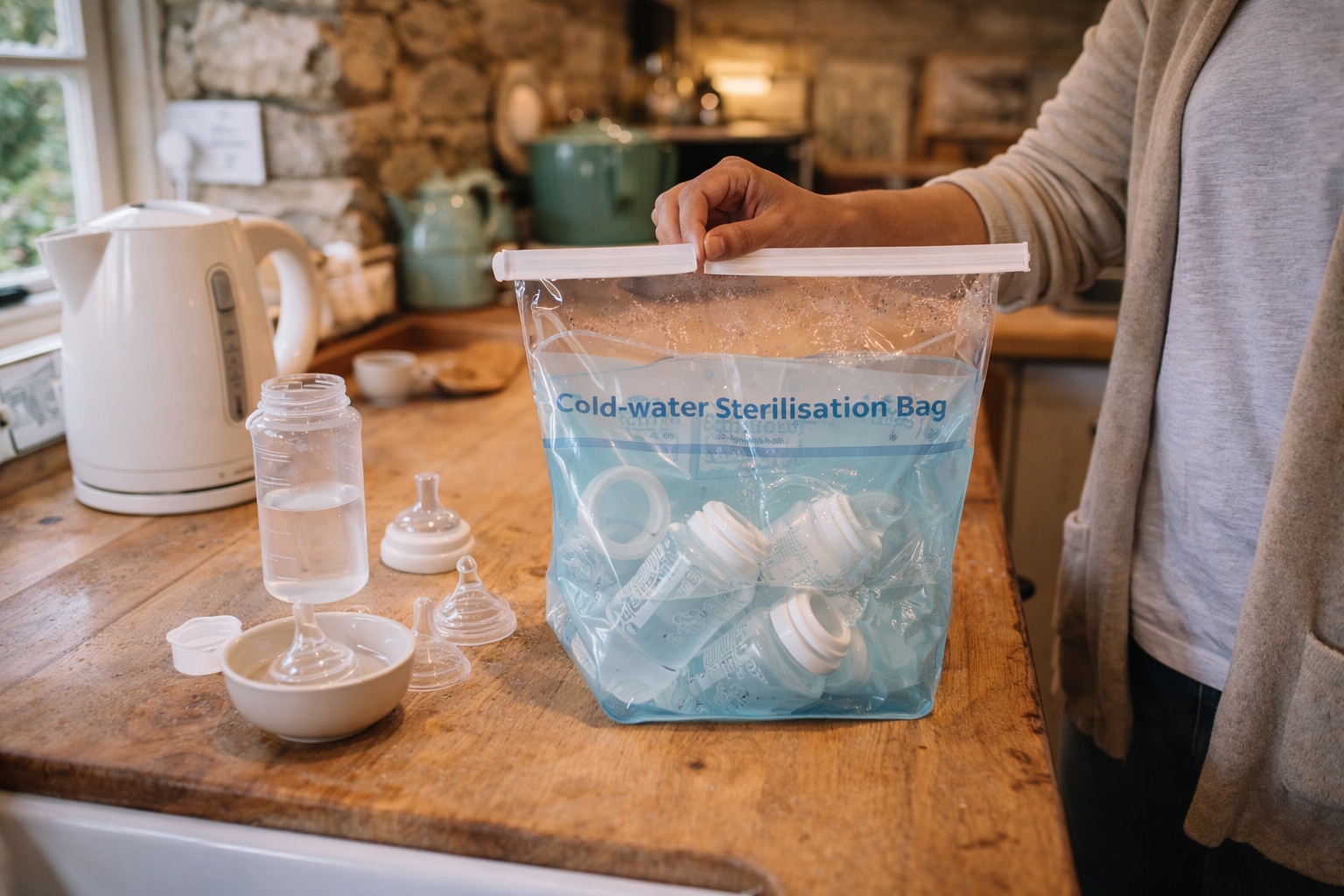
This is the method veteran travelling parents swear by. Sterilising tablets — Milton is the best-known brand — dissolve in cold water and sterilise equipment in around 15–30 minutes. You don't need electricity, a microwave, or any specialist equipment. A clean washing-up bowl or even a large food storage container with a tight-fitting lid works perfectly.
The main downside is the mild chemical smell and taste that can linger on bottles if you don't rinse them afterwards. Some parents find this bothers their babies; others don't notice it at all. A quick rinse with cooled boiled water (or safe drinking water abroad) sorts it out.
A large zip-lock bag or a lightweight collapsible washing-up bowl makes a perfectly adequate sterilising container. If you're travelling light, this is genuinely the most space-efficient system available — just make sure you're using safe water at your destination.
Milton tablets are available in most UK supermarkets and pharmacies. They're also easy to find in Boots and online. A pack of 100 tablets costs around £3–£5 and will last most families the better part of a year even with daily use. For travelling abroad, make sure you have enough bottled water available if tap water isn't safe to drink.

Lightest Option
Milton Sterilising Tablets
Price: Around £3–£5 for 100 tablets
The classic travel sterilising solution — dissolve one tablet in cold water, submerge your bottles and teats, and everything is sterile in 15–30 minutes. A single pack weighs next to nothing, takes up less room than a paperback, and works anywhere in the world with safe water. This is our pick for any trip where luggage space is tight.
✅ Pros
- Cheapest option by far
- No power, microwave, or kit needed
- Virtually zero weight or bulk
- One pack lasts months
❌ Cons
- Mild chemical smell unless rinsed
- 15–30 minute soak time
- Needs a container and safe water

Cold-Water Box Pick
Vital Baby Nurture Pro Travel Steriliser
Price: Around £12–£18
A cold-water travel steriliser box that works much like the Milton Mini — fill it with water, drop in a sterilising tablet, and submerge your bottles for around 15 minutes. The lidded tub is sturdy enough to double as a storage container and needs no power or microwave, so it suits camping, glamping and flights where you sterilise on arrival. As with any cold-water method, expect a faint chemical smell unless you rinse with cooled boiled water afterwards.
✅ Pros
- No power or microwave needed
- Lidded tub doubles as storage
- Great for camping and flights
❌ Cons
- Faint chemical smell unless rinsed
- 15-minute soak, not instant
- Needs a safe water source
Microwave Steriliser Bags
Microwave steriliser bags were something of a revelation when they launched, and they're still one of the best travel steriliser solutions going. Each bag holds several bottles plus teats, you add a small amount of water, microwave for around 90 seconds, and you're done. Most bags are reusable up to 20 times — a few months' worth of travel use.
They pack completely flat, weigh next to nothing, and the steam sterilising is just as effective as a traditional microwave steriliser. The one limitation is obvious: you need access to a microwave. This makes them ideal for self-catering, family visits, and an increasing number of hotels that have in-room or shared microwaves — but less useful for camping or glamping.
See our tips on travelling abroad with a baby for advice on checking what facilities your accommodation provides before you pack.

Best Reusable Bag
Haakaa Silicone Microwave Steriliser Bag
Price: Around £10–£13
Unlike the flimsier disposable-style bags, Haakaa's is made from thick food-grade silicone that stands up to hundreds of cycles rather than the usual 20. You add a splash of water, microwave for a couple of minutes, and steam sterilises bottles, teats and small accessories. It costs more upfront than a pack of throwaway bags and folds a touch bulkier, but for regular travellers the reusability earns its keep.
✅ Pros
- Lasts hundreds of cycles
- Thick, hard-wearing silicone
- Steam sterilising — no chemicals
❌ Cons
- Needs microwave access
- Pricier upfront than disposable bags
- Slightly bulkier folded

Best for Pump Parts
Medela Microwave Bags
Price: Around £6–£8 for 5 bags
From a trusted name in feeding kit, these bags sterilise in around three minutes and can be reused up to 20 times, with a write-on panel to track your cycles. They pack completely flat and are a natural pick if you already express with Medela pump parts, since they're sized to fit them. The usual caveat applies — you need a microwave — and the disposable format means more waste over time than a silicone bag.
✅ Pros
- Fast 3-minute cycle
- Fits Medela pump parts
- Pack flat, weigh nothing
❌ Cons
- Needs microwave access
- Reusable only ~20 times
- More waste than silicone
Portable Microwave Sterilisers
If you travel frequently with young babies, a dedicated compact microwave steriliser is worth considering. These are smaller than the full-size versions designed for home use, and most hold three to four bottles — enough for a day's feeds. They work using steam, so you just add a small amount of water and microwave for four to six minutes.
The trade-off is size and weight. Even the most compact models take up more luggage space than a pack of tablets or a microwave bag. If you're flying with a hand luggage-only policy, you'll feel every gram. But for road trips, caravan holidays, and stays in self-catering cottages where the microwave is on the worktop anyway, a compact unit is very convenient.

Our Pick
Milton Mini Portable Travel Steriliser
Price: Around £15–£20
A compact cold-water steriliser that comes with a pack of Milton sterilising tablets and holds three to four bottles. The lidded tub doubles as a soaking container, and the whole unit packs neatly into your bag. This one impressed us for its simplicity — no electricity, no microwave, no fuss. The mild chemical scent is the only thing some parents find off-putting, but a rinse with boiled water deals with it.
✅ Pros
- Works anywhere — no power needed
- Lightweight and compact
- Holds 3–4 bottles
- Trusted brand, widely available in the UK
❌ Cons
- Mild chemical smell on bottles
- 30-minute soak time (not instant)
- Needs a safe water source
UV Sterilisers for Travel
UV sterilisers use ultraviolet light to kill bacteria and viruses without any water or heat. They're a relatively new option in the baby market, and they can be genuinely useful for travel — particularly for dummies, soothers, and small items that don't fit easily in a bowl or steriliser bag.
The main things to be aware of: UV sterilisation only works on surfaces directly exposed to the light source. Bottles must be completely disassembled and arranged carefully. It's also worth checking whether your chosen model runs off mains power (requires a travel adaptor abroad), USB, or batteries — USB and battery models are the most flexible for international travel.
UV steriliser pouches — small fabric or silicone pouches with a built-in UV strip — are particularly practical for on-the-go use with dummies and soothers. They cost around £25–£50 and can be charged via USB.

Best UV Option
Nuby UV Portable Steriliser
Price: Around £25–£35
A compact UV unit that sterilises dummies, teats and small accessories using light alone — no water, no heat — which makes it handy for hotel rooms and quick top-ups between feeds. It runs off USB or batteries, so you're not hunting for the right travel adaptor abroad. Bear in mind UV only reaches surfaces the light actually touches, so bottles need disassembling, and it won't replace a full steam or cold-water cycle for a day's worth of feeds.
✅ Pros
- No water or heat needed
- USB or battery powered
- Ideal for dummies and small items
❌ Cons
- Only sterilises exposed surfaces
- Bottles must be disassembled
- Not ideal for batch bottle cycles

Best for Self-Catering
Tommee Tippee Microwave Steriliser
Price: Around £20–£25
A compact microwave steriliser that holds up to four Tommee Tippee bottles (or similar-sized bottles from other brands) and sterilises in around four to five minutes. Solid choice for self-catering holidays where there's a microwave — it's not tiny, but it's smaller than the full home version and does the job reliably. Works with any standard 650W+ microwave.
✅ Pros
- Steam sterilising — no chemicals
- Holds 4 bottles at once
- Fast cycle (4–5 minutes)
- Lid stores bottles sterile after use
❌ Cons
- Needs microwave access
- Bulkier than bags or tablets
- Not suitable for camping
Sterilising on a Flight
This is the question most parents stress about before their first flight with a baby. The reality is simpler than it sounds. You have two practical options:
- Pre-sterilise and seal. Sterilise bottles fully before leaving for the airport, then seal each one in a clean zip-lock bag. Bottles stored this way remain sterile for up to 24 hours — enough for any UK departure flight and most short-haul routes. For the feed itself, use a pre-measured carton of ready-to-feed formula, which requires no preparation.
- Cold water tablets on arrival. Pack a small supply of Milton tablets and sterilise at your destination using bottled water or cooled boiled water. This is particularly useful if you're on a long-haul flight, where you might want to use bottles during the flight itself.
See our guide on how to pack formula for flights for more detail on liquid rules, formula powder, and what you can and can't bring through security. Our baby hand luggage checklist is also worth bookmarking before your trip.
Sterilising Abroad: Water Quality and Power Adaptors
Two practical things to sort before you travel: water safety and power compatibility.
Water Safety
In most of Western Europe, tap water is perfectly safe for cold water sterilising. In popular family destinations such as France, Spain (mainland), Portugal, Italy, and Greece, you can generally use the tap water — though many parents choose bottled water just to be safe. For destinations where tap water isn't safe to drink (parts of Turkey, Egypt, many long-haul destinations), always use bottled water for sterilising and for making up formula.
The NHS Fit for Travel website has country-by-country advice on water safety — worth checking before you go.
Power Adaptors
If you're using an electric or UV steriliser, check the voltage and plug type for your destination. UK appliances run on 230V, and most European destinations match this (though the plug shape differs). US destinations run on 110V, which may not be compatible with all appliances — check the label on your steriliser for a voltage range. If it says 100–240V, you just need a plug adaptor. If it says 230V only, you'll need a voltage converter too, or simply switch to a different sterilising method for that trip.
Which Method Is Right for Your Trip?
| Trip Type | Best Method | Why |
|---|---|---|
| UK cottage / self-catering | Microwave bags or compact steriliser | Microwave almost always available, no extra kit needed |
| Hotel (UK or Europe) | Cold water tablets or microwave bags | Most hotels don't have in-room microwaves; tablets need nothing at all |
| Camping / glamping | Cold water tablets | No power or microwave needed — just a container and water |
| Short-haul flight | Pre-sterilise and seal | Bottles stay sterile in sealed bags for 24 hours |
| Long-haul flight | Cold water tablets at destination | Tablets are hand luggage-friendly and work on arrival |
| Visiting family | Microwave bags or steriliser | Microwave almost certainly available; fast and easy |
| Long-haul destinations (water risk) | Cold water tablets + bottled water | Doesn't rely on tap water quality |
What About Dummies and Other Feeding Kit?
Dummies (soothers) should also be sterilised regularly, especially in younger babies. Cold water tablets work perfectly for these — drop them in the same sterilising solution as the bottles. UV steriliser pouches are a convenient alternative if you want to sterilise a dummy quickly without setting up a full sterilising station.
Breast pump parts, bottle brushes, and teats can all go into the cold water solution or the microwave steriliser alongside bottles. Check your changing mat and other kit against our baby travel first aid kit essentials list to make sure you're not missing anything else.
Pack a small set of long-handled tongs or a bottle brush specifically for travel. Handling just-sterilised equipment with clean tongs avoids introducing bacteria back onto bottles before they're used — something that's easy to overlook when you're working in an unfamiliar kitchen.

Handy Add-On
Collapsible Bowl + Travel Bottle Brush Set
Price: Around £8–£12
This pairs a silicone bowl that folds flat with a compact bottle brush, covering two travel jobs in one — a clean container for cold-water tablets and a way to scrub bottles before you sterilise them. The bowl packs down to almost nothing and the brush keeps unfamiliar kitchen sponges out of the equation. It isn't a steriliser in itself, but it's the missing piece that makes the tablet method genuinely practical away from home.
View on AmazonSummary: Best Travel Steriliser by Budget
| Budget | Pick | Approx. Price | Why We Like It |
|---|---|---|---|
| Under £5 | Milton Sterilising Tablets | Around £3–£5 (100 tabs) | Works everywhere, zero bulk |
| Under £10 | Microwave Steriliser Bags | Around £6–£8 for 5 bags | Flat pack, reusable, fast cycle |
| Under £20 | Milton Mini Travel Steriliser | Around £15–£20 | Compact unit with tablets included, no power needed |
| Under £30 | Tommee Tippee Microwave Steriliser | Around £20–£25 | Steam sterilising, holds 4 bottles, no chemicals |
| Premium | UV steriliser bag (USB) | Around £30–£60 | No water needed, ideal for dummies and small items |
For most families, a £3–£5 box of Milton tablets is all you genuinely need for travel — it's what countless parents have relied on for decades, and it works. If you prefer steam sterilising or want something your baby already uses at home, microwave bags or a compact steriliser are the natural next step. The best baby travel steriliser is the one that fits your trip, your accommodation, and your routine.
✈️ Free Baby Hand Luggage Checklist
Never forget the essentials. Enter your email and we'll send the free checklist straight to your inbox — one page, every category, ready before every flight.
Frequently Asked Questions
Do I need to sterilise baby bottles when travelling?
The NHS recommends sterilising all feeding equipment until your baby is 12 months old. When travelling, it's just as important — if not more so, since you're in unfamiliar kitchens and using different water supplies. Cold water tablets, microwave bags, or a compact steriliser are the most practical options on the road.
What is the easiest steriliser to travel with?
Sterilising tablets (such as Milton) are the easiest option for travel — they're cheap, weigh almost nothing, and work anywhere you can fill a bowl or large container with cold water. Microwave steriliser bags are a close second if you're staying somewhere with a microwave.
Can I sterilise baby bottles on a plane?
You can't use electric or microwave sterilisers on a plane, but you can use cold water sterilising tablets. Alternatively, sterilise bottles fully before your flight and seal them in a clean bag — they'll stay sterile for up to 24 hours if left sealed. Many parents travelling short haul simply pack pre-sterilised bottles and use ready-to-feed formula for the flight.
Are microwave steriliser bags worth it for holidays?
Yes — microwave steriliser bags are a brilliant travel solution if you're staying in self-catering accommodation, a hotel with a microwave, or with family. Each bag can be reused up to 20 times, takes up almost no space in your luggage, and sterilises in around 90 seconds. They're perfectly adequate for most trips.
Is tap water safe for sterilising abroad?
In most Western European destinations, tap water is safe for sterilising. In destinations where tap water isn't drinkable — many parts of Asia, Africa, the Middle East — use bottled water for cold water sterilising and for making up formula. Check the NHS Fit for Travel advice for your specific destination before you go.
How long do bottles stay sterile after sterilising?
Bottles removed from a steriliser and left sealed (or kept inside the steriliser with the lid on) remain sterile for around 24 hours. Once removed and exposed to air, they should be used promptly or resterilised. It's practical to sterilise in a batch in the evening for the following day.
Can I use a UV steriliser when travelling abroad?
UV sterilisers are compact and don't require water, making them appealing for travel. However, most run on mains power and you'll need a suitable travel adaptor. Battery or USB-powered UV bags are available and are a good option for destinations where power adaptors are complicated. Note that UV sterilisers only work on surfaces directly exposed to the UV light — bottles must be disassembled and arranged carefully.
Do I still need to sterilise if I'm breastfeeding?
If you're exclusively breastfeeding and not using bottles or expressing, you don't need a steriliser at all. However, if you express milk and store it in bottles, or use a dummy, those items should still be sterilised until your baby is 12 months. A small pack of Milton tablets takes up almost no space and covers you without needing to pack any equipment.