
Backpack Carrier vs Front Carrier for Travel: Which Do You Actually Need?
By BabyTravel UK Editorial Team · Last updated March 2026
Both types of baby carrier are genuinely useful for travelling — just not for the same things. A compact front carrier is the right tool for airports, city breaks, and shorter walks. A framed backpack carrier is the right tool for fell walks, mountain paths, and any trip where you're carrying a heavy toddler for three hours across uneven ground. Getting the choice wrong means either lugging unnecessary bulk through an airport or arriving at the start of a Lake District ridge walk with the wrong carrier for the job. This guide covers when each type wins — and when it's worth having both.
⚡ Quick Answer
- Front carrier wins for: airports, city breaks, flights, restaurants, babies under 6 months, hot weather, any trip where you also have a stroller
- Backpack carrier wins for: hiking and fell walks, carrying for 2+ hours, babies over 6 months who are heavy, trips where walking is the main activity
- Both have a place if: you're driving to a walking holiday and have boot space to spare
- Our front carrier pick: Ergobaby Omni Breeze — comfortable to 12kg, suitable from birth
- Our backpack pick: Deuter Kid Comfort Pro — proper hip-transfer frame, suitable from 6 months to 22kg
The Fundamental Difference
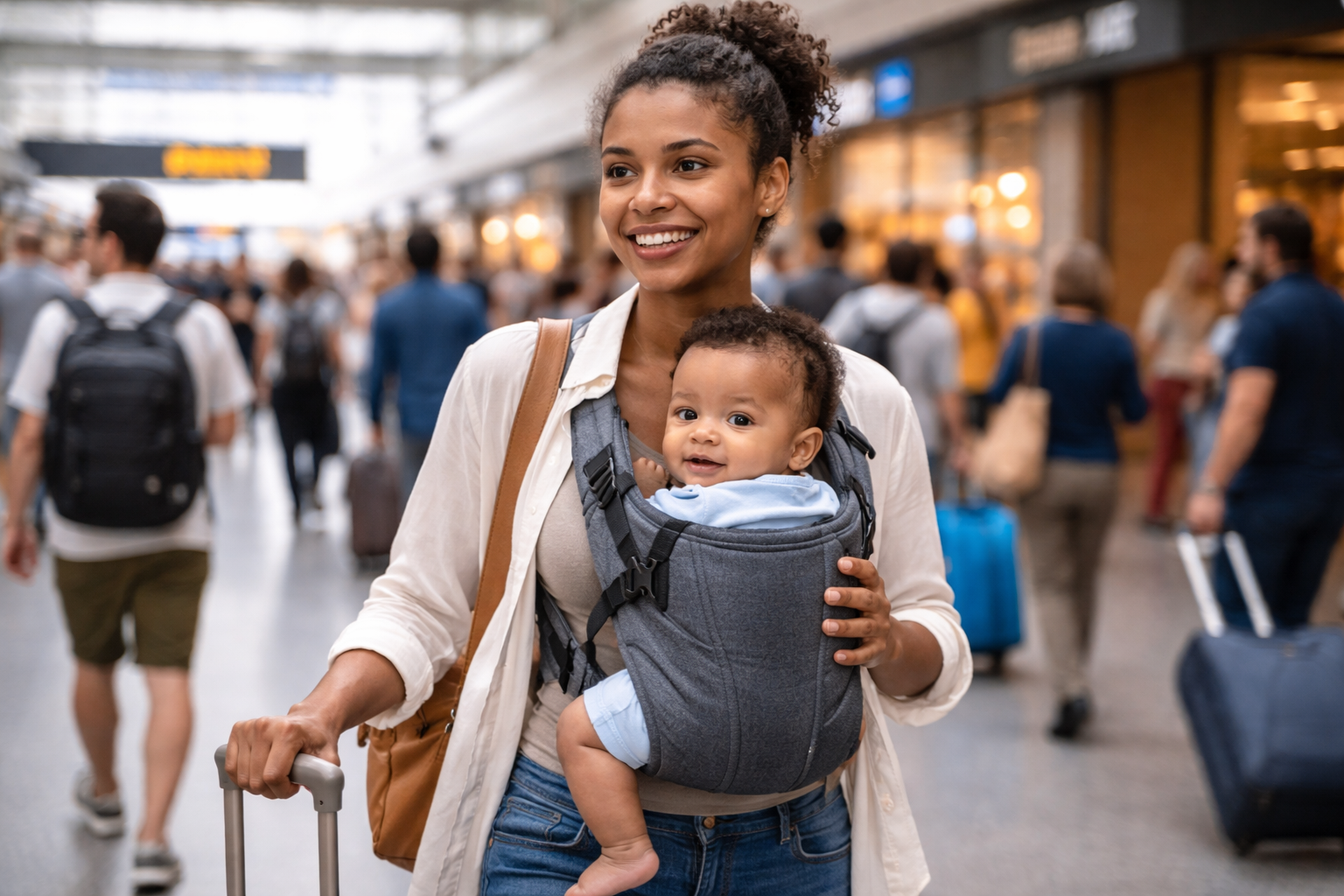
Front carriers hold baby against your chest — facing inward (chest-to-chest) for young babies, or facing outward when they have head control and want to see the world. They're soft structured, compact, and typically weigh 0.5–1kg. Most work from birth through to around 20kg, though comfort decreases significantly as baby grows heavier. Weight is distributed across your shoulders and hips via padded straps and a waist belt. Good models — the kind with a proper lumbar waist belt — are comfortable for 1–2 hours of city carrying or moderate walks.
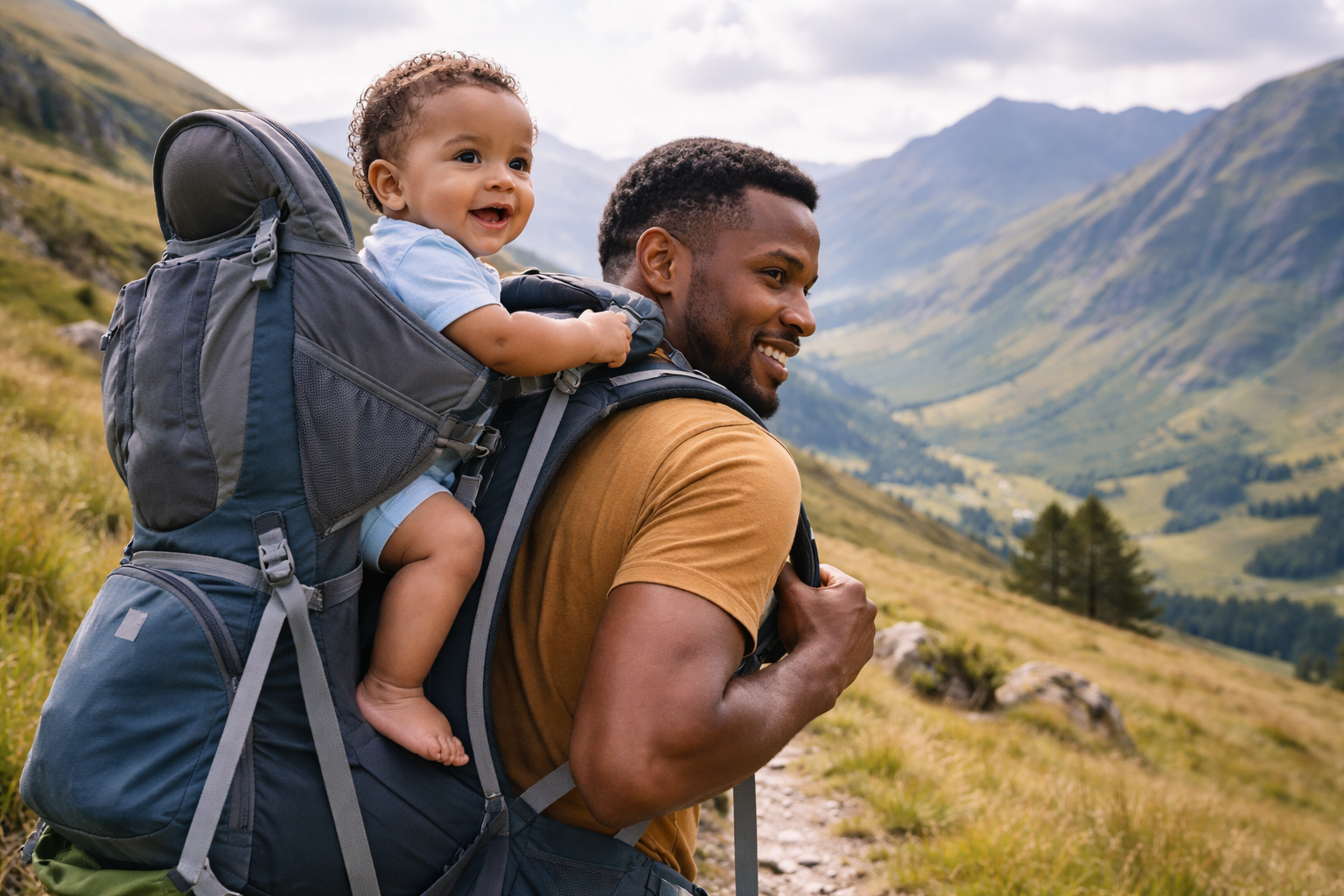
Backpack carriers are a different product category entirely. They're rigid framed structures — think a hiking rucksack with a padded seat compartment on top for baby. Baby sits upright behind your head, slightly elevated, with a wide-angle view of the world ahead. The frame transfers weight directly to your hips, not your shoulders — which is why a properly fitted backpack carrier is far more comfortable than a front carrier for long distances with a heavy toddler. The trade-off: they weigh 2.5–3.5kg when empty, don't fold flat, and aren't suitable until baby has full, unassisted head control — generally 6 months. For the full rundown on carrier types, our carrier hub covers every option.
When to Choose a Front Carrier
📋 Free Baby Holiday Packing Checklist
Enter your email and we'll send the free printable checklist straight to your inbox — every category, ready to tick off before every trip.
A front carrier is the right choice in the following situations:
- Newborns to 6 months. Baby needs chest-to-chest contact and full head support. No backpack carrier is appropriate at this age — the front carrier is the only option.
- Airports and flights. A front carrier folds flat, fits in a carry-on bag, and goes through security in seconds. You can keep baby in it through the metal detector (remove the frame if any). A backpack carrier needs to be checked as luggage — which means no carrier at the terminal or on the plane. See our stroller on planes guide for when to gate-check your pushchair instead.
- City breaks. Buses, Tube carriages, narrow restaurant aisles, escalators, crowded markets — a backpack carrier is cumbersome in all of these. A front carrier keeps your profile slim and your hands free. For London, a front carrier is almost always the better choice over a stroller.
- Short to medium walks (under 2 hours). For a coastal path, a village walk, or a morning at a National Trust property, a front carrier is entirely adequate and far less hassle than a framed pack.
- Hot weather. Less fabric, more airflow. A front carrier is significantly cooler for both parent and baby than a framed backpack on a warm day.
- When you also have a stroller. A front carrier packs into the stroller basket when not in use. You can alternate between them throughout the day — carrier for the crowded bit, stroller for the longer flat stretches.
When to Choose a Backpack Carrier
A backpack carrier earns its bulk in the following situations:
- Dedicated hiking and fell walking. The Lake District, Snowdonia, the Scottish Highlands, Dartmoor — routes where you're climbing, the terrain is uneven, and you're out for 3–5 hours. A front carrier becomes genuinely uncomfortable over this distance with a heavy baby. A backpack carrier with proper hip transfer makes it sustainable. Our Lake District guide has specific route suggestions where a carrier is essential.
- Babies over 6 months with strong head control. Once baby can sit independently and hold their head steady, the backpack carrier becomes an option — and they typically love the elevated view.
- Long carries (2+ hours). The comfort gap between a front carrier and a backpack carrier is modest at 45 minutes and significant at 3 hours. If the plan involves extended carrying time, the hip frame makes the difference.
- Toddlers who are heavy. At 12–15 months, most babies weigh 10–12kg. A front carrier at this weight over a long walk puts real strain on your back. A backpack carrier distributes that weight to your hips and legs — the strongest part of your body.
- Trips where walking is the primary activity. If you're booking a week in the Highlands specifically to walk, or a Snowdonia cottage specifically to get on the hills, the backpack carrier is the right centrepiece of your kit.
Pro Tip: Most backpack carriers include a removable daypack on the back — so while baby is in the seat, you also have storage for water, snacks, waterproofs, and nappies. This makes them more self-contained than a front carrier for full-day walks. Check whether the model you're considering includes this — it varies by brand and price point.
Age and Weight Guide
The single most important factor in this decision is your baby's age and weight. Here's how it maps out:
- 0–4 months: front carrier only. Baby needs chest-to-chest contact, inward facing, and full head support. No exceptions.
- 4–6 months: front carrier is the primary option. Some babies with strong head control can go in a backpack carrier from around 5 months, but 6 months is the standard minimum and most manufacturers' stated recommendation.
- 6–12 months: either works. Front carrier for convenience and city use. Backpack for dedicated walks where comfort over distance matters. This is the crossover zone — assess based on the trip type.
- 12–24 months: the backpack carrier starts to win for walking trips. Baby is now 10–13kg and carries in a front carrier strain your back over distance. For short carries — airports, nap transport, restaurant to car — a front carrier remains easier to deploy quickly.
- 2+ years: backpack carrier for walking if baby will tolerate it (many toddlers resist by this age — assess your individual child). Front carrier becomes impractical at this weight for most parents on anything beyond a short carry.
Comfort Comparison
This is where the honest answer matters. A front carrier with a good padded waist belt — the Ergobaby Omni Breeze, the BabyBjorn Harmony — is comfortable to about 10–12kg for around 1–2 hours of carrying. Beyond that, back and shoulder fatigue increases noticeably. Most parents find this sufficient for city breaks and moderate walks through a baby's first year.
A framed backpack carrier (Deuter Kid Comfort, Osprey Poco) transfers weight to the hips via a rigid aluminium or carbon frame — the same principle as a hiking rucksack. This is genuinely comfortable to 18–20kg for 3–4 hours of walking. The difference in parent comfort over a long day in the hills is not marginal — it's the difference between finishing a walk feeling tired and finishing it feeling destroyed. If you're planning serious walking with a toddler, this matters.
Portability Comparison
Front carriers: folds flat, weighs 0.5–1kg, fits in a carry-on bag or stroller basket. The Boba Air folds into a pouch the size of a paperback book. Practical for every travel scenario.
Backpack carriers: rigid frame, weighs 2.5–3.5kg empty. Doesn't fold. Takes up significant boot or luggage space. For flying, it needs to be checked — which means no carrier through the airport. For a driving holiday heading to the hills, this bulk is irrelevant. For a weekend city break by train, it's a significant inconvenience.
Front Carrier vs Backpack Carrier: Head to Head
| Factor | Front carrier | Backpack carrier |
|---|---|---|
| Minimum age | From birth | 6 months (full head control) |
| Max comfortable carry time | 1–2 hours (up to ~12kg) | 3–4 hours (up to 20kg+) |
| Weight (carrier empty) | 0.5–1kg | 2.5–3.5kg |
| Packed size | Folds flat — fits in carry-on | Rigid — needs boot or checked luggage |
| Airport / flying | ✅ Ideal — goes through security, usable on plane | ❌ Must be checked — no carrier at airport |
| City and public transport | ✅ Excellent | ⚠️ Cumbersome on buses, escalators |
| Fell walking / hiking | ⚠️ Fine for shorter walks under 2 hours | ✅ Purpose-built for long-distance terrain |
| Hot weather comfort | ✅ Better — less fabric, more airflow | ⚠️ More coverage — ventilated models help |
| Baby's view | Forward facing or inward — at parent height | Elevated — baby sees over parent's head |
| Storage included | Usually none | Removable daypack on most models |
| Price range | Around £60–£200 | Around £150–£350 |
Destination Quick-Pick Guide
| Destination | Best carrier type | Why |
|---|---|---|
| Lake District | Backpack for fells, front for Windermere / villages | Fell routes need the frame — flat lakeside paths are front carrier territory |
| Snowdonia | Backpack carrier | Mountain terrain and long ascents — the backpack carrier is essential for serious routes |
| Scottish Highlands | Backpack carrier | Remote glens and long walks — bring the backpack carrier for anything beyond a short stroll |
| Cornwall | Front carrier | Village streets, beaches, and coastal café walks are all front carrier friendly |
| London | Front carrier | The Tube, buses, and crowded attractions — no question |
| European city break | Front carrier | Compact, folds into your carry-on, works on cobblestones and café terraces |
| Beach holiday | Front carrier | Sand doesn't suit wheels — a front carrier gets you from car park to sand in one go |

Ergobaby Omni Breeze (Best Front Carrier for Travel)
From newborn to toddler, airports to coastal paths
The Omni Breeze earns its place on almost every travel carrier list: suitable from birth without an insert, carries to 20kg, and the SoftFlex mesh keeps both parent and baby cooler than most structured carriers. The padded lumbar waist belt makes a genuine difference for longer carries, and it folds small enough to fit in a changing bag. Our consistent recommendation for parents who want one carrier that works across all travel scenarios.
- ✅ Suitable from birth — no newborn insert needed
- ✅ SoftFlex mesh — significantly cooler than standard carriers
- ✅ Four carry positions including hip carry for older babies
- ✅ Padded lumbar waist belt — extends comfortable carry time
- ❌ Premium price — around £170–£200
- ❌ At 15 months+, a framed backpack carrier is more comfortable for long walks

Deuter Kid Comfort Pro (Best Backpack Carrier for Hiking)
Purpose-built for fell walks, mountain paths, and long-distance carrying
The Deuter Kid Comfort Pro is the benchmark backpack carrier for serious walking with a baby. The Vari Flex hip fin system transfers baby's weight directly to your hips — the same principle as a quality hiking rucksack — making it genuinely comfortable at 22kg max load for multi-hour walks. The integrated sun and rain canopy covers baby when conditions change mid-walk, and the removable 8-litre daypack carries nappies, snacks, and waterproofs. Designed to last from 6 months through to your last carrying days.
- ✅ Vari Flex hip transfer system — built for long-distance comfort
- ✅ Removable 8-litre daypack — storage for a full day out
- ✅ Integrated sun and rain canopy included
- ✅ Suitable from 6 months to 22kg
- ❌ Around £280–£320 — a significant investment
- ❌ Rigid frame — needs boot space or checked luggage for flying
When You Need Both
Some trips genuinely benefit from having both a front carrier and a backpack carrier. A walking holiday in the Lake District driven to from home — you have boot space, you want the backpack carrier for the fell walks, but the front carrier earns its place on arrival day, village evenings, and the drive home when baby needs soothing. This hybrid approach is realistic for car-based holidays.
For flying trips, the calculus changes. Every kilo in your luggage is deliberate. The front carrier comes in the cabin; the backpack carrier gets checked. If your trip is primarily hiking, check the backpack and bring a lightweight front carrier (Boba Air, around £70) as your cabin option. If it's primarily sightseeing with one or two walking days, a good front carrier covers everything and the backpack stays at home. See our holiday packing list for carrier considerations in the full kit context.
✈️ Free Baby Hand Luggage Checklist
Never forget the essentials. Enter your email and we'll send the free checklist straight to your inbox — one page, every category, ready before every flight.
Frequently Asked Questions
What is the difference between a front carrier and a backpack carrier?
A front carrier holds baby against your chest — compact, packable, suitable from birth. A backpack carrier is a rigid framed structure that holds baby in an elevated seat behind you — better for weight distribution on long walks, but bulky and not suitable until 6 months. The right choice depends on your baby's age, your destination, and whether you're primarily sightseeing or hiking. Our carrier hub covers the full range of options.
At what age can a baby go in a backpack hiking carrier?
Most manufacturers recommend 6 months, when babies typically have full, unassisted head control. Some carriers allow use from around 5 months for babies with strong head control, but 6 months is the standard minimum. Before 6 months, a front carrier in an inward-facing position is the safe and appropriate option.
Can you take a backpack baby carrier on a plane?
You can, but it has to be checked as luggage — it won't fit in overhead bins and can't be used at the terminal or during the flight. For flying, a compact front carrier is always more practical. It goes through security, fits in a carry-on, and lets you carry baby hands-free through the airport. See our guide on travelling with a stroller on a plane for the wider picture of flying with baby gear.
Which baby carrier is best for hiking?
For dedicated hiking with a baby over 6 months, a framed backpack carrier is the right tool. The Deuter Kid Comfort Pro and Osprey Poco both distribute weight to your hips via a proper frame — comfortable for 3–4 hours of walking at 18–20kg. A front carrier handles shorter walks well but causes back fatigue over longer distances with a heavier baby. For Lake District or Snowdonia walking trips, the backpack carrier is worth the investment.
Can I use a front carrier for hiking?
Yes — for shorter walks under 2 hours on reasonable terrain, a quality front carrier with a good waist belt works well. The Ergobaby Omni Breeze is comfortable to around 12kg for most parents for this duration. For longer, more demanding walks with uneven terrain, a framed backpack carrier is significantly more comfortable and reduces the risk of back strain.
Do I need both a front carrier and a backpack carrier?
Possibly — it depends on your trips. For a car-based walking holiday, having both is practical and useful. For a flying trip, the weight and bulk of the backpack carrier needs to justify itself. If your trip is primarily hiking, bring both (check the backpack, cabin the front carrier). If it's mixed city and light walking, a good front carrier covers everything you need.
What is the best baby carrier for city breaks?
A front carrier every time. A backpack carrier is cumbersome on buses, escalators, and in narrow restaurants. A compact, packable front carrier gives you hands-free mobility in all city scenarios. For London, a front carrier is often the best transport solution of all — faster and more flexible than a stroller on the Tube.
How long can I carry a baby in a front carrier?
With a quality front carrier with a proper waist belt, 1–2 hours is comfortable for most parents with a baby under 10kg. Comfort reduces as baby grows heavier — at 12–15 months (typically 10–12kg), long carries in a front carrier become tiring. This is the point where a backpack carrier starts to make a real difference for walking-focused trips.
The Bottom Line
If you can only have one: choose based on your trips. Primarily city breaks and flights? Front carrier, no question. Primarily hiking holidays with a baby over 6 months? A backpack carrier is worth the investment. Mixed trips to varied destinations? A quality front carrier covers most scenarios and a lightweight option like the Boba Air covers the rest. The carrier hub has the broader comparison, and our destination guides — including the Lake District, Scottish Highlands, and Cornwall — give terrain-specific advice for wherever you're heading.