
Best UK Beaches for Babies and Toddlers (2026)
By BabyTravel UK Editorial Team · Last updated July 2026
The UK coastline is genuinely brilliant for babies — you just need to choose the right beach for your little one's age and your own sanity.
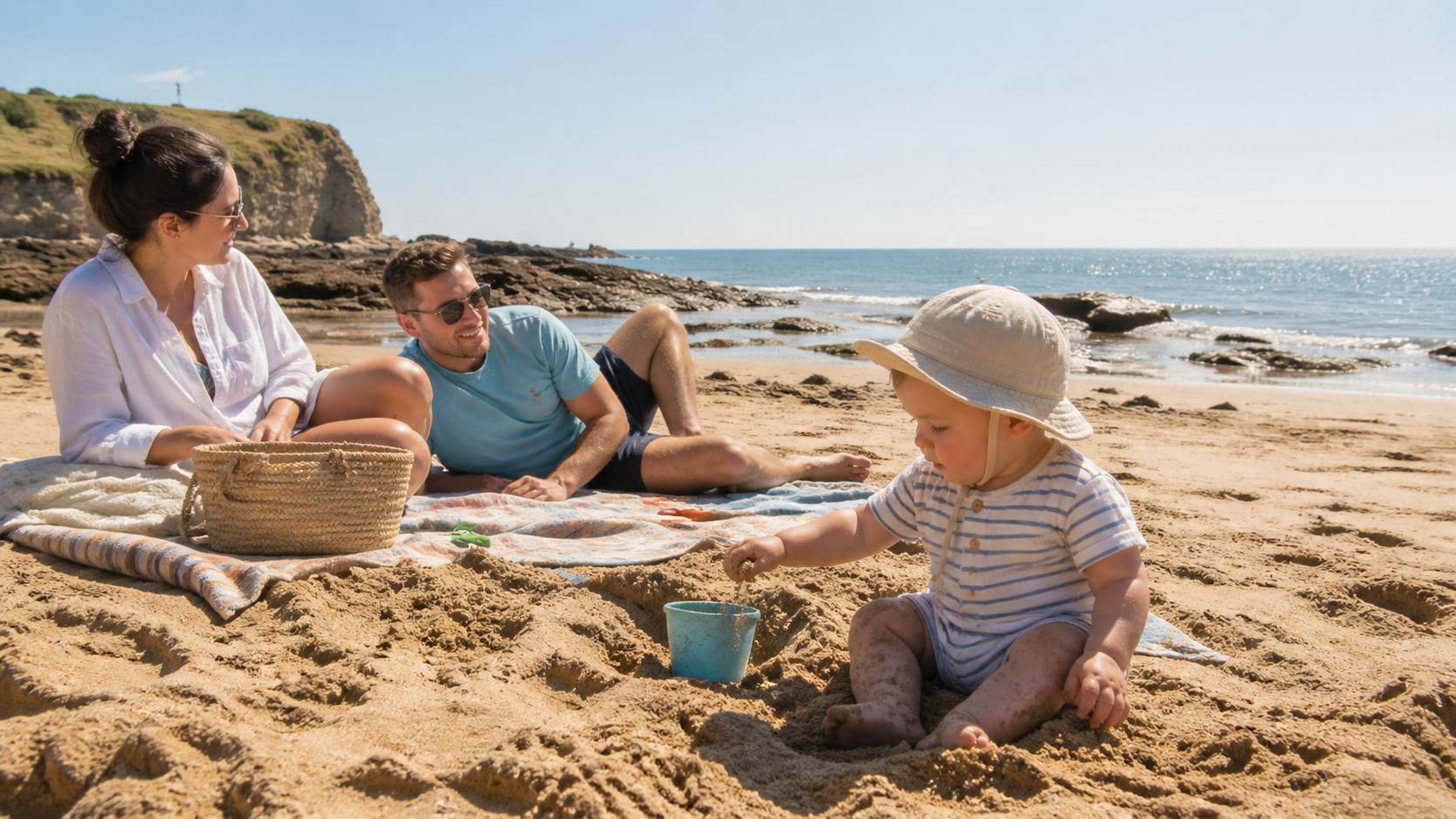
A beach day with a baby sounds idyllic. And it genuinely can be — but it depends enormously on which beach you choose. A steeply shelving pebble beach with no loos for two miles is a very different experience to a wide, flat, sandy bay with a café fifty metres from the car park. The UK has plenty of both.
The good news is that the best baby-friendly beaches in the UK are genuinely among the most beautiful in Europe. This guide cuts straight to the ones that actually work when you're managing a crawling baby, a bulging change bag, and a pushchair that won't fold without a fight.
Quick Answer
- 🏖️ Best for space: Holkham, Norfolk — vast flat sands that never feel crowded, even in August
- 🚿 Best facilities: Woolacombe, Devon — proper loos, changing, café, lifeguards, and a wide gentle slope into the water
- ♿ Best pushchair access: Studland, Dorset — National Trust-managed with a proper path to the sand and excellent facilities
- 🌊 Best for calm water: Gyllyngvase, Cornwall — sheltered bay near Falmouth, rarely rough, easy town access
- 💰 Best budget option: Filey, Yorkshire — quieter than the south coast, great flat sand, much cheaper to stay nearby
What Makes a Beach Baby-Friendly?
Not all sand is created equal when you've got a seven-month-old who wants to eat everything they touch. Before we get to the regional picks, here's what to actually look for:
- Flat, firm sand — pebbles are genuinely painful on bare baby knees, and soft deep sand is exhausting to push a buggy through
- Gradual water entry — a gentle slope into shallow water is far safer than a steep drop-off, especially once your little one starts toddling toward the waves
- Toilets and changing facilities within 200 metres — further than that and you'll be doing a nappy change on your beach bag with sand in places you'd rather not think about
- Some windbreak or natural shelter — UK beaches can be cold even in July; a bay or dune system makes a big difference
- A café within reach — because at some point you'll need a hot drink to get through the day
- Pushchair-accessible path to the sand — no one wants to carry the buggy down steep steps with a baby on their front
- Rockpools nearby — once your baby becomes a toddler, rockpools buy you an extra hour of entertainment every time
The Best UK Beaches by Region
Cornwall
Cornwall has dozens of beaches, but they vary wildly in terms of baby-friendliness. Harlyn Bay on the north coast is one of the best-kept secrets — it faces north-west, so it catches less of the Atlantic swell than nearby Polzeath, the sand is firm, and it stays sheltered behind the headland when the wind picks up. Polzeath is longer and more popular, with a wide flat beach that's great for crawlers and early walkers, plus a reliable surf vibe that won't bother a baby in the slightest.
Near Falmouth, Gyllyngvase is about as close to a traditional urban beach as Cornwall gets — easy car park, accessible path, good café, and a sheltered bay that stays calm when choppier beaches are off-limits. It's a solid choice when you need everything within easy reach. For the full picture on planning your trip, see our Cornwall with a baby guide, or search for cottages near Falmouth and the north Cornish coast.
Devon
Woolacombe is genuinely one of the best baby beaches in the country — a wide, long, Blue Flag beach with a gentle slope, warm (ish) water, proper changing facilities, lifeguards in season, and a row of cafés just above the sand. It handles a crowd well, partly because it's big enough that everyone spreads out. If you're making one Devon beach trip with a baby this year, make it Woolacombe.
Bigbury-on-Sea is a calmer, tidal beach with a fascinating island (Burgh Island) you can wade to at low tide — something to aim for once your little one is walking. Blackpool Sands near Dartmouth is privately managed, beautifully maintained, and has crystal-clear water that looks almost Mediterranean on a sunny day. There's a good café and the beach stays clean. Find where to stay with our Devon with a baby guide, or browse Devon cottages near the beach.
Dorset
Studland is a National Trust property with four distinct beaches running along the same bay — Shell Bay, Knoll Beach, Middle Beach, and South Beach — each with a slightly different character. Knoll Beach has the best facilities including loos, café, and a proper pushchair-accessible path across the dunes. The water is shallow and calm, which makes it genuinely safe for little paddlers. Lulworth Cove is breathtaking and worth visiting even though you'll need to park and carry your baby down the steps (a sling or carrier is the answer here). Weymouth is classic British seaside at its most accessible — flat, sandy, everything on hand, and great if you want donkey rides and ice cream alongside your beach time. For the full region, read our Dorset with a baby guide and explore Dorset cottage rentals.
Pro Tip
At Studland, arrive before 10am in July and August to get a car park space without queuing. The beach is worth the early start — once you're set up, you'll have a good patch even on the busiest days.
Norfolk
Holkham is in a different category to most UK beaches. Walk through the pine forest from the National Trust car park and the sand seems to go on forever — flat, firm, and wide enough that even in August it never feels like you're competing for space. The walk from the car park is about 15 minutes and completely pushchair-friendly. Once you're there, the stretch feels almost Scandinavian in its scale. Wells-next-the-Sea is the more traditional option — a tidal beach with warm, shallow water at low tide and excellent sandcastle conditions. Brancaster is quieter still, backed by National Trust marshes, and a good choice if you want to feel like you've found somewhere not everyone else has.
Read more in our North Norfolk with a baby guide, or look at Norfolk cottage rentals for places to stay nearby.
Pembrokeshire
Barafundle Bay is harder to reach than most on this list — you'll park at Stackpole Quay and walk about fifteen minutes along a coastal path — but the beach is worth it. It's pristine, sheltered, and feels genuinely remote without being inaccessible. A carrier is more practical than a pushchair for the walk. Tenby South Beach is the easy option: excellent facilities, a beautiful walled town right behind you, good lifeguard cover, and easy access. Broad Haven on the St Brides Bay side is a consistent family favourite — proper facilities, good café, and a wide flat beach that stays sandy even as the tide comes in. See our Pembrokeshire with a baby guide or book through Pembrokeshire cottages.
Further Afield
Bamburgh in Northumberland is one of the most photogenic beaches in England — a vast sweep of firm sand with Bamburgh Castle rising behind it. It's rarely crowded, the sand is firm enough to push a buggy on, and the village has a good café within a short walk. Well worth the journey north if you're based in that part of the country. Filey on the Yorkshire coast is everything a baby-friendly beach should be: flat, sandy, calm water, good facilities, and surrounded by a town that's quieter and considerably cheaper than the south coast equivalents. For coastal Yorkshire stays, browse Yorkshire coastal cottages. Camber Sands in East Sussex is the closest large sandy beach to London — wide, flat, backed by dunes, and easy to reach by car or train from the capital.
Beach Safety With a Baby
📋 Free Baby Holiday Packing Checklist
Enter your email and we'll send the free printable checklist straight to your inbox — every category, ready to tick off before every trip.
The UK sun is often underestimated. Even on cloudy days, UV levels can be high enough to burn a baby's skin in under 20 minutes. Factor 50 sunscreen, a rashvest, and a pop-up beach tent or sunshade are all worth packing. Read our full guide to sun safety on holiday with a baby for everything you need to know before heading to the coast. If your baby does catch the sun despite your best efforts, our guide to the best baby after-sun has soothing options worth packing just in case.
On sand ingestion: your baby will eat some. Small amounts aren't harmful, but it's worth keeping food covered and wiping hands regularly. Wave awareness matters more than it sounds — even small UK waves can knock a sitting baby or a steady toddler off balance. Stay close when they're near the water's edge, even in calm conditions.
Finally, shade and hydration. Babies overheat quickly on warm sand, and they can't tell you when they're thirsty. Regular drinks and time in the shade matter as much as sunscreen.
Our Tip
A pop-up UV beach tent is one of the best beach investments you'll make as a parent. Look for one with a UPF 50+ rating and enough space for both your baby and the change bag — you'll want to be in there too when the sun is strong.
What to Pack for a Beach Day
A beach day with a baby requires more kit than a beach day without one, but there's a line between well-prepared and over-packed. The basics come down to shade, sun cream, and swimwear: see our reviews of the best baby beach tents, best baby sun cream, best UV swimsuits, and best swim nappies. For calm, supervised paddling, our guide to the best baby pool floats covers the safest options, and a clip-on fan can help keep everyone cool on the walk down, see our roundup of the best clip-on pram fans. Use our packing calculator to build a list that matches your baby's age and the length of your trip, or see the full baby holiday packing list for a comprehensive breakdown. And if the tide is further out than expected or the wind picks up unexpectedly, our Busy Bag Challenge Cards (£4.99) give you a bank of quick-win activities that work just as well on a beach towel as they do in a holiday cottage.
✈️ Free Baby Hand Luggage Checklist
Never forget the essentials. Enter your email and we'll send the free checklist straight to your inbox — one page, every category, ready before every flight.
Frequently Asked Questions
What is the safest UK beach for a baby?
Woolacombe in Devon and Studland in Dorset are among the safest — both have lifeguard cover in season, gradual water entry, shallow paddling areas, and good facilities close to the sand. Holkham in Norfolk is excellent for space and calm conditions, though it doesn't always have lifeguards. Always check RNLI beach safety information before visiting any beach with a young child.
Can you take a pushchair on the beach?
It depends entirely on the beach surface. Firm, flat sand — like Holkham, Woolacombe, or Bamburgh — is manageable with a standard pushchair. Soft, deep sand (like some parts of Camber Sands) can make pushing very hard work, and pebble beaches are largely impossible. All-terrain buggies handle sand better than standard travel pushchairs. At beaches with steps down to the sand, you'll need to carry the pushchair, so a sling or carrier is useful to have as a backup.
What age can a baby go in the sea in the UK?
There's no fixed minimum age, but most parents start paddling with babies from around six months, once they have some head control and core stability. The water temperature matters more than the age — UK sea temperatures average around 14–16°C in summer, which is cold for an adult and very cold for a small baby. A neoprene wetsuit or warm rash suit helps enormously. Keep sessions short and watch for shivering, which can happen quickly.
Do babies need UV swimsuits at UK beaches?
A UV-protective rashvest or all-in-one sun suit is strongly recommended for babies at any beach, including the UK. Baby skin burns faster than adult skin, and regular suncream can wash off in the water. A UPF 50+ suit covers most of the body so you only need to apply suncream to the face, hands, and feet. The Lullaby Trust recommends keeping babies under six months out of direct sunlight entirely.
The UK coast is genuinely fantastic for families with babies and toddlers — you don't need to travel abroad to find a brilliant beach day. For a wider look at budget-friendly options, our guide to cheap baby-friendly holidays in the UK covers how to make the most of the coast without overspending.
Beach Day Essentials
The kit that makes a beach day with a baby easier, all tested and ranked in our buying guides: