
City Pushchair Guide UK: What Actually Works in Daily Urban Life
By BabyTravel UK Editorial Team · Last updated July 2026
City pushchair shopping is about friction reduction. Pavements, buses, trains, narrow shops, and stairs expose weak setups quickly. The right model should make daily movement easier, not just look compact online.
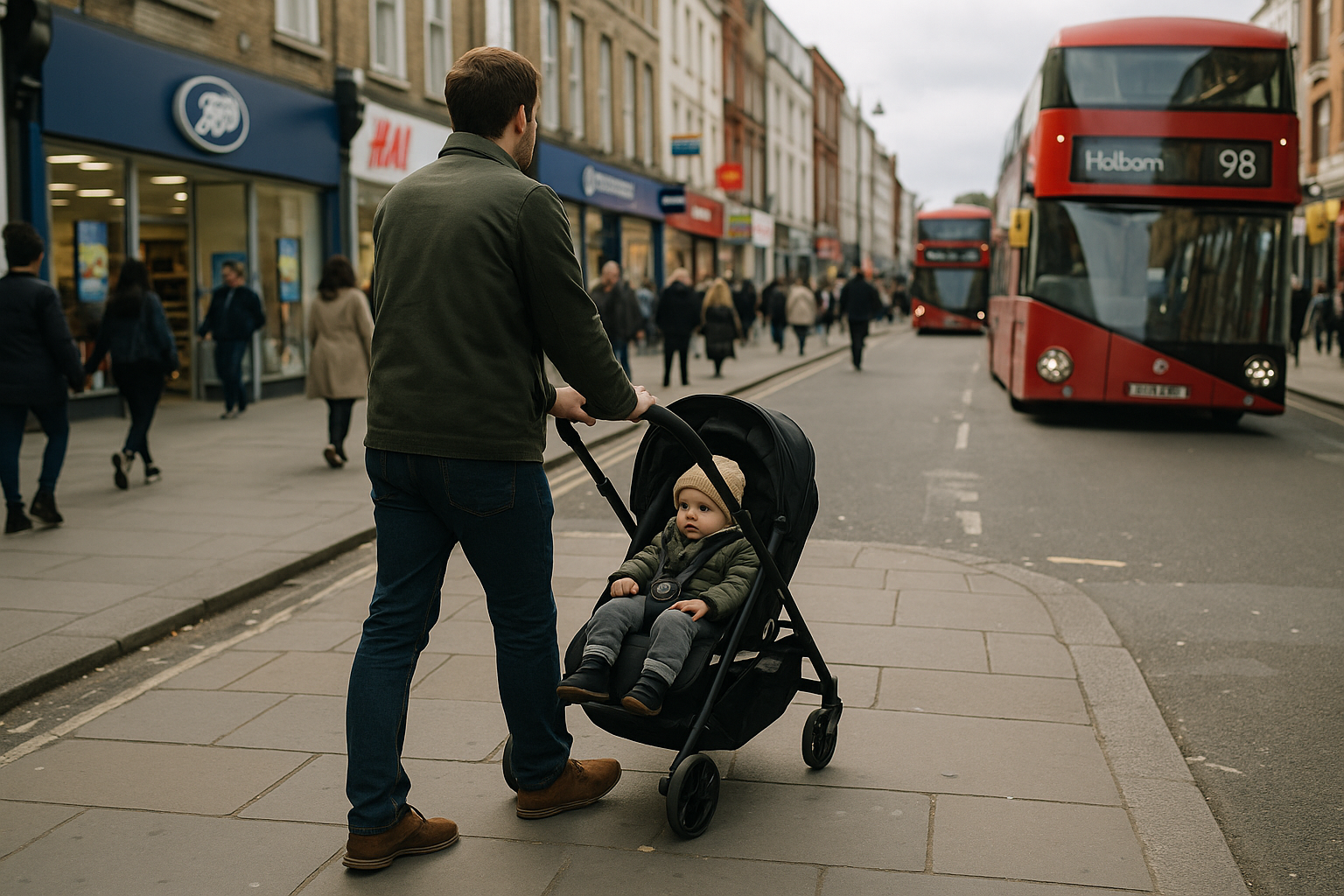
This guide helps you choose by city routine: transport use, storage constraints, and outing style.
Quick city decision framework
- Frequent public transport: prioritise carry weight + fast fold.
- Mostly walking errands: prioritise steering + curb handling.
- Small flat storage: prioritise folded footprint + easy standing.
Top city pushchair picks by use case
| Use case | Product | Why | Link |
|---|---|---|---|
| Best compact all-rounder | Babyzen YOYO² | Compact fold and practical city mobility | Check price |
| Best premium city handling | Bugaboo Butterfly | Fast fold and smooth urban steering | Check price |
| Best lightweight carry | Joolz Aer+ | Easier for stairs and station movement | Check price |
| Best value city option | Baby Jogger City Tour 2 | Strong practical balance without premium pricing | Check price |
What city parents should test first
📋 Free Baby Holiday Packing Checklist
Enter your email and we'll send the free printable checklist straight to your inbox — every category, ready to tick off before every trip.
- Fold and unfold while holding a bag in one hand.
- Carry up and down one staircase section.
- Turn through tight indoor path simulation.
- Check curb up/down behaviour with realistic load.
If these fail, everyday use will feel hard quickly.
Urban setup mistakes
- Overloading accessories that slow movement.
- Choosing by weight alone and ignoring fold behaviour.
- Ignoring storage path from front door to home spot.
- Not testing in real shoes/bags/conditions.
Public transport specific tips
Keep essentials in one reachable pouch. Fold before entering bottleneck points. Use predictable loading/unloading routines so movement stays smooth under pressure.
Policy and safety checks
For travel use, check official guidance such as CAA passenger pages and route-specific airline rules where relevant.
How city environments change pushchair priorities
Urban parenting exposes weaknesses quickly. Tight pavements, uneven kerbs, crowded transport, and limited storage reward practical design over flashy extras. What matters is repeatable usability under pressure.
A stroller that feels fine on smooth showroom floors can feel frustrating in real city patterns. Always evaluate by your most common route conditions.
Neighbourhood movement patterns
Dense high-street zones
Need: agile steering, quick stops, and easy repositioning. Wider frames and sluggish turning increase friction.
Station + stair routes
Need: low carry strain and reliable fold lock. If fold confidence is weak, daily movement gets stressful fast.
Parks + mixed pavements
Need: wheel confidence and frame stability. Too-light frames can feel twitchy on uneven paths.
Storage reality for city homes
City homes often have limited hallway and cupboard space. Measure your storage path: front door width, hallway turning angle, and resting location. A stroller that technically fits but is awkward to place will still become a daily burden.
Folding speed matters here too. If storing requires multiple fiddly steps, consistency drops.
Transport workflow optimisation
- Pre-position essentials in one fixed pouch.
- Approach bottlenecks with accessories removed.
- Fold before crowd pressure builds.
- Carry with balanced grip, not awkward one-corner hold.
- Reopen in a calm space, not at movement choke points.
This sequence reduces delays and keeps transitions more controlled.
Budget planning for city parents
City use is frequent, so reliability often matters more than initial discount. Spend where you feel weekly impact: fold reliability, steering predictability, and comfort stability. Save on extras that do not change routine outcomes.
Child comfort in urban routines
For city life, comfort means more than cushioning. It includes usable recline, weather coverage, and harness speed. Faster comfort adjustments keep outings smoother when plans change.
Common city buying mistakes
- choosing by weight alone
- ignoring turning behaviour in tight paths
- overloading with accessories too early
- not testing fold under realistic pressure
- forgetting seasonal load changes
Seasonal adaptation for city use
Winter adds layers, rain covers, and extra storage needs. Summer adds hydration and sun coverage priorities. Reassess your layout each season to keep movement efficient and avoid clutter creep.
How to run a fair 20-minute test
Test each candidate stroller over mixed conditions: smooth pavement, rough patch, curb transition, tight turn, and quick fold. This gives a realistic signal on daily performance.
Repeat with realistic load. Empty-stroller tests are misleading.
Long-term value framework
The best city stroller is the one that keeps your routine moving with minimal friction over months, not days. Predictable handling and fast transitions protect both time and energy.
If two options are close, choose the one that feels easier when you are tired. That is the truest daily-use benchmark.
City parent closing note
Urban life rewards systems thinking. Keep setup simple, movement predictable, and accessories purposeful. That combination delivers the strongest long-term result.
Advanced practical playbook for better outcomes
The most effective improvements usually come from process quality, not product switching. Families who get smoother outcomes tend to run consistent routines and refine small details over time. This works because consistency reduces cognitive load and prevents repeated mistakes in high-pressure moments.
A good process has three layers: preparation, execution, and recovery. Preparation sets expectations and removes ambiguity. Execution keeps transitions controlled. Recovery ensures you can adapt when plans change. If all three layers are present, most difficult days remain manageable.
Preparation layer
Preparation starts with route clarity and realistic assumptions. Confirm policy details where relevant, pre-position essentials, and keep setup lean. Decide in advance what you will do if your preferred plan is not possible. Fallback decisions made early are usually better than improvised ones under pressure.
Execution layer
Execution depends on repeatable sequencing. Use the same order for high-frequency tasks: check, fold, carry, handover, recover. Repetition makes actions faster and calmer. This is especially helpful when children are unsettled or schedules shift unexpectedly.
Recovery layer
Recovery means having a simple plan B. If route timing changes, equipment access changes, or handling differs from expectations, your recovery plan should prioritise safety, movement, and comfort in that order. Clear priorities reduce panic and improve decisions.
Decision quality checklist
- Does this setup remove repeated friction in my weekly routine?
- Can I execute key transitions quickly when tired?
- Is comfort stable for realistic outing durations?
- Can one adult handle the full process alone if needed?
- Do I have a clear fallback for common disruptions?
If most answers are yes, you are likely on the right track.
Common failure patterns
Pattern 1: over-accessorising. Too many add-ons increase setup complexity and slow transitions. Keep only what provides frequent, measurable benefit.
Pattern 2: weak rehearsal. New setups fail more often when not tested in realistic conditions. Run at least one practical rehearsal before high-stakes use.
Pattern 3: no post-trip review. Without review, friction repeats. A short debrief after each major outing builds faster improvement than buying new gear.
Post-use review template
- What felt slow or frustrating?
- What worked better than expected?
- Which one change would improve next outing most?
- What can be removed to reduce complexity?
- What should be standardised in routine?
This review takes three minutes and improves decisions consistently.
Role allocation for two-adult travel
When two adults travel together, role clarity reduces friction. One handles child comfort and essentials, the other handles route communication and equipment transitions. Swap roles only when needed, not mid-transition by default. Predictable roles improve speed and reduce confusion.
Solo-parent resilience strategy
For solo travel or solo outings, simplify aggressively. Keep one essentials pouch, one transition sequence, and one fallback. Lower complexity improves control and reduces error rate under fatigue.
How to choose improvements by impact
Not all improvements are equal. Prioritise changes that affect high-frequency friction points. If an issue appears once a month, it is lower priority than one that appears every outing. Impact-first prioritisation protects time and budget.
Long-term sustainability
The best system is the one you can maintain. Build routines that are simple enough to repeat consistently. Overly complex systems tend to degrade quickly and create new friction.
Small maintenance habits, light monthly reviews, and controlled accessory use create strong long-term outcomes with minimal effort.
Practical close
Progress comes from repeatable habits more than perfect purchases. Keep your setup simple, test in real conditions, and improve one high-impact detail at a time. That approach consistently delivers better family travel and daily movement outcomes.
Route-specific optimisation examples
Bus-heavy routes: pre-fold early, keep width clear, and carry essentials in one front-access pouch.
Train-heavy routes: prioritise carry balance and quick repositioning on platform transitions.
High-street routes: choose tighter turning and predictable braking over feature-heavy setups.
How to keep city setups efficient
Run a weekly 5-minute reset: remove unnecessary items, wipe wheels, and check fold points. This keeps performance stable and avoids clutter fatigue.
City routines improve fastest when setup stays lean and predictable.
Closing urban note
In city life, convenience compounds. Small gains in fold speed and movement control save meaningful time over a month.
Implementation checklist for the next 4 weeks
Week 1: establish your baseline routine and note the three biggest friction points.
Week 2: apply one high-impact change focused on transitions and setup speed.
Week 3: simplify accessories and standardise your essentials layout.
Week 4: retest under busier conditions and document what improved.
This month-long approach creates stable improvements without unnecessary spending.
High-impact habits that are easy to keep
- one fixed pouch for essentials
- one repeatable fold/carry sequence
- one monthly maintenance check
- one short post-use review after major outings
These habits are simple, but they consistently improve outcomes for busy families.
Closing action prompt
Choose one change from this guide and apply it on your next outing. Small changes done consistently beat large changes done once.
Detailed city case studies
Case study 1: commuter parent in London. Daily movement includes bus, short walks, and station stairs. The winning setup used a lightweight fold-first pushchair with minimal accessories and a fixed essentials pouch. Biggest gain was reduced transition time at transport bottlenecks.
Case study 2: parent with small flat storage. Main issue was hallway clutter and difficult evening resets. Switching to a compact-fold model and standardising storage location reduced daily friction and improved consistency.
Case study 3: mixed urban + weekend trips. Family needed balance between weekday mobility and weekend comfort. They prioritised steering confidence and moderate comfort rather than extreme compactness, which improved overall satisfaction.
Urban route optimisation checklist
- identify your 3 most frequent route bottlenecks
- test stroller turning radius at each bottleneck
- time your fold and carry sequence realistically
- check whether essentials stay reachable while moving
- review setup after 2 weeks and remove unused extras
These checks convert abstract preferences into practical decisions you can trust.
Final city parent reminder
Your best setup is the one that feels boringly reliable. If it works smoothly on tired weekdays, it will usually perform well on bigger days too.
Neighbourhood-by-neighbourhood adaptation
Different UK city areas create different stroller demands. In dense central areas, short-turn agility and quick fold behaviour matter most. In residential zones with mixed pavements, wheel stability and ride quality have bigger impact. Near stations and transport hubs, carry confidence is the deciding factor.
Mapping your most common routes and weighting your setup to those routes is one of the strongest upgrades you can make.
Parent time-savings framework
Track your average transition time for one week: leaving home, transport boarding, and destination setup. Then apply one improvement and retest. Many parents find 10–20% time savings just by simplifying layout and reducing accessory clutter.
Time savings are not just convenience. They reduce stress and improve overall outing quality.
Final route-fit principle
Choose for your most frequent route, not your ideal route. That single principle prevents most city stroller regret.
✈️ Free Baby Hand Luggage Checklist
Never forget the essentials. Enter your email and we'll send the free checklist straight to your inbox — one page, every category, ready before every flight.
FAQ
What is the best city pushchair for small flats?
Usually the model with quickest fold and smallest practical storage footprint.
Is premium worth it for city use?
If use is daily and heavy, premium fold/handling can be worth it.
Can I use one pushchair for city + travel?
Yes, if it balances fold speed, carry comfort, and child comfort.
What matters more: weight or steering?
Both matter; in city life, predictable steering often has bigger impact.
How often should I maintain city pushchairs?
Quick wheel/joint cleaning weekly and deeper checks monthly.