
Dubai With a Baby: The 2026 Parent Survival Guide
By BabyTravel UK Editorial Team · Last updated July 2026
Seven hours from the UK, genuinely excellent baby infrastructure, and warm sunshine when Britain is grey. Dubai with a baby is more manageable than most parents expect — once you know the rules about timing, heat, and which parts of the city actually work with a pushchair.
Dubai is one of the most popular winter sun destinations for UK families, and for good reason. The hotels are outstanding for families, the malls are essentially air-conditioned cities with dedicated nursing rooms on every floor, and the beach areas are calm, clean, and lifeguarded. If you're considering your first first holiday with your baby and want guaranteed warmth, Dubai sits in a sweet spot — far enough to feel like a proper adventure, not so far that the flight becomes the main event. It's also a natural starting point if you're thinking about longer-haul trips in the future.
There's one rule above all others, though. Timing your visit correctly isn't just a preference — in Dubai, it determines whether the trip is wonderful or genuinely dangerous for a baby.
Quick Answer: Dubai With a Baby
- 1. Best time to go: November to February. October and March are acceptable. April–September is not suitable for babies — temperatures exceed 40°C.
- 2. Heat management: Even in winter, limit direct sun exposure between 11am and 3pm. Babies under 6 months should be kept out of direct sunlight entirely.
- 3. Stroller or carrier: A compact stroller with a large canopy works well — Dubai is flat and almost entirely pushchair-accessible outdoors. A carrier is useful for malls and tight indoor spaces.
- 4. Best activities: Hotel pool days, Dubai Mall aquarium, JBR and La Mer beaches, The Green Planet, Dubai Garden Glow (evenings).
- 5. Healthcare and supplies: Excellent private hospitals, Calpol and nappies in every pharmacy, tap water is safe.
When to Go to Dubai With a Baby
This is the single most important decision you'll make for this trip. Dubai's summer temperatures regularly exceed 40°C with high humidity — these conditions are genuinely hazardous for babies and young children. Don't visit between April and September.
The realistic window for families with babies is October to March. Within that, November to February is the sweet spot: temperatures sit between 20°C and 30°C, skies are clear, and there's virtually no rain. You'll still feel warm by UK standards — this is, after all, the UAE — but it's manageable with sensible precautions. March starts to climb, and October can still feel genuinely hot in the middle of the day, but both months work if you stay in the shade between 11am and 3pm.
| Month | Avg Temp | Sunshine hrs/day | Rain risk | Baby suitability |
|---|---|---|---|---|
| October | 30–35°C | 10 | Low | ⚠️ Acceptable — stay in shade 11am–4pm |
| November | 24–30°C | 9 | Low | ✅ Good — comfortable for beach and outdoor time |
| December | 20–26°C | 8 | Occasional | ✅ Excellent — ideal temperature range |
| January | 18–24°C | 8 | Low | ✅ Excellent — light layers needed in evenings |
| February | 20–26°C | 9 | Low | ✅ Excellent — peak family travel month |
| March | 24–30°C | 9 | Very low | ⚠️ Acceptable — earlier in month is better |
Managing the Heat — Even in Winter
Even in December and January, Dubai is warmer than the hottest UK summer day. The sun is intense at midday, UV levels are high year-round, and the contrast between outdoor temperatures and air-conditioned interiors can be extreme — sometimes 15–20°C of difference. That contrast is actually one of the trickier things to manage with a baby.
Babies under 6 months should not be in direct sunlight at all. The NHS recommends keeping very young babies in the shade whenever possible, and in Dubai this becomes even more critical. Older babies need factor 50 sunscreen (applied 30 minutes before going outside), a wide-brimmed sun hat, UV-protective swimwear for the beach and pool, and a stroller with a large canopy — or a good sun shade — during outdoor time.
Build your day around the indoor–outdoor split: beach or pool time in the morning (8am–10:30am) and evening (4pm onwards), and air-conditioned malls or indoor attractions in the middle of the day. Dubai's indoor culture isn't a compromise — it's genuinely brilliant for families with babies. The malls are enormous, endlessly entertaining, and climate-controlled to perfection. Our wider guide to keeping your baby cool in hot weather covers the same principles for any hot destination.
Pram Fans and Sun Shades
Two accessories that genuinely earn their place on a Dubai trip. Even with a good stroller canopy, a buggy fan makes a real difference during outdoor time — clipping to the frame and circulating air directly around your baby rather than relying on natural breeze. The SkyGenius Clip-On Stroller Fan is our top pick: rechargeable battery, 360° rotation, and quiet enough not to disturb a sleeping baby. Pack it fully charged in your hand luggage. See our full roundup of the best clip-on pram fans for more options.
A pram sun shade adds an extra layer of UV protection beyond what your stroller canopy provides — especially useful for the legs and feet that often catch direct sun when you're walking along a beachfront or through an outdoor area. The SnoozeShade Plus Deluxe fits most pushchairs, provides near-blackout coverage, and has the bonus effect of encouraging naps during outdoor walks. See our full sun shade guide if you want to compare options before you buy.
Pro Tip
Pack a light muslin for indoors. The air conditioning in Dubai malls and hotels is extremely cold — often 18–20°C — and a thin layer helps stop babies getting chilly after you've dressed them for outdoor temperatures. The temperature change when you go through a mall entrance is genuinely shocking the first time.
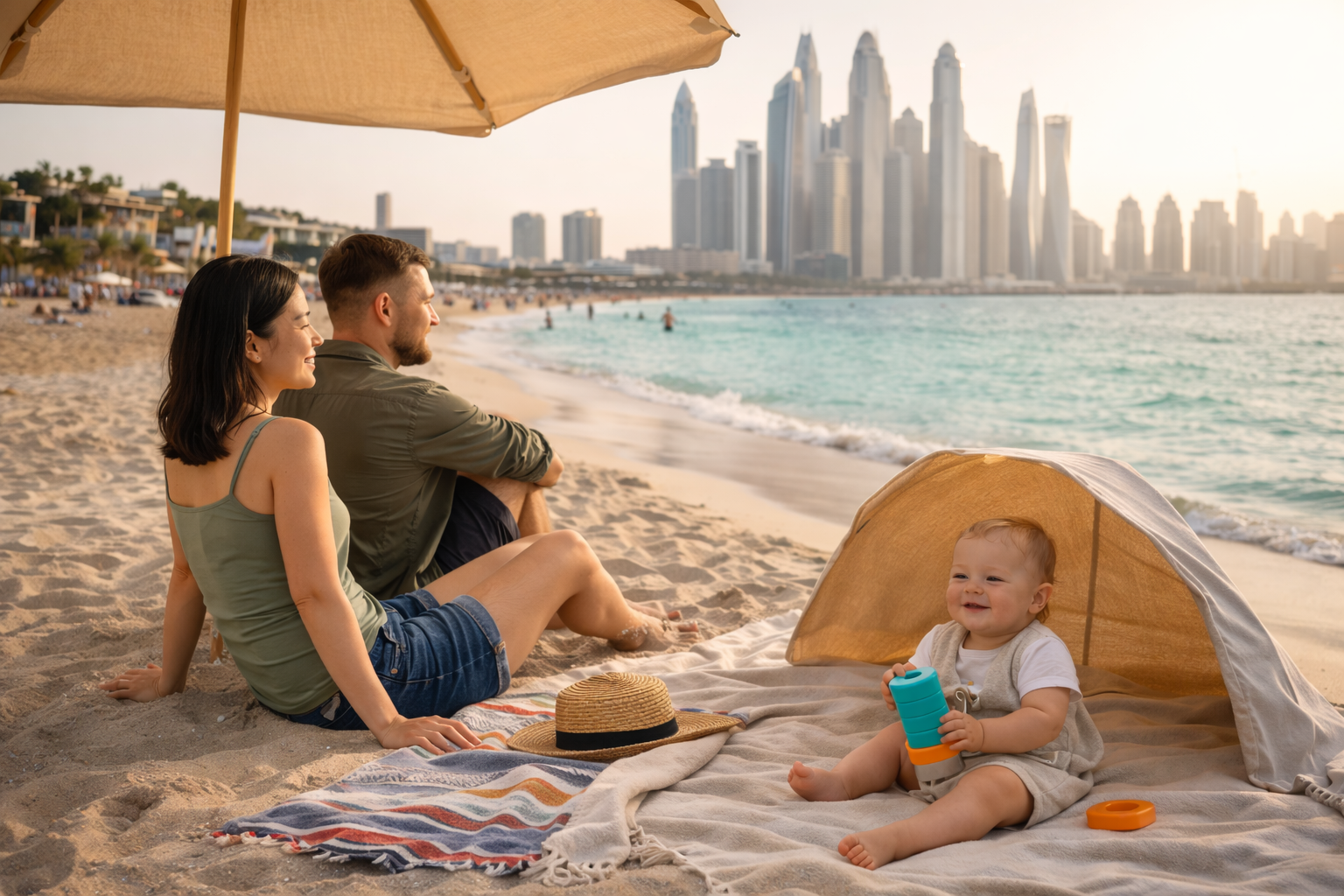
Baby-Friendly Hotels in Dubai
📋 Free Baby Holiday Packing Checklist
Enter your email and we'll send the free printable checklist straight to your inbox — every category, ready to tick off before every trip.
Dubai hotels are genuinely among the best in the world for families with young children. Most mid-range and above properties provide cots, bottle warmers, baby baths, sterilisers, and nappy bins as standard — just call ahead to confirm and request them when booking. Many also offer babysitting services through a dedicated concierge, though prices vary.
Atlantis The Palm
The landmark choice for families. Atlantis sits on the Palm Jumeirah, has a private beach, multiple pool complexes including a water park (for older children, though the lagoon areas work for babies), and the famous Ambassador Lagoon aquarium — free for hotel guests, brilliant for babies who are fascinated by moving lights and fish. Rooms are enormous by Dubai standards. This is a splurge, but it delivers. Rates typically start around £350–£500 per night in peak season.
Jumeirah Beach Hotel
A strong family-focused option on Jumeirah Beach with direct access to the Wild Wadi water park (included for guests). The hotel has a dedicated children's club from age 2, a calm private beach with good lifeguarding, and excellent room service for those inevitable evenings when you don't want to take the baby to a restaurant. Rates from around £250–£400 per night.
Ritz-Carlton JBR
If you want a quieter, more intimate feel — without sacrificing beach access — the Ritz-Carlton at JBR is a solid choice. The beach here is calm and well-managed, the service is impeccable, and the location puts you within a short walk of The Beach at JBR and La Mer. More relaxed than Atlantis, which some families with very young babies will prefer. From around £300–£450 per night.
Holiday Inn Dubai Festival City
The affordable option. Located on Dubai Creek near Festival City Mall, this is a comfortable family hotel without the premium price tag — rates from around £120–£180 per night. No private beach, but the pool is good and Festival City Mall is steps away. Worth considering if you're prioritising mall time and indoor experiences over beach days.

Find Baby-Friendly Hotels
Search baby-friendly hotels with free cancellation, cot requests, and family room options.
Search Hotels on Booking.comThings to Do in Dubai With a Baby
The honest answer is that a large portion of the best baby activities in Dubai don't require you to leave the hotel. Pool days in a warm, safe, supervised environment are ideal for babies — and in Dubai, those pools are exceptional. That said, there's plenty worth venturing out for.
| Activity | Indoor / Outdoor | Cost (approx) | Buggy access | Best age |
|---|---|---|---|---|
| Hotel pool day | Outdoor (shaded) | Free (hotel guests) | ✅ Yes | All ages |
| Dubai Mall aquarium | Indoor | ~£20/adult, under-3 free | ✅ Fully accessible | 3 months+ |
| JBR Beach / The Beach | Outdoor | Free | ✅ Flat promenade | All ages |
| La Mer beach | Outdoor | Free | ✅ Flat and paved | All ages |
| Dubai Creek / Abra boat | Outdoor (brief) | ~£1/person | ⚠️ Fold stroller | 6 months+ |
| Dubai Garden Glow | Outdoor (evening) | ~£15/adult, under-2 free | ✅ Flat paths | 3 months+ |
| The Green Planet | Indoor | ~£25/adult, under-3 free | ✅ Lift access | All ages |
| Miracle Garden | Outdoor | ~£12/adult, under-3 free | ✅ Flat paths | All ages (Nov–Apr only) |
Dubai Mall
More than just a shopping centre — this is a day out in itself. The Dubai Aquarium and Underwater Zoo is genuinely spectacular for babies: floor-to-ceiling tanks, moving fish, and coloured lights at a level that works brilliantly for young children. The mall has nursing rooms and baby-changing facilities on every floor, clearly signposted. The Mamas & Papas unit inside means you can stock up on anything you've forgotten. Allow a full day.
The Beach at JBR and La Mer
Both of these are lifeguarded, family-friendly beach areas with calm water, clean facilities, and paved promenades that are perfectly pushchair-accessible. La Mer has shallow splash areas alongside the main beach that work brilliantly for babies and toddlers. Go early morning — by 10:30am in December or February it's already warm enough to need shade. Both areas have cafés and restaurants close by, making feeding and nappy stops straightforward.
Dubai Garden Glow
An evening attraction (open from around 4pm) that features illuminated sculptures and light installations spread across a flat garden park. For babies, the sensory stimulation of lights and colour is fantastic — and the evening timing means you're not dealing with midday sun. Runs from approximately October to April.
The Green Planet
An indoor tropical rainforest biodome in City Walk, fully air-conditioned. Birds, sloths, reptiles, and thousands of plants across multiple levels connected by lifts. The humidity inside is higher than elsewhere — not unpleasant, just different — and the whole experience is calm and well-managed. A great option for the hottest part of the day.
Dubai Creek Abra Ride
For a moment of old Dubai away from the malls, a traditional wooden abra (water taxi) crossing on Dubai Creek is a short, cheap, genuinely lovely experience. The boats are open-sided, the crossing takes about 10 minutes, and it costs almost nothing. You'll need to fold the stroller for boarding and hold your baby for the crossing — not suitable for babies under 6 months.
Malls and Indoor Life
If you've never been to Dubai before, the role that malls play in daily life takes some adjustment. In the summer months, the entire city operates indoors during the day — and even in winter, malls are the natural default for the midday hours when outdoor temperatures are at their peak.
Dubai Mall is the flagship: enormous, well-signposted, with multiple baby-care rooms, a full Mamas & Papas store, a food court covering every cuisine imaginable, and two floors of restaurants. Mall of the Emirates is smaller but excellent — it has a Ski Dubai slope (you won't be taking a baby on that, but the novelty of seeing snow through a window in 28°C sunshine is something), great food options, and superb baby facilities. Ibn Battuta Mall is themed around the travels of explorer Ibn Battuta, making it more interesting to walk around than a standard shopping centre, and it's significantly quieter than the main tourist-facing malls.
Getting Around Dubai With a Baby
Taxis are cheap, air-conditioned, plentiful, and easy to hail or book through the Careem or Uber apps. They're your most practical option for most journeys. Note that car seats are legally required for children in Dubai — taxis are technically exempt under local law, but many parents choose to bring a portable car seat for peace of mind. Careem allows you to request a car seat-equipped vehicle, though availability varies.
The Dubai Metro is modern, clean, air-conditioned, and has a dedicated women and children's carriage which is the most comfortable for families with pushchairs. It doesn't cover all areas — particularly not the beachfront resorts — but it's excellent for getting from the airport to the city centre. Stations have lifts and are fully step-free.
Renting a car is an option, but Dubai driving is fast-paced and unfamiliar to most UK visitors. ISOFIX is standard in rental cars, but always call ahead to confirm a compatible car seat is available before you arrive. Our car travel guide covers the practicalities of car seats on holiday.
Need a Hire Car?
Compare car hire from all major providers — most include free cancellation and baby seat options.
Compare Car HireFlying to Dubai With a Baby
Direct flights from most major UK airports take around 7 hours — longer than European short-haul but shorter than most long-haul destinations. Emirates flies from Heathrow, Gatwick, Manchester, Birmingham, Glasgow, and Edinburgh. British Airways covers Heathrow. Emirates is particularly well set up for families: bassinets are available in economy (request when booking — they go fast), baby meals can be ordered in advance, and changing tables are available on board.
For everything you need to know about the flight itself, our flying with a baby guide and first flight guide cover all the practicalities — from airport security to nappy-changing at 35,000 feet. Our baby hand luggage checklist is worth working through before you pack your cabin bag.
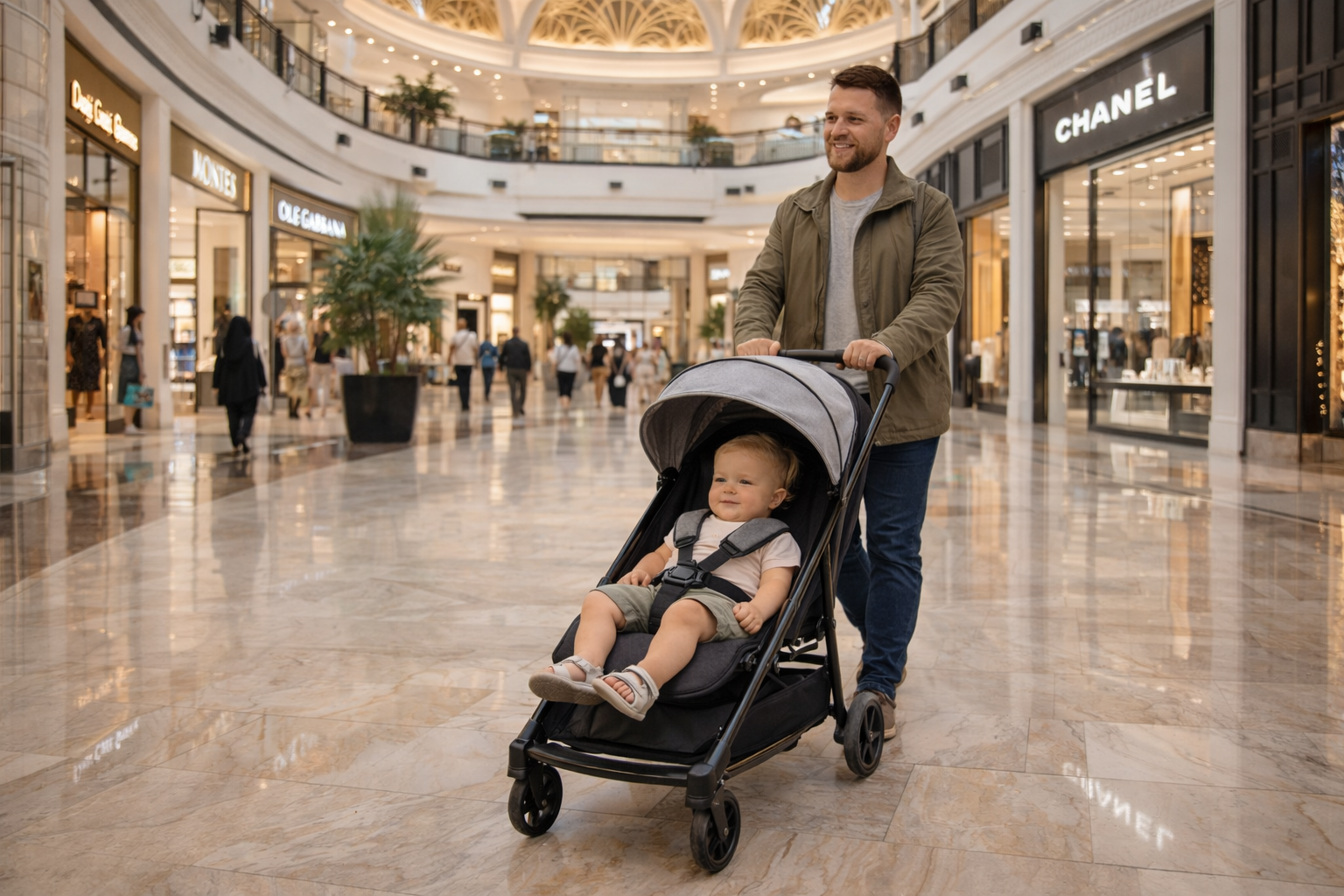
What to Pack for Dubai With a Baby
The packing list for Dubai differs from a European holiday in a few specific ways. Our full baby holiday packing list covers the basics — here's what to prioritise specifically for Dubai:
- Sun protection: Factor 50 sunscreen, a wide-brim cotton hat, UV swimsuit for beach days. Non-negotiable.
- Light cotton and linen clothing: Synthetics hold heat. Pack loose-fitting cotton in light colours for outdoors.
- A light muslin or thin cardigan: For the extreme indoor air conditioning — the shift from 28°C outside to 19°C inside happens multiple times a day.
- Swim nappies: Bring plenty — a reusable swim nappy meets most hotel pools' double-nappy rule. Available in Dubai but more expensive than at home.
- A compact stroller with a large canopy: Dubai is flat and perfectly pushchair-friendly outdoors, but a good canopy is essential. Our travel pushchair review covers the best options — look for UPF-rated canopies. If you're thinking specifically about hot weather performance, our hot weather stroller guide ranks the top options by ventilation and sun protection.
- A baby carrier: Useful for malls and crowded indoor spaces. A breathable mesh carrier is more comfortable in the heat — see our hot weather carrier guide for the best options.

Bugaboo Butterfly
Our top pick for Dubai. The Butterfly's large extendable canopy provides excellent sun coverage, and the one-second fold means you're not wrestling with it in 28°C heat. At around 7.3kg it's manageable for a week of daily use, and the all-wheel suspension handles the pavements and paved beachfronts easily.
✅ Pros
- Full extendable canopy with UPF protection
- Genuinely fast fold — important in heat
- Comfortable seat for babies from 6 months
❌ Cons
- Seat fabric can warm up in direct sun
- Premium price point
- Not suitable from birth without accessories

Ergobaby Omni Breeze
The best carrier choice for Dubai. The SoftFlex mesh panel allows genuine airflow against your chest and baby's back — a solid fabric carrier becomes unbearable in warm weather. Suitable from newborn to toddler in all four carry positions, and the waist belt transfers weight off your shoulders for longer walks through the malls.
✅ Pros
- Breathable mesh — dramatically cooler than fabric carriers
- No infant insert needed from newborn
- Ergonomic hip position for baby
❌ Cons
- Bulkier to pack than a ring sling
- Takes a few attempts to master the fit
- Pricier than budget carriers
Sun Essentials for Dubai
Even in Dubai's winter window, the midday sun is intense. These are the sun-safety basics that make beach mornings and pool days work with a baby.

Childs Farm SPF 50+ Sunscreen
Fragrance-free SPF50+ made for babies' delicate skin (6 months+).
Check price on Amazon
Splash About UV All-in-One Swimsuit
UPF50+ all-in-one covering shoulders to knees for pool and beach.
Check price on Amazon
Splash About Happy Nappy (Reusable Swim Nappy)
Reusable swim nappy that meets most pools' double-nappy rule.
Check price on Amazon
Babymoov Anti-UV Pop-Up Sun Tent
Pop-up UPF50+ tent for shade and a cool nap spot.
Check price on Amazon
Healthcare and Practical Essentials
Dubai has excellent private healthcare — some of the best-equipped hospitals in the world are here. The key word is private: treatment is expensive without insurance. Make sure your travel insurance covers your baby specifically, includes medical repatriation, and has a high enough medical coverage limit (£5 million is the standard recommendation for Dubai). Read the policy before you go, not after something has happened. Holiday Extras lets you compare family travel insurance options side by side and filter for policies with the right coverage levels for a long-haul trip like Dubai.
On the positive side: pharmacies are everywhere, open long hours, and well-stocked with familiar UK brands. You'll find Calpol, nappies (Pampers and Huggies widely available), formula (most UK brands stocked), and baby food without any difficulty. Tap water in Dubai is technically safe to drink but heavily treated — bottled water is cheap and widely available, and most families use it for preparing feeds.
Cultural Considerations for Families
Dubai is a broadly tolerant city in tourist areas, but a few things are worth knowing before you go. Dress code is casual in hotel areas, on the beach, and in malls — you don't need to cover up. At cultural sites and in older areas of the city (like Dubai Creek), covering shoulders and knees is respectful and in some cases required.
Breastfeeding is culturally accepted but using a nursing cover or finding a dedicated nursing room (available in all major malls) is more comfortable in practice. Friday is the UAE weekend — not Saturday and Sunday — so some services and transport patterns are different on Fridays. Alcohol is available in hotels and licensed restaurants. Ramadan, if your visit falls during it, brings reduced restaurant opening hours during daylight: worth checking the dates, though many tourist-facing venues remain open.
Pro Tip
Book your hotel cot and any baby equipment in advance — don't rely on turning up and asking. Most Dubai hotels are excellent at this, but they need notice. Email or call the hotel directly rather than relying on a booking platform note, and get written confirmation of what will be ready in your room on arrival.
Is Dubai Worth It With a Baby?
Yes — for the right family, at the right time of year. If you travel in November to February, you'll find a city that is genuinely excellent for families with young babies: warm, safe, beautifully designed for pushchairs and indoor life, and with hotel standards that make the daily logistics of life with a baby easier than almost anywhere else. The flight (7 hours) is manageable, and most airlines on this route are well set up for families. It costs more than a European break, but the hotel quality and guaranteed sunshine justify the premium for many families. If you'd like to explore the full range of long-haul options under 10 hours, our destination comparison covers five top choices.

Don't Forget Travel Insurance
Compare family travel insurance policies — covers medical emergencies, cancellations, and lost luggage.
Compare Travel Insurance✈️ Free Baby Hand Luggage Checklist
Never forget the essentials. Enter your email and we'll send the free checklist straight to your inbox — one page, every category, ready before every flight.
Frequently Asked Questions
Is Dubai safe for babies?
Dubai is a very safe city for families. Crime rates are low, roads are well-maintained, malls and hotels are secure, and healthcare is excellent. The primary safety consideration for babies is the heat — visiting outside the October–March window, or failing to protect your baby from direct sun even in winter, is the real risk. Stick to the advice on timing and sun protection and Dubai is a thoroughly safe destination.
What age can babies travel to Dubai?
There's no minimum age requirement to fly or enter Dubai. However, babies under 3 months may find a 7-hour flight challenging, and the heat (even in winter) requires careful management for newborns. Most families wait until their baby is 3–6 months old before attempting long-haul, though some travel earlier without issue. Always check with your GP or health visitor if you have concerns about flying with a very young baby.
Do Dubai hotels provide cots?
Yes — virtually all mid-range and above hotels in Dubai provide travel cots on request, and many also offer bottle warmers, sterilisers, and baby baths. Always request these when booking (or email the hotel directly) rather than assuming they'll be ready. Most hotels are excellent at fulfilling family requests if given advance notice.
Is there baby formula and nappies in Dubai?
Yes. Dubai pharmacies and supermarkets stock UK formula brands (Aptamil, Hipp Organic, SMA), a full range of nappies (Pampers and Huggies widely available), and most UK baby food brands. You don't need to overpack these items — but bring a 2-day supply in case you arrive late or need to settle in before shopping.
Which airline is best for flying to Dubai with a baby?
Emirates is generally rated the best for families on the Dubai route. Bassinets (sky cots) are available in economy class — request one when booking as they go quickly. Baby meals can be pre-ordered, there are changing tables on board, and the inflight entertainment is excellent for when your baby surprises you by sleeping through the whole thing. British Airways is a solid second option with good family policies.
Do I need a car seat in Dubai?
Car seats are legally required for children in Dubai when travelling in a private car. Taxis are technically exempt under local law, but using one provides important protection. Careem and Uber both operate in Dubai and Careem allows you to request a car seat-equipped vehicle (availability varies). If you're renting a car, arrange the car seat in advance — don't rely on the desk at pick-up.
Are Dubai beaches safe for babies?
JBR Beach, La Mer, and most hotel beaches are lifeguarded and well-maintained with calm water and flat access. The main beach consideration is sun exposure: go before 10:30am or after 4pm, use factor 50 sunscreen, and keep babies out of direct midday sun. The water temperature in winter (December–February) is around 22–24°C — warm and pleasant for babies.
What is the cheapest time to go to Dubai with a baby?
January is typically the most affordable month in the sweet-spot window — post-New Year demand drops, prices come down, and temperatures remain ideal. Late October and early November can also offer good value before peak season starts. December (particularly school holidays) and February are the most expensive months in the winter window.
The Verdict
Time it right — November to February is the sweet spot — and Dubai is one of the most practical long-haul destinations you can take a baby to. The infrastructure is excellent, the hotels are outstanding, and the indoor-outdoor rhythm of life there suits families with young children better than almost anywhere else. Pack sun protection, book your cot in advance, and build your days around beach mornings and mall afternoons.