
Best Lightweight Airline-Approved Car Seats UK 2026
By BabyTravel UK Editorial Team · Last updated August 2026
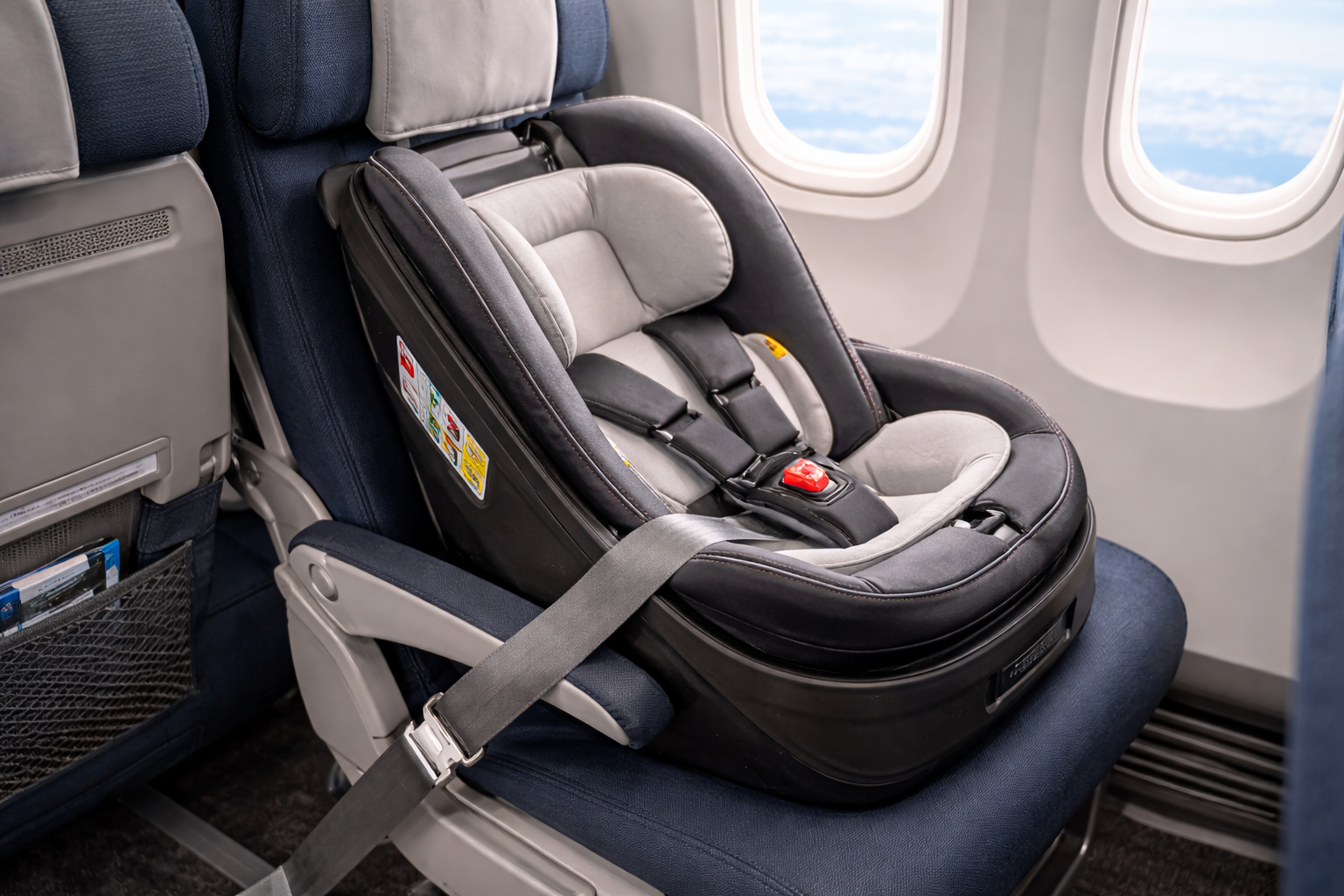
Taking a car seat into an aircraft cabin is not as simple as finding a model described as “travel friendly”. The exact seat must be certified for use with an aircraft's two-point lap belt, it needs to fit the airline's size rules, and the airline must agree to its use on your booked flight and seat.
Among current UK choices, the Joie i-Level Pro offers a good balance of everyday car use and aircraft certification, the Maxi-Cosi Pebble 360 Pro² is the strongest premium option, and the BeSafe Go Beyond suits parents who want a current TÜV-certified infant carrier. The Doona X is much heavier but replaces a separate airport stroller.
Before you buy for a flight
Match the full model name to the current TÜV Rheinland aircraft-qualified list, look for the “For use in Aircraft” label on the physical seat, and obtain confirmation from your airline. TÜV notes that the airline has the final decision.
Quick picks
- Best overall: Joie i-Level Pro
- Best premium: Maxi-Cosi Pebble 360 Pro²
- Best current infant carrier: BeSafe Go Beyond
- Best for airport transfers: Doona X
Airline-compatible car seats compared
| Car seat | Child range | Product weight | Aircraft listing | Best for |
|---|---|---|---|---|
| Joie i-Level Pro | 40–87cm, up to 13kg | Check the current seat listing | TÜV list, issued 2025 | Everyday car comfort and flights |
| Maxi-Cosi Pebble 360 Pro² | 40–87cm | About 4.7kg without base | TÜV list, issued 2023 | Premium rotating-base system at home |
| BeSafe Go Beyond | 40–87cm, up to 13kg | About 4.5–5kg | TÜV list, issued 2024 | Current certified infant carrier |
| Doona X | 40–85cm, up to 13kg | 8.3kg | TÜV list, issued 2024 | Car seat and airport stroller in one |
The base is not taken into the cabin. Aircraft installation uses the plane's lap belt according to the car-seat manual, subject to the airline's rules. A seat can be approved for aircraft use yet still be refused because of its width, the booked seat position or a carrier-specific policy.
The best airline-approved car seats
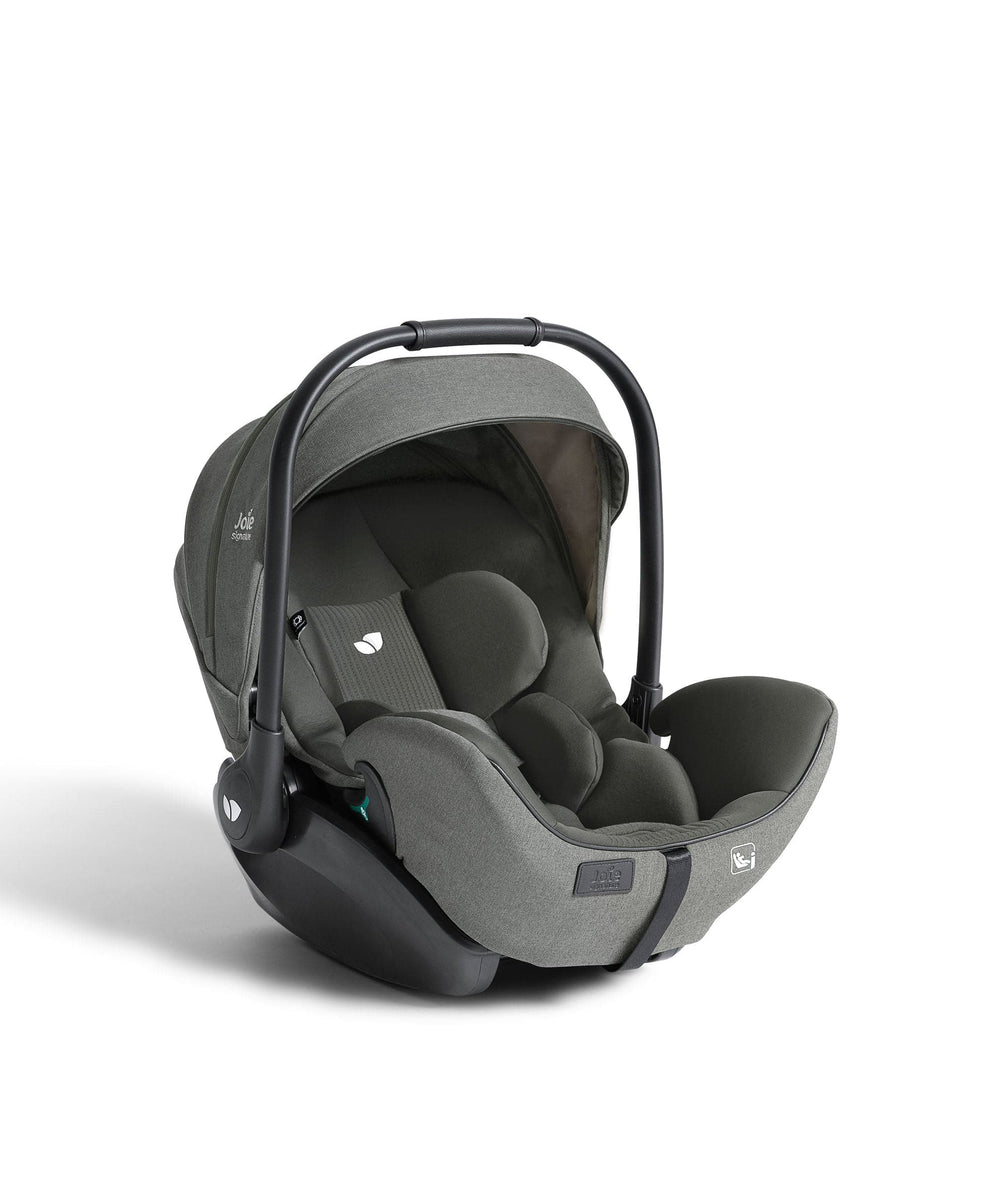
1. Joie i-Level Pro: best overall
The i-Level Pro is a current R129 infant carrier for babies from 40 to 87cm, with a deep recline for road and pushchair use. It can be installed in a car with the vehicle's three-point belt or paired with a compatible Joie base, which is useful when you want one seat to cover everyday journeys and flights.
TÜV Rheinland's list names the i-Level Pro as qualified for aircraft use. Before travelling, check that the label is present on your exact seat and follow the aircraft section of its manual. Do not assume the in-car recline or base is used on board; cabin installation is a separate arrangement.
- Pros: current certification, belt installation in cars, useful recline and broad pushchair compatibility.
- Cons: not the smallest infant carrier and airline acceptance still needs confirmation.
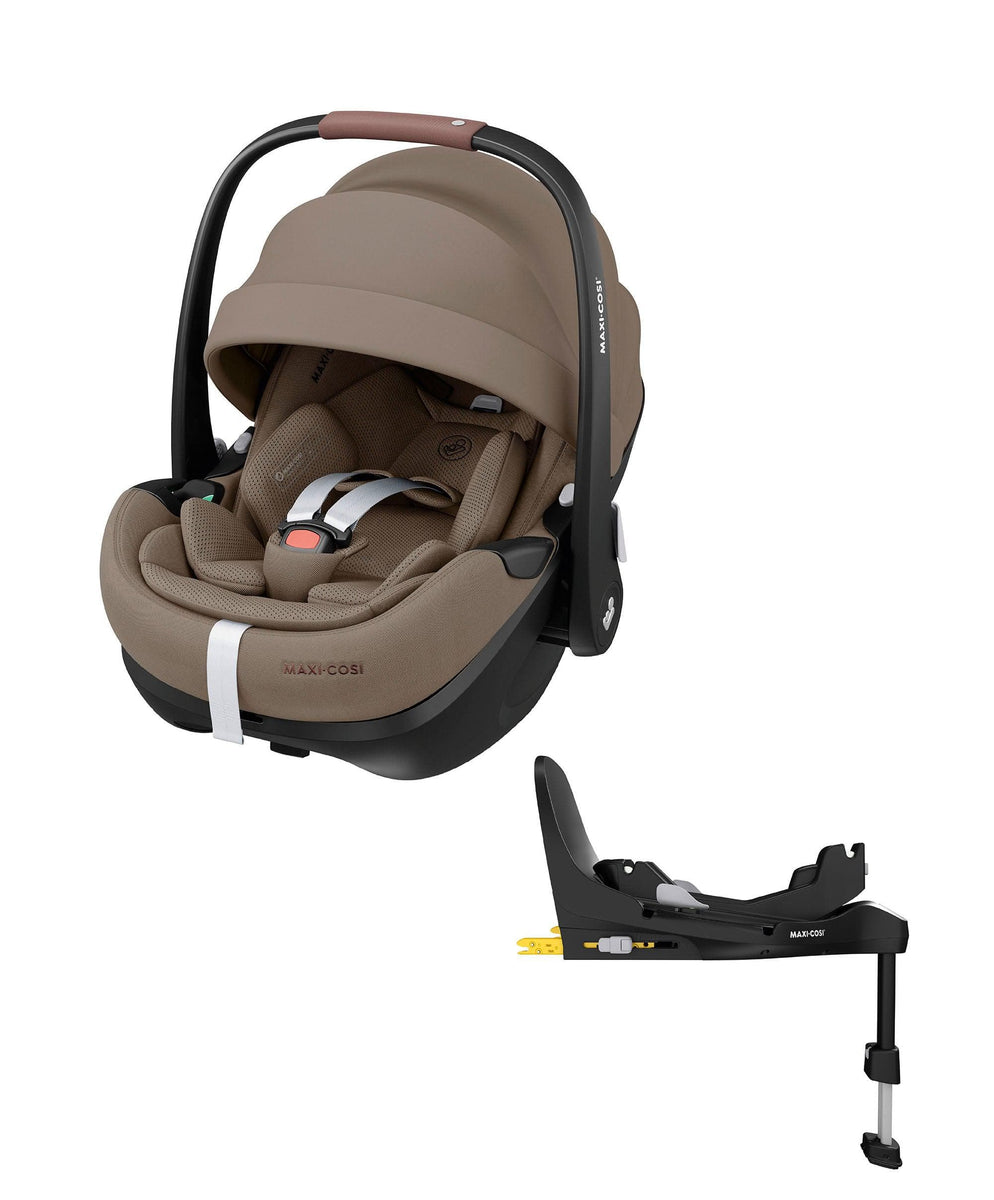
2. Maxi-Cosi Pebble 360 Pro²: best premium option
The Pebble 360 Pro² weighs about 4.7kg and is designed for babies from 40 to 87cm. At home it pairs with the FamilyFix 360 Pro base for slide-and-rotate convenience; for travel, the infant carrier itself is the relevant piece. TÜV's list includes the Pebble 360 Pro² as an aircraft-qualified model.
This is most appealing when you want a premium everyday system and occasional cabin use, rather than the absolute lightest possible seat. Check whether the retailer bundle includes the base and compare that cost with buying the carrier alone.
- Pros: certified model, full lie-flat feature in approved modes, strong everyday base system.
- Cons: premium price and the base adds significant cost and weight at home.
3. BeSafe Go Beyond: best current certified carrier
The Go Beyond covers babies from 40 to 87cm and appears on the TÜV aircraft list under its exact model name. Its Active Lay Flat function is intended to improve comfort in supported modes, while car installation can use a compatible base or a vehicle belt.
Weight figures vary slightly between published listings, so use the label and manual supplied with the exact version you buy. The most important cabin detail is not the recline feature but the TÜV label and correct two-point-belt installation described by the manufacturer.
- Pros: current 2024 aircraft qualification, newborn-to-87cm range and premium infant support.
- Cons: expensive and not as widely stocked as Joie or Maxi-Cosi.
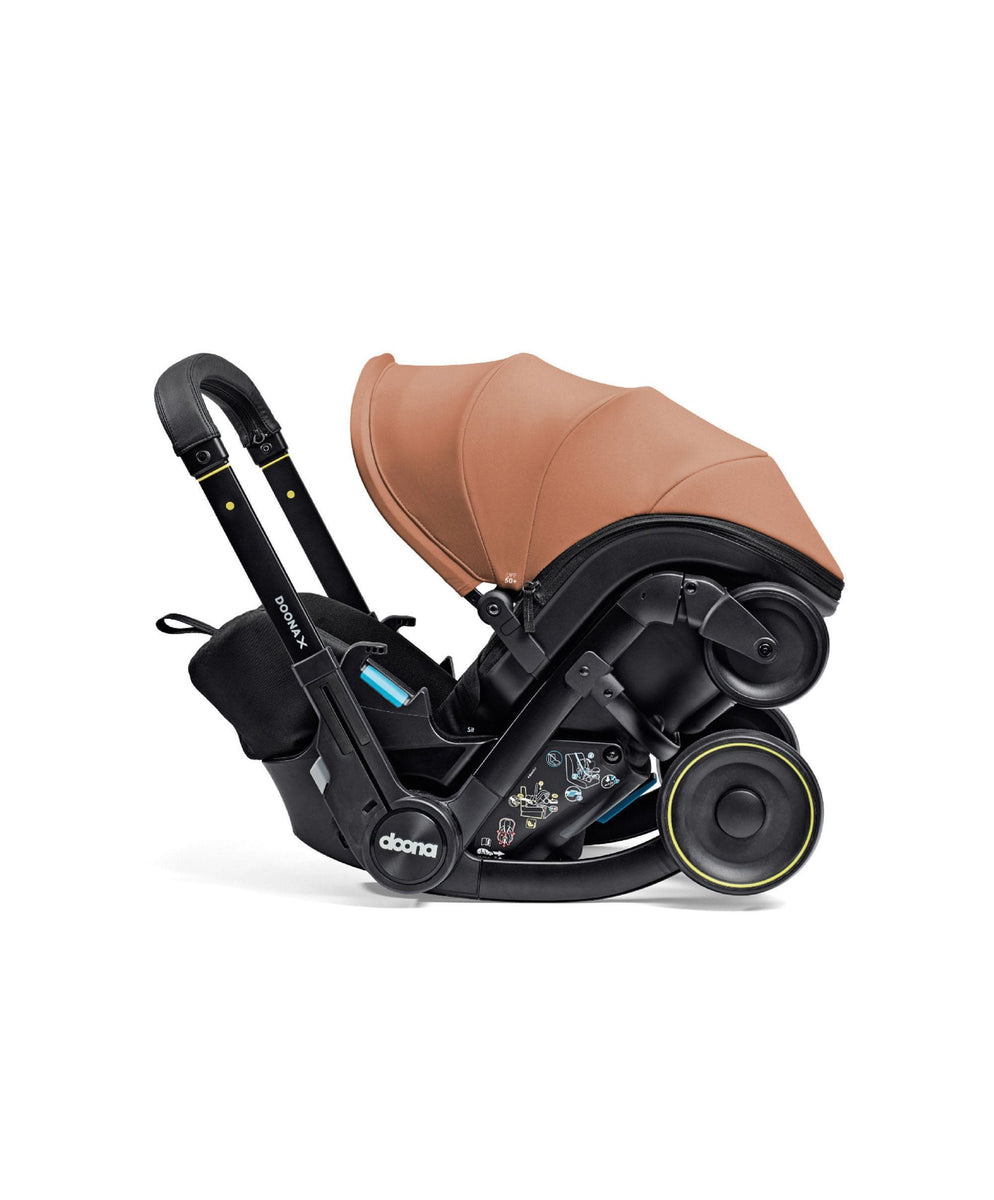
4. Doona X: best for airport transfers
The Doona X is the exception to the word “lightweight”. At 8.3kg it is heavier than a standard infant carrier, but its integrated wheels turn it into a stroller for the airport, taxi queue and short walk at the destination. That can remove the need to carry both a seat and separate buggy through the terminal.
It is R129 approved for road use, covers 40–85cm and appears on the TÜV aircraft list. The cabin practicality depends on airline agreement and seat dimensions, while the wheels and handle must be placed in the correct aircraft configuration.
- Pros: certified for aircraft use, stroller built in, very convenient for taxis and short transfers.
- Cons: heavy to lift, expensive and not a replacement for a full pushchair on long days.
For the full car, stroller, taxi and flight trade-offs, read our detailed Doona X review for UK parents.
Aircraft-approved does not mean every airline accepts it
📋 Free Baby Holiday Packing Checklist
Enter your email and we'll send the free printable checklist straight to your inbox — every category, ready to tick off before every trip.
TÜV qualification confirms that a named child restraint has been assessed for aircraft use. Airlines still control what may be used on their planes. Some require advance notice, restrict car seats to a window position, prohibit them in exit rows, specify a maximum base width or apply different rules during take-off and landing.
The TÜV aircraft child-restraint guidance explains why aircraft seats require separate assessment, and the UK Civil Aviation Authority's travelling-with-children guidance is a useful starting point before checking the operating airline.
Contact the airline with the full model name and its dimensions, then keep the written response with your booking. Bring the manual and make sure the label remains readable. Our practical guide to using a car seat on a plane explains the booking and boarding process, while the airline baby policies comparison links to individual carrier rules.
Why exact model names matter
Car-seat families often reuse familiar names across several generations. “CabrioFix”, “Pebble”, “Aton” or “Baby-Safe” may refer to multiple seats with different suffixes, dimensions and approvals. A certificate for one version does not automatically apply to the newer or older version beside it in a shop.
For example, a current retailer may stock the light 3.8kg Cybex Aton B2 i-Size while the TÜV list names Aton B iSize. That is close enough to cause confusion but not close enough to assume they are identical. If the exact suffix is missing, ask the manufacturer for written confirmation or choose a model whose name and label match clearly.
What to check before travelling
- Book a separate aircraft seat for the child if the airline requires one for car-seat use.
- Send the airline the full model name, certification and width before departure.
- Confirm the approved cabin position; window seats are commonly required so the restraint does not block another passenger.
- Pack the manual where cabin crew can see the aircraft installation section.
- Photograph the certification label before leaving home in case it becomes difficult to read.
- Do not take the ISOFIX base into the cabin unless an airline and manufacturer explicitly instruct otherwise.
If the seat will travel in the hold instead, protect it in a padded bag and inspect it after landing. Our car seat on holiday guide compares taking, hiring and buying at the destination.
✈️ Free Baby Hand Luggage Checklist
Never forget the essentials. Enter your email and we'll send the free checklist straight to your inbox — one page, every category, ready before every flight.
Frequently asked questions
Can I use any R129 car seat on a plane?
No. R129 is a road-vehicle standard. Aircraft use requires a suitable two-point-belt approval or other certification accepted by the airline, plus the airline's permission.
Do I need to buy my baby a separate plane seat?
Usually yes if you want the baby to remain in a car seat during the flight. Rules and fares differ, so confirm this before booking rather than trying to add the restraint at the gate.
Can an ISOFIX base be used on a plane?
Ordinary aircraft seats do not use the car's ISOFIX installation. Certified infant carriers are normally attached using the aircraft lap belt according to their manual.
Where should a car seat go in the cabin?
Many airlines require a window seat so the restraint cannot obstruct another passenger, with restrictions around exit rows and bulkheads. Follow the carrier's assigned seating rules.
What is the lightest airline-approved infant car seat?
The answer changes by model generation and market availability. Compare only exact products on the current certification list, then verify their physical labels and current weights.
Can I use a booster seat on a plane?
Standard backless boosters depend on a vehicle's three-point belt and are not suitable for an aircraft lap belt. TÜV guidance states that booster seats are not permitted for this use.
What if cabin crew refuse the seat?
The airline has the final decision on board. Written pre-approval, the manual and a visible label help, but you should also know the carrier's fallback arrangements before travelling.
Our verdict
The Joie i-Level Pro is the best-balanced current option, while the Maxi-Cosi Pebble 360 Pro² suits parents already investing in its premium base system. The BeSafe Go Beyond is another strong current certified carrier, and the Doona X earns its place when integrated wheels matter more than low lifting weight. Buy by exact model and certification label, not by brand name alone.