
Best Compact Cot for Small Spaces (UK 2026)
By BabyTravel UK Editorial Team · Last updated July 2026
If you’ve ever tried fitting a travel cot into a tiny hotel room, you already know the pain. The wrong cot eats floor space, blocks the bathroom door, and turns bedtime into a wrestling match. The right one folds small, sets up fast, and still feels safe and comfortable for your baby.
See the best compact cots now →
Also useful: overnight travel cot safety, travel cot vs portable crib, and lightweight folding cots for holidays.
Quick picks
- Best Overall: Silver Cross Slumber 3-in-1 Travel Cot
- Best Compact Fold: Graco Compact Travel Cot
- Best Budget: Baby Elegance Air² Travel Cot
What actually matters in a compact travel cot?
Marketing copy usually focuses on “lightweight” and “easy fold,” but parents in small spaces care about a few practical details: folded footprint, setup speed, mattress feel, and whether the cot still gives enough room for proper sleep. If those are off, you feel it every day of the trip.
For safety context, follow the Lullaby Trust safer sleep advice and check relevant NHS baby sleep guidance before overnight travel.
Five compact-cot features worth comparing
- True compactness: does it fit small UK rooms without disrupting movement?
- Speed: can one parent set it up quickly after a long travel day?
- Sleep comfort: does the base feel stable and practical for overnight use?
- Carry practicality: can you move it between car, train, hotel, and family house without hassle?
- Value: does the performance justify the price?
Small-space reality check before buying
📋 Free Baby Holiday Packing Checklist
Enter your email and we'll send the free printable checklist straight to your inbox — every category, ready to tick off before every trip.
Measure your likely room layout first. Most parents only measure cot dimensions and forget the “use zone” around it. You still need room to stand, lift your baby safely, and move at night without tripping on bags.
A good rule: plan for the cot footprint plus about one adult step of clearance on at least two sides. In tight flats or family guest rooms, this small check can save a lot of frustration.
When compact cots fail (and how to avoid it)
- Too heavy for your routine: manageable once, annoying every day.
- Slow setup: a “simple” design that still takes too long when your baby is tired.
- Poor storage logic: carry bag design makes repacking harder than setup.
- Mismatch with trip type: good for car trips but bad for flight-heavy travel.
If you travel often, always prioritise setup speed and carry ease over minor style features.
Top Picks: Compact Cots for Small Spaces
| Category | Product | Why it stands out | Link |
|---|---|---|---|
| Best Overall | Silver Cross Slumber 3-in-1 Travel Cot | 7.65kg; newborn insert, toddler cot and playpen modes | Check price |
| Best Budget | Baby Elegance Air² Travel Cot | 9kg full-size cot with mesh sides and carry bag | Check price |
| Best Compact Pack | Graco Compact Travel Cot | 22.4 × 22.4 × 79.8cm folded; 8.95kg | Check price |
| Best for Small Rooms | Maxi-Cosi Iris² Travel Cot | Two height positions and a raised newborn level | Check price |
| Best Lightweight | Venture Airpod Travel Cot | Easier to carry for frequent movers | Check price |
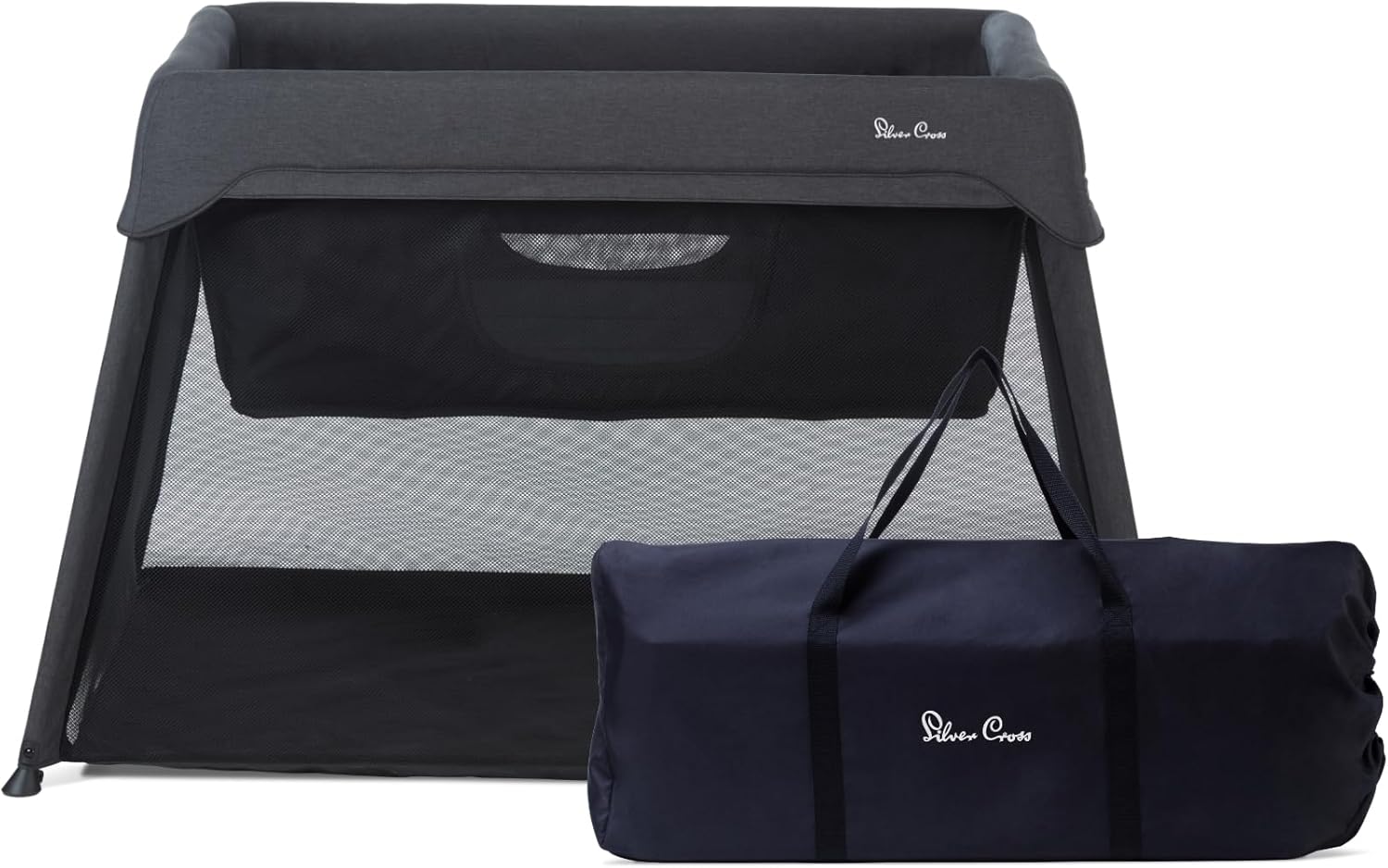
Best Overall: Silver Cross Slumber 3-in-1 Travel Cot
At a glance: 7.65kg, 112 × 80 × 67cm open and 88 × 34 × 17cm folded. The zip-in newborn insert changes it from a raised newborn bed into a full travel cot and playpen.
Why we like it: It offers more stages than a basic full-size cot while remaining lighter than several budget alternatives. The folded package is long but relatively flat, which works well across a car boot or beneath a bed at home.
- Pros: three useful modes, 7.65kg weight, flat folded profile
- Cons: 80cm open width needs checking in very small hotel rooms

Best Budget: Baby Elegance Air² Travel Cot
At a glance: 9kg and 111 × 79 × 67cm when open. It is a conventional full-size travel cot with mesh sides, supplied mattress and carry bag.
Why we like it: Good choice for occasional travel, grandparents’ house use, or a backup setup where a dependable full-size sleep space matters more than shaving off every kilogram.
- Pros: affordable, roomy, breathable mesh sides
- Cons: heavier and wider than genuinely lightweight travel cots

Best Compact Pack: Graco Compact Travel Cot
At a glance: 8.95kg, 102.5 × 72.5 × 79.5cm open and 22.4 × 22.4 × 79.8cm folded. The carry bag creates a tall, narrow package rather than a flat suitcase shape.
Why we like it: The narrow folded footprint is easy to stand in a cupboard or slot beside other luggage. It is still a full-size cot once open, so “Compact” describes the packed shape rather than a tiny sleeping area.
- Pros: narrow folded package, simple Graco fold, carry bag included
- Cons: almost 9kg and not the shortest package for train travel

Best for Small Rooms: Maxi-Cosi Iris² Travel Cot
At a glance: A two-level travel cot that keeps a newborn higher, then converts to the lower toddler position as your child grows.
Why we like it: Better match for compact guest rooms and holiday lets where an easy-access raised level and tidy rectangular footprint are more useful than playpen extras.
- Pros: two height positions, newborn-friendly access, practical room layout
- Cons: price can be higher than entry-level options

Best Lightweight: Venture Airpod Travel Cot
At a glance: A carry-friendly pick for families moving between locations frequently.
Why we like it: Lighter builds are often easier to live with on real trips, especially when one parent handles most transport and setup.
- Pros: easier carrying, more travel-friendly day to day
- Cons: may trade off some heavy-duty feel
How to choose quickly based on your routine
Mostly car trips: go for comfort + stable setup first; compactness second.
Frequent room changes: prioritise carry ease and setup speed.
Tiny flats or guest rooms: prioritise folded footprint and small-room fit.
Budget-sensitive buying: choose a reliable basic model now and upgrade only if travel frequency increases.
Practical setup tips from experienced parents
- Do one full setup run at home before your trip.
- Keep sleep items packed together so bedtime stays predictable.
- Use the same corner/placement pattern each night to reduce fuss.
- Let your baby test the cot briefly in daytime before first overnight use.
Small routines like this can dramatically reduce bedtime stress in unfamiliar rooms.
Room-by-room planning guide
Hotel room with limited floor space
In smaller hotel rooms, the cot usually competes with luggage space and access to the bathroom. Place the cot first, then rebuild the room around it. It sounds basic, but doing this in reverse is where most families lose time and patience.
Keep one “night lane” clear from your bed to the cot. If you need to step over bags at 2am, the setup is wrong.
Family guest room
Guest rooms often have extra furniture, low sockets, and less usable floor area than expected. If possible, move one piece of furniture before bedtime. That single move can turn a stressful setup into a calm one.
Ask for blackout support early. If curtains are thin, use practical workarounds so sleep stays predictable.
Holiday apartment or Airbnb
Apartments often give more floor space, but layouts vary. Use daytime arrival to test cot position and power points before your baby is tired. The best place is usually near your bed but away from direct heating or drafty doors.
Travel strategy by trip type
Weekend break: favour quick setup and low hassle over advanced features you will barely use.
7–14 day holiday: comfort and maintenance become more important because you repeat the routine many nights.
Frequent family visits: carry ease and repack speed matter most. You’re not just setting up once.
Comfort without overcomplication
Parents often ask if they should buy lots of add-ons. Usually, no. A stable cot, safe sleep clothing, and a consistent bedtime routine deliver more value than extra accessories.
What helps most:
- same sleep cue pattern each night (story, feed, lights down)
- familiar sleep item approved for your child’s age and stage
- quiet setup before your baby reaches overtired mode
Simple routines beat complicated gear most of the time.
Care and long-term value
Compact cots last longer when you keep a basic maintenance rhythm. Check joints and locking points monthly if you travel often. Wipe and fully dry after each trip. Repack neatly so zips and fabric are not strained in storage.
If you share gear between homes, label parts and store instructions in the carry bag. This avoids setup mistakes when someone else is helping.
Final buying advice
If you’re stuck between two models, choose the one that is easier to set up when you’re tired. That is the real test. Good travel gear should reduce stress, not add another decision at bedtime.
A compact cot is worth it when it protects sleep quality and makes room setup predictable. That consistency matters far more than spec-sheet perfection.
Detailed buyer scenarios
Scenario 1: One-bedroom flat, no spare storage. Prioritise fold size and bag storage first. A slightly more expensive compact fold often saves more stress than a cheaper bulky model that is awkward to store.
Scenario 2: Grandparents’ house every other weekend. Prioritise setup speed and simple instructions. If multiple adults will use it, simplicity beats niche features.
Scenario 3: Mixed transport travel (car + train + taxi). Prioritise carry comfort and repack ease. Heavy cots feel manageable once, then frustrating over repeated moves.
Scenario 4: Longer family holiday. Prioritise sleep comfort and nightly consistency. Over a week or more, comfort trade-offs become obvious quickly.
What parents usually ask after buying
Most post-purchase issues are not about safety certification. They are about routine friction: awkward setup, poor room placement, and messy repacking. A compact cot that you can set up calmly in under two minutes is usually the better long-term choice, even if specs look similar on paper.
If your baby is sensitive to sleep changes, do a mini rehearsal at home before travel week. Even one practice night can make the first trip smoother.
Checklist for first trip success
- Test setup and fold twice at home
- Pack cot bag in the most accessible travel position
- Bring familiar bedtime cues
- Check room layout on arrival before bedtime
- Keep one predictable bedtime routine each night
This checklist sounds simple, but it is the difference between a calm first night and a stressful one.
✈️ Free Baby Hand Luggage Checklist
Never forget the essentials. Enter your email and we'll send the free checklist straight to your inbox — one page, every category, ready before every flight.
Frequently Asked Questions
Can babies sleep overnight in a compact travel cot?
Yes, if the cot is designed for overnight sleep and used according to manufacturer guidance. Always follow safe sleep recommendations.
Is lighter always better?
Not always. Lighter is useful for carrying, but overall stability and setup quality still matter.
Do I need a separate mattress?
Use only what the manufacturer recommends. Adding unapproved mattress layers can affect safety.
Which is better for tiny rooms: compact fold or lightweight?
If space is the main issue, compact fold usually matters more than weight.
How often should I clean a travel cot?
Spot clean after each trip and deep clean regularly, especially if used frequently.
Expanded practical FAQs parents ask in real life
Do I need two compact cots for different situations?
Most families can manage with one if it matches their routine well. If you split time between multiple homes, a second lower-cost cot can still be worth it for convenience.
What if my baby sleeps differently in travel cots?
That is common in the first few nights. Keep bedtime cues consistent and avoid changing too many variables at once. Stability usually improves quickly when routine stays familiar.
Should I prioritise a bigger sleep area over compact fold?
For frequent travel in small spaces, compact fold usually wins. For longer stays in larger rooms, extra sleep area can be a worthwhile comfort upgrade.
Can I rely on accommodation cots instead?
Sometimes yes, but quality and cleanliness vary. Bringing your own cot gives predictable setup and fewer surprises, especially with babies sensitive to sleep changes.
How do I choose without overthinking?
Pick by routine: transport type, room size, and setup speed. If those three align, you’ll usually make a good decision even without chasing every spec.
What to do after you buy
Once your cot arrives, do a quick two-night home test before any trip. Set it up in your bedroom, run your normal bedtime routine, and make a short notes list: setup time, carry comfort, and anything that feels awkward. This tiny rehearsal saves stress when you are travelling and tired.
Keep a compact “sleep kit” stored with the cot bag. Include approved sleepwear, one familiar comfort cue, and any essentials you always use at bedtime. The less you search for items, the easier nights become in unfamiliar places.
If one parent does most setup, design the system around that person’s workflow. The best travel setup is not the most technical one. It is the one you can repeat calmly, even after a long day. When you find a routine that works, keep it consistent across every trip.