
Best Pushchair Footmuff for Travel (UK 2026)
By BabyTravel UK Editorial Team · Last updated July 2026
If you travel in autumn or winter, a good footmuff is one of the most useful baby accessories you can buy. It keeps your child warm in the pushchair, reduces blanket battles, and helps naps stay on track when you’re outside.
Jump to this year’s top footmuff picks →
Planning a full setup? Pair this with our guides to stroller bags for flights, must-have baby travel accessories, and flying with a baby and stroller.
Quick verdict
- Best Overall: Orzbow Universal Footmuff for Pushchair
- Best for Winter: CrocnFrog Universal Baby Bunting Footmuff
- Best Lightweight: BundleBean GO Multi-use Waterproof Footmuff
What makes a travel footmuff worth buying?
Most parents don’t need ten features. You need five things to be right: fit, warmth, washability, weather resistance, and packability. If any of those fail, the product becomes annoying fast and ends up at the bottom of the buggy basket.
For UK travel specifically, you’re usually dealing with damp air, unpredictable rain, and cold wind rather than deep snow. That means a practical travel footmuff should focus on wind blocking + water resistance + easy ventilation, so your child is warm but not sweaty.
On safety: avoid over-bundling and keep an eye out for overheating cues. The Lullaby Trust safer sleep advice is a good reference for managing baby temperature in cooler weather.
How we rate footmuffs on Baby Travel UK
To keep reviews useful (not fluffy), we score products on a practical parent framework:
- Fit confidence: works with harness slots and common buggy shapes
- Warmth control: cosy in wind/cold, with unzip options for mild days
- Weather performance: handles drizzle and splashy pavements
- Travel usability: folds small, easy to stash in the car/overhead area
- Care and maintenance: wipe-clean or machine-wash friendly
- Price-to-value: does it justify the cost over a blanket + layer combo?
We also cross-check parent concerns we repeatedly see in forums and travel groups: slipping down in the seat, zips catching, and awkward fit around 5-point harnesses.
Buyer’s guide: choose the right one in 3 minutes
📋 Free Baby Holiday Packing Checklist
Enter your email and we'll send the free printable checklist straight to your inbox — every category, ready to tick off before every trip.
1) Start with your pushchair type
Compact city stroller? You’ll usually want a trimmer universal model. Larger travel systems and all-terrain buggies can handle chunkier winter footmuffs. If your seat shape is curved or bucketed, prioritise flexible harness slot positioning.
2) Match warmth to your real use case
If most trips are school runs, urban errands, and train travel, lightweight insulated models are often enough. If you regularly do early-morning walks, countryside routes, or winter city breaks, go for stronger windproof and thermal lining performance.
3) Don’t ignore cleaning
Wet shoes, snack crumbs, and muddy wheels happen. A footmuff that is machine washable or easy wipe-clean will save you time every week.
4) Build flexibility into your setup
The best models unzip or fold down quickly so you can adapt when weather shifts mid-trip. In the UK that’s common, so this feature matters more than most spec sheets suggest.
Temperature and layering tips for UK travel
Layering beats over-bulking. A base layer + warm suit + footmuff is usually more manageable than multiple blankets. Keep hands/neck checks in mind and adjust as needed during the day. For weather context before day trips, the Met Office is a better planning input than generic weather apps.
If you’re flying, cabin temperatures can vary. Keep your baby in removable layers and use the footmuff more like a controlled outer layer on arrival and airport transfers rather than throughout airport interiors.
Top Picks: Best Pushchair Footmuffs for Travel
These picks cover the categories parents usually care about most: overall value, budget, winter warmth, lightweight travel, and universal fit.
| Category | Product | Why it stands out | Link |
|---|---|---|---|
| Best Overall | Orzbow Universal Footmuff for Pushchair | Balanced warmth, fit, and value for most UK families | Check price |
| Best Budget | Universal Pushchair Footmuff | Low-cost entry point for occasional cold-weather use | Check price |
| Best for Winter | CrocnFrog Universal Baby Bunting Footmuff | Warmer cocoon feel for windier and colder days | Check price |
| Best Lightweight | BundleBean GO Multi-use Waterproof Footmuff | Flexible for transitions and changing temperatures | Check price |
| Best Universal Fit | For Your Little One Universal Footmuff | Strong compatibility focus across stroller types | Check price |
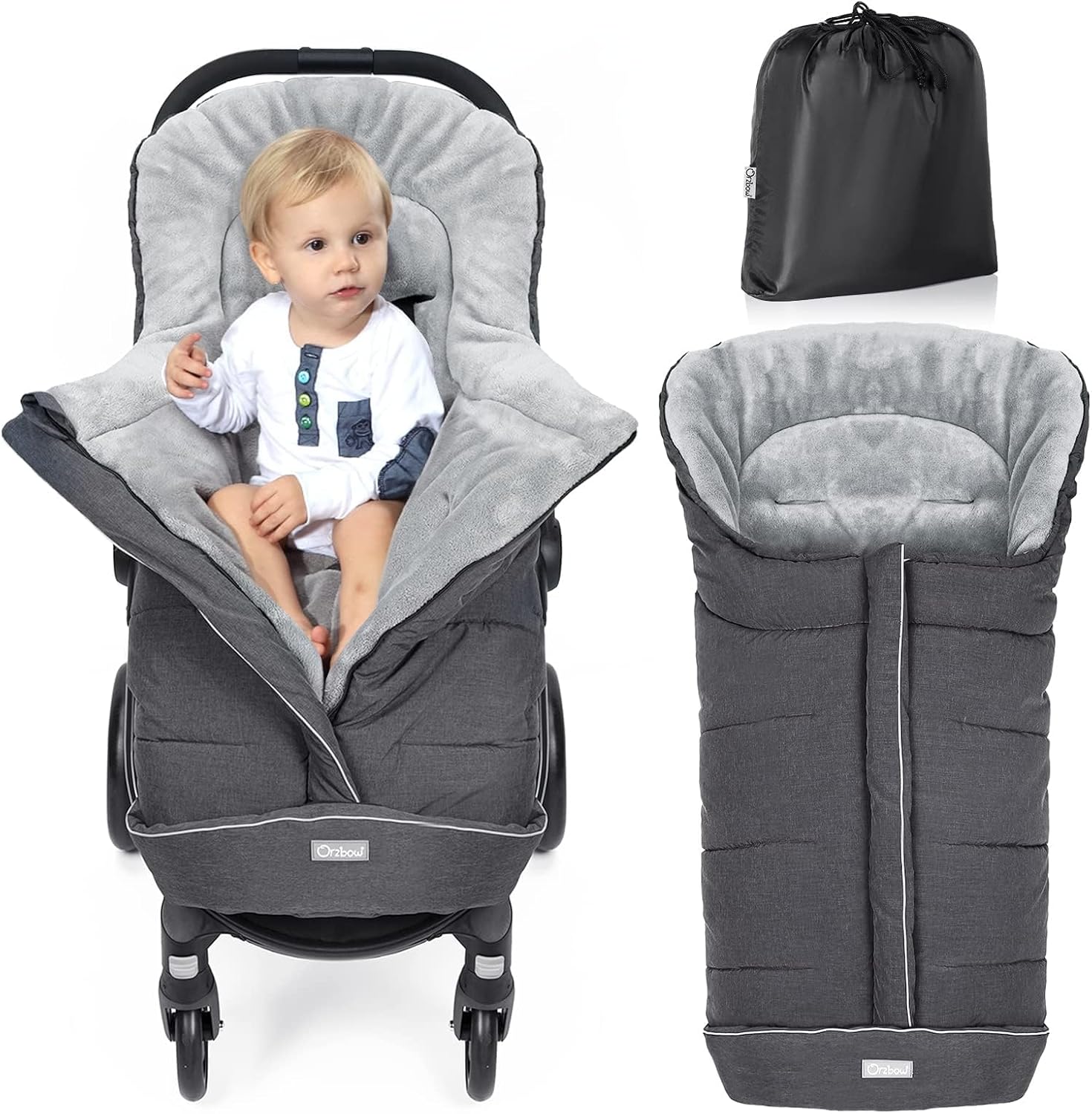
Best Overall: Orzbow Universal Footmuff for Pushchair
At a glance: A balanced all-round footmuff for UK families who need reliable warmth, decent weather resistance, and easy day-to-day use.
Why we like it: This is the safest all-rounder for most families. It balances warmth and flexibility, and usually works well for mixed UK weather where mornings are cold but afternoons warm up.
- Pros: versatile use, strong value, practical for city + weekend trips
- Cons: may be less insulated than dedicated deep-winter models

Best for Winter: CrocnFrog Universal Baby Bunting Footmuff
At a glance: A warmer cocoon-style option designed for colder, windier outings where standard footmuffs can feel underpowered.
Why we like it: Better for genuinely cold and windy conditions where lighter options can feel underpowered. If you’re doing winter markets, late-evening walks, or colder regional trips, this category makes sense.
- Pros: warmer profile, cocoon coverage, wind resistance feel
- Cons: can run warm indoors; less ideal for mild weather commuting

Best Lightweight: BundleBean GO Multi-use Waterproof Footmuff
At a glance: A lighter, more flexible pick for mixed-weather travel days with lots of indoor/outdoor transitions.
Why we like it: Strong for travel days with lots of transitions (train, taxi, airport, indoor venues). Lightweight styles are usually easier to pack and adjust.
- Pros: easier to carry, flexible use, good for mixed days
- Cons: less thermal punch in very cold snaps

Best Universal Fit: For Your Little One Universal Footmuff
At a glance: A compatibility-first choice for parents who want fewer fit issues across different stroller types.
Why we like it: This category is for parents worried about fit friction. Universal-leaning options reduce the odds of returns and harness mismatch issues.
- Pros: fit confidence, easy setup, practical day-to-day
- Cons: may not be as tailored as brand-specific models

Best Budget: Universal Pushchair Footmuff
At a glance: A low-cost starter option for occasional use, spare setups, or shorter winter trips.
Why we like it: Good starting point if you only travel occasionally or want a spare for grandparents/car boot use.
- Pros: low cost, straightforward utility
- Cons: usually fewer premium details and weaker weather resistance
Footmuff vs blanket: which should parents use?
A blanket is flexible and useful indoors, but outdoors it tends to slip, drag, and leave gaps. A footmuff is usually better for stroller travel because it stays in place and protects against wind. In practical terms, most parents end up using both: footmuff for outdoor movement, blanket for indoor transitions and nap top-ups.
Common mistakes (and how to avoid them)
- Buying by looks only: prioritise harness compatibility and washability first.
- Ignoring climate reality: UK damp + wind matters more than extreme-insulation marketing claims.
- No layering plan: one over-warm setup creates discomfort and fussiness.
- Forgetting transport context: if you use buses/trains often, lighter and more adjustable usually wins.
Our recommendation by parent type
Daily commuter parent: choose lightweight + quick unzip control.
Weekend family road trips: choose stronger thermal insulation + weather resistance.
Frequent flyer: choose compact packability and easy transition in/out of airport settings. Combine with a protective stroller bag and check latest baggage rules from the UK Civil Aviation Authority.
Deep-dive: matching footmuffs to real UK travel scenarios
Scenario A: Daily nursery runs + train commute
If you do short, frequent trips, don’t chase maximum insulation by default. You’ll move between warm indoor spaces and cold platforms repeatedly. The better setup is a medium-warmth footmuff with easy unzip/flip-down access, plus removable layers. This keeps your child comfortable without sweating during transitions.
Commuter parents usually benefit from:
- smooth zip access for quick adjustments
- machine-wash confidence after muddy weather days
- lighter overall carry weight for stairs and station changes
Scenario B: Weekend road trips and outdoorsy routines
For family drives, parks, and countryside walks, stronger weather resistance matters more than ultralight packability. You’ll likely face wind, damp ground, and longer outdoor blocks. In this case, winter-focused options with better draft protection are often the right choice.
Practical tip: keep a compact backup blanket in the car. It’s useful for transitions and can reduce the need to fully remove the footmuff when temperature changes.
Scenario C: Flight-heavy travel year
When flights are frequent, choose a footmuff you can quickly pack, shake clean, and reuse without drama. You want fewer fiddly parts and fabric that handles repeated compression. Pair it with a protective stroller bag so the whole setup works as a system.
What “good fit” actually means (and why many parents return products)
Fit problems are the #1 reason parents feel disappointed. A footmuff can look great in photos and still fail in practice. Here’s the short checklist we use:
- Harness path alignment: strap slots should not force awkward routing
- Seat depth compatibility: shallow seats need slimmer construction
- Shoulder area stability: top section shouldn’t sag into baby’s face
- Legroom and closure: enough room when your child is in a thicker outfit
Before buying, compare your buggy shape with customer images where possible. Manufacturer photos alone rarely show real fit challenges.
Care, cleaning, and longevity
A footmuff only remains useful if maintenance is realistic. For UK conditions, we recommend a simple cleaning cadence:
- After wet days: air dry fully before storage to avoid damp smell
- Weekly: wipe down zips and high-contact outer fabric
- Every 2–4 weeks: machine wash if care label allows
- Monthly: inspect zip tracks and seams for wear
This routine keeps performance stable and extends product life. If your family rotates between grandparents’ house, nursery, and car travel, consider owning two different warmth profiles (light + winter) instead of forcing one model to do everything badly.
Who this guide is best for
If you’re trying to choose between similar footmuffs and don’t want to waste money on the wrong one, this page is for you. The best results come from matching the product to your real routine — school runs, train commutes, weekend walks, or winter travel — rather than buying on price or hype alone.
If you want a quick decision, start with the top picks table and prioritise compatibility first. Once fit is sorted, choose warmth based on your usual weather and trip pattern.
Parent checklist before you click buy
- Confirm harness slot compatibility with your exact stroller model
- Check whether outer fabric is water-resistant and easy to wipe
- Verify machine-wash care guidance
- Read recent reviews for zip reliability and long-term wear
- Choose warmth profile based on your real routine, not one-off trips
This final check takes two minutes and prevents most buyer regret. If you’re torn between two options, choose the one with easier maintenance and better fit confidence over small feature extras.
And remember: your goal is consistent comfort and fewer interruptions while travelling, not owning the most premium product category. A well-matched mid-range model often beats an expensive mismatched one.
✈️ Free Baby Hand Luggage Checklist
Never forget the essentials. Enter your email and we'll send the free checklist straight to your inbox — one page, every category, ready before every flight.
Frequently Asked Questions
Do I need a different footmuff for travel and daily use?
Not always. Many universal options can handle both. If you travel frequently, prioritise compact fold and quick venting so one model can do both jobs.
Can a footmuff replace all blankets?
No. It handles outdoor pushchair warmth better, but blankets are still useful indoors and for flexible layering.
What’s the best way to check compatibility before buying?
Check harness slot layout, seat shape, and product fit notes. If you’re between two sizes or styles, choose the one with stronger compatibility language and easier returns.
How often should I wash a footmuff?
For regular city use, many parents spot-clean weekly and machine wash every few weeks (or after muddy/wet days). Always follow the label.
Are waterproof footmuffs necessary in the UK?
For most families, water-resistant outer fabric is worth it. It handles drizzles and damp benches better and keeps the setup usable through variable UK weather.
Bottom line: choose the footmuff that matches your real weekly routine. Fit, weather performance, and washability matter more than feature-heavy marketing.