
Christmas Travel With a Baby: What to Pack for an Overnight Stay
By BabyTravel UK Editorial Team · Last updated November 2026
The easiest bit of Christmas travel with a baby is usually the packing once you know where they'll sleep and what your hosts can lend you. Sort that out before the car boot fills with presents. Then keep one small changing and feeding bag within reach and put the rest of the overnight kit in a separate holdall.
Before you leave
- Agree where the cot will go and ask which cot and mattress are already there.
- Pack a spare outfit and enough of your usual feeding and changing supplies for a delay.
- Check the outward and return journeys. The Boxing Day timetable may look nothing like the one you used to arrive.
- Put the bedtime kit at the top of the overnight bag, not underneath the presents.
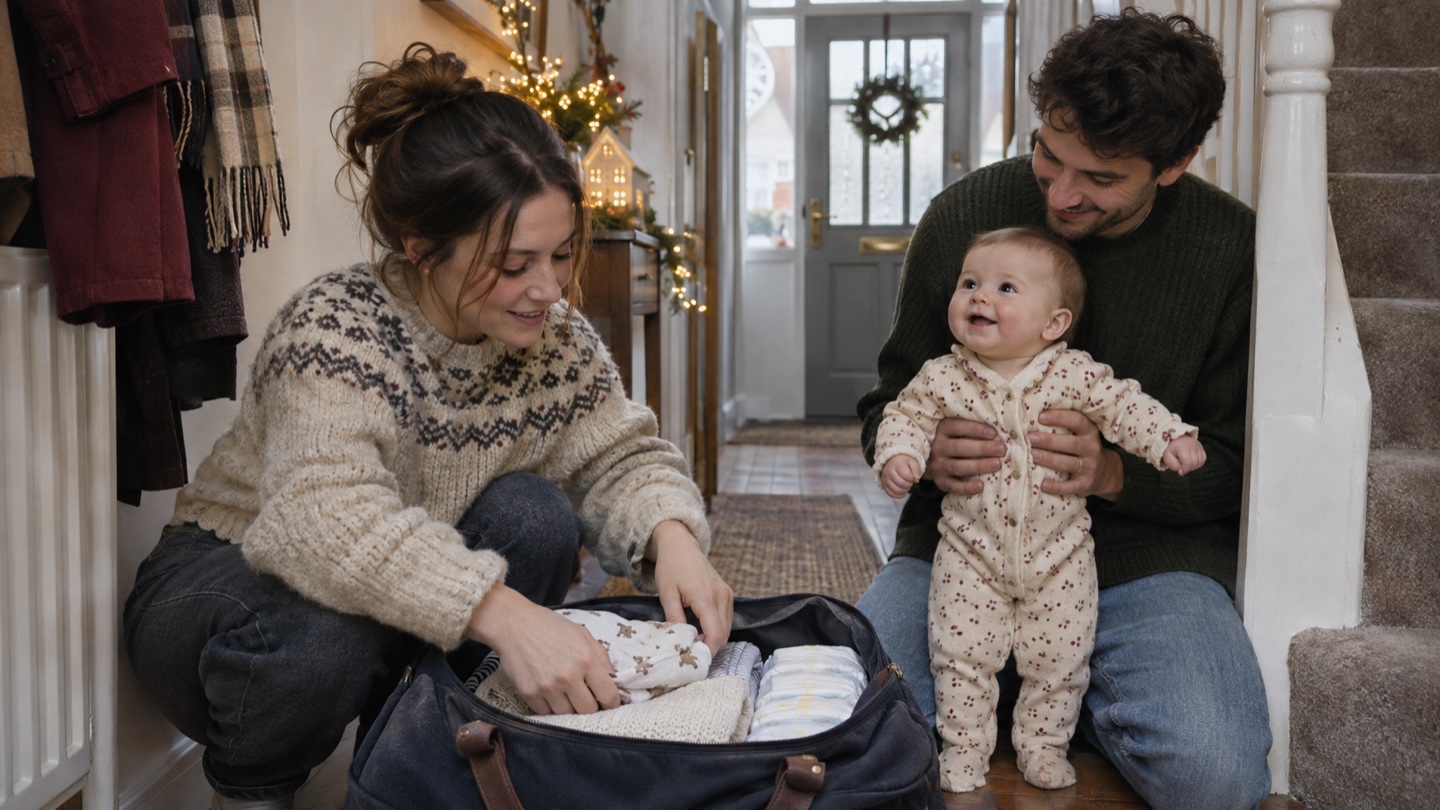
This checklist is for a night or two with family in the UK. If you're staying longer or packing for a flight, start with our full baby holiday packing list and add the bits below that apply to Christmas.
Christmas travel packing checklist for a baby or toddler
| When you need it | What goes in | What can stay at the destination |
|---|---|---|
| On the journey | Nappies, wipes, changing mat, spare outfit, wet bag and the feeding kit you already use. | Bulk packs of nappies and a bigger supply of wipes. |
| At bedtime | Familiar sleep clothes and an appropriately sized sheet if needed. Take your cot and its own mattress if there is no suitable one waiting. | A checked travel cot with its compatible mattress and the instructions. |
| At meals | Usual bottles or cups, bib, age-appropriate food and anything you need for your child's normal feeding routine. | A suitable highchair, bowls and a clean place to prepare feeds. |
| For a winter walk | Removable warm layers, the pushchair's fitted rain cover and a footmuff if you use one. | A suitable spare buggy only if you've checked it for your child and the planned outing. |
| If you get delayed | Extra nappies, an extra change, feeding supplies, charger and any medication your child usually needs. | Nothing you need while you're still on the road or waiting for a train. |
Work from what you use on an ordinary day. Pack your usual supplies for the hours you'll be away, then allow for a longer journey and a shop being closed. If you're travelling with a toddler who is toilet training, put spare trousers, socks and a bag for wet clothing where you can reach them without unzipping the big case.
One night still needs a full evening and morning of feeding, changing and sleep. Two nights mainly add consumables and clothes. If the grandparents have a washing machine, that might save a third spare outfit, but it doesn't help when your child needs a clean vest at a service station.
Ask your hosts about the cot before you go
Ask them to send a photo of the cot set up, including the label and the mattress. Confirm that it locks open properly, is in good condition, and has a firm, flat mattress that fits it without gaps. Take the cot's instructions with you or send the manual to your hosts beforehand. A cot that has been stored for years is worth assembling before the day you arrive.
Follow the Lullaby Trust's safer sleep advice for trips away. For the first six months, plan a separate sleep space in the same room as you, put your baby down on their back and keep the cot clear. Use the mattress supplied for that cot or a replacement the manufacturer explicitly permits. Don't add a topper, quilt or folded blanket to make a thin travel-cot mattress feel softer.
Measure the space beside your bed, including the distance you need to walk past it in the dark. A narrow spot beside a radiator or under a blind cord is a poor place to squeeze in a cot. Ask for a different position before you pack the cot, rather than hoping you can move furniture at bedtime.
If there is already a suitable cot, borrow it and bring the bedding you actually need. For repeated visits, a simple second cot can be more useful than an expensive model carried back and forth. If you regularly travel by train, look at the packed dimensions and weight in our travel cot comparison before choosing.

Red Kite Sleep Tight Travel Cot
Around £38
A straightforward folding cot for families who mainly travel by car or want to leave one at a relative's house. Practise opening it before you travel and keep the original base and instructions together in the bag.
Good for: Occasional stays where price matters more than carrying it a long distance. Trade-off: It is a basic full-depth cot; check its limits and whether bending down to the base suits the adults who will use it.
Check price on Amazon
Graco FoldLite LX Travel Cot with Bassinet
Around £70
The LX includes a raised bassinet and a folding travel design. The raised level can be handy on short visits with a younger baby, but it has its own limits; use the lower level when the instructions require it.
Good for: A family that needs to pack the cot up after each visit. Trade-off: Costs more than a basic spare cot, and the bassinet is only useful for the stage permitted by the manual.
Check price on AmazonKeep a small journey bag separate
📋 Free Baby Holiday Packing Checklist
Enter your email and we'll send the free printable checklist straight to your inbox — every category, ready to tick off before every trip.
Use one pouch for a complete nappy change: a mat, wipes, a nappy, a small bag for wet clothes and a clean outfit. The spare outfit needs to be reachable with one hand. Pack one for yourself if you have a baby who often brings up milk, particularly if the rest of your clothes will be in a roof box or in the train's luggage rack.
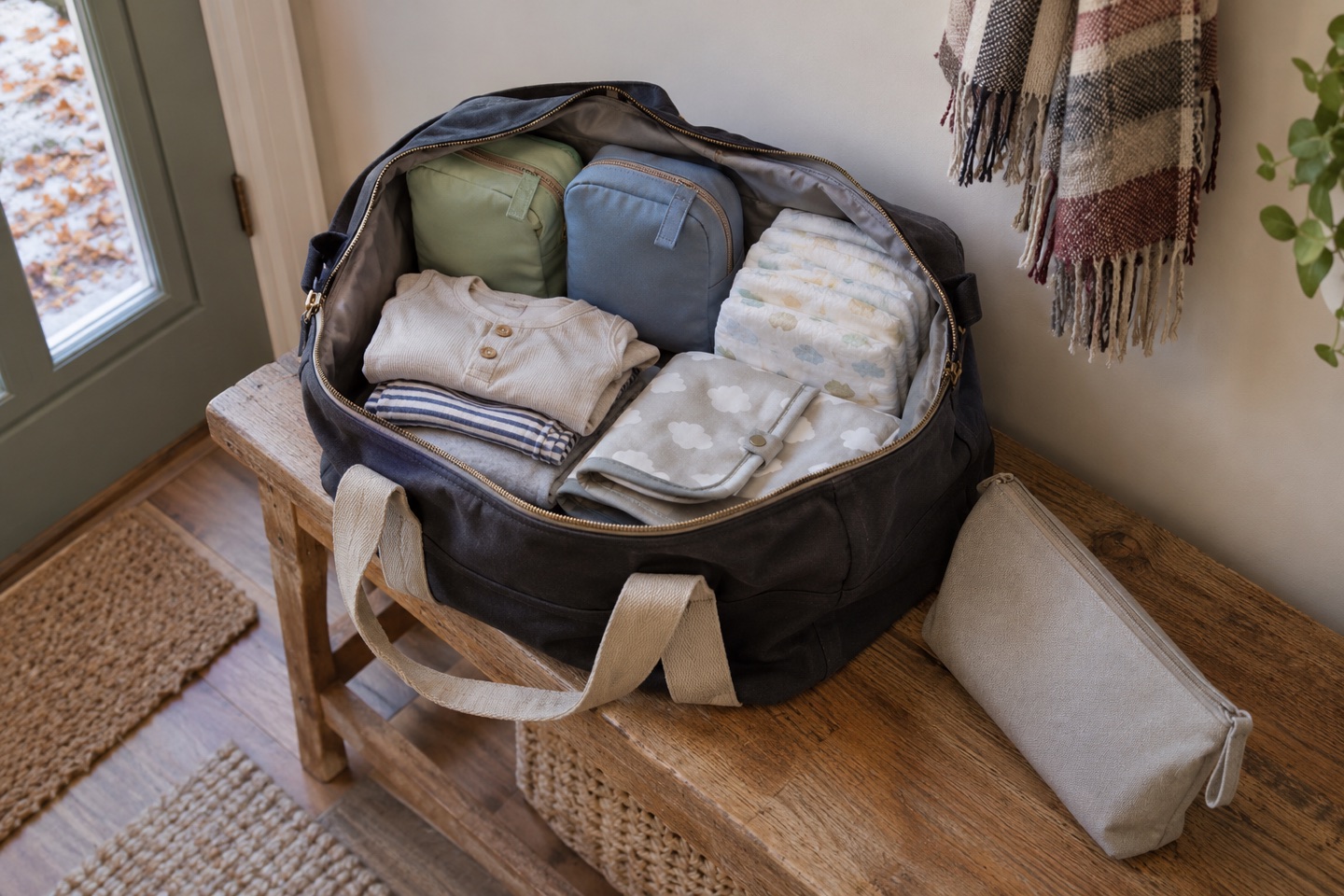
Feeding supplies need their own clean, accessible space. If you use formula, check the NHS advice on feeding away from home rather than making up a bottle hours before setting off. Ready-to-feed formula can be an option where it suits your baby's usual feeding plan; bottles and teats still need appropriate cleaning and sterilising.
Ask about kitchen space at the other end. A house full of guests may have a packed fridge and a sink full of roasting tins. If you need to sterilise equipment, agree where you'll do it and whether your hosts have a microwave that fits your unit. Our travel steriliser guide covers options if you won't have a microwave.

Milton Solo Travel Steriliser
Around £10–£15
The Solo is a single-bottle unit with microwave and cold-water methods. It is a better fit for a short stay than taking a large worktop steriliser, provided the bottle and teat you use fit inside and you can follow the instructions at your destination.
Good for: Parents who need to sterilise one compatible bottle at a time. Trade-off: The capacity is small if you need several bottles ready together; check size and method before packing it.
Check price on AmazonIf your normal mat is bulky, the Skip Hop Pronto Changing Station folds the mat and a few essentials into one clutch. It isn't essential if your changing bag already has a mat and a pouch you can grab. Our changing mat comparison includes simpler alternatives.
Travelling by car over Christmas
Try the seat in the exact car you're taking, particularly if a relative is collecting you. Check the manual and the NHS guide to choosing and fitting a baby car seat. Remove bulky outerwear before fastening the harness and follow the seat manufacturer's instructions for keeping your child warm; keep the pushchair footmuff in the boot until you arrive.
Choose a stop where you can get everyone out of the car and do a change or feed. Check opening hours before setting off, especially if you normally use a small café rather than a service area. Secure heavy bags and gifts in the boot. Keep the journey bag accessible without leaving it loose where it could move around.
When you reach the house, take your baby out of the car seat and move them to their usual safe sleep set-up if they are asleep. Before you unpack, put the pushchair where you can use it without moving the rest of the luggage. A fitted rain cover and pushchair footmuff can then stay with the buggy rather than taking up space in the changing bag.
Travelling by train over Christmas
Look up both directions on National Rail's Christmas and New Year travel page and check the operator's journey planner again before leaving. Engineering works can turn a direct train into a replacement bus, and some days have few or no services. A longer change with lifts is often easier than a short connection with stairs and a folded pushchair.
If a relative can collect you, give them the station entrance and a backup time. Ask whether the station has a working lift if you can't carry the buggy and the overnight bag together. Keep the changing and feeding pouch with you when a bag goes in a luggage rack. Our train travel with a baby guide has more detail on buggies, transfers and busy carriages.
For a child old enough for the set, a Melissa & Doug Water Wow pad is a compact activity at a table or while you're waiting. Check the age on the specific pack, supervise its use and leave it at home if the small pen is unsuitable. For younger children, a familiar board book or an age-appropriate toy you already own may be enough.
Our tip: Save one familiar activity for the delay rather than taking everything out as soon as you sit down. For a toddler who likes a small challenge, try the free Busy Bag sample before buying any extra toys.
What to do if the plans change
If you arrive late, set up the cot before the adults sit down to eat and put the clean clothes where you can find them in the dark. You don't need to reproduce every part of the bedtime routine. Keep whatever your child recognises, such as their usual sleep clothes and a book, and use the safe sleep set-up you agreed in advance.
If the cot is missing a piece, won't lock or has the wrong mattress, don't improvise with cushions or spare bedding. Ask your hosts to help find a suitable replacement or change where you stay. If you don't have enough feeding supplies for a delay, check what is open before committing to the next leg of the trip, especially if your baby uses a specialist product.
Once you're settled, a walk can give everyone a change of scene. If you're planning a bigger outing, our baby-friendly Christmas markets guide covers pushchair access and quieter times. If you're doing several outdoor walks, handlebar gloves can be handy for the adult pushing, but don't buy them if your normal gloves already do the job.
✈️ Free Baby Hand Luggage Checklist
Never forget the essentials. Enter your email and we'll send the free checklist straight to your inbox — one page, every category, ready before every flight.
Frequently Asked Questions
What do I need for one night at grandparents' with a baby?
Plan the cot, sleep clothes and feeding arrangements first. Pack the nappies and clothes you normally use overnight and the next morning, with a spare set in the bag you'll use on the journey.
Can my baby use an old travel cot at grandparents'?
Check the model, instructions and condition, including the mattress fit and whether the sides lock open correctly. If you can't confirm it is complete and suitable for your child, arrange another cot before the trip.
Should I add a thicker mattress to the travel cot?
Use the supplied mattress or an exact replacement the manufacturer permits. A thicker insert can leave an unsafe gap, and a thin mattress designed for the cot doesn't need a topper.
Can I leave my baby asleep in the car seat after we arrive?
Take your baby out of the seat when you arrive and place them on a firm, flat sleep surface. Use the car seat for travel and follow the manufacturer's instructions.
How many nappies should I pack for Christmas travel?
Start with what your child normally uses in the same amount of time, then add some for a delay or a closed shop. Keep a handful in the small bag and the rest with your overnight kit.
Will trains run on Christmas Day or Boxing Day?
Don't assume your usual service runs. Check your exact route on National Rail and with the operator, including the return trip and any replacement buses.
What should I leave at grandparents' for repeat visits?
A suitable cot with its original mattress, compatible bedding and spare nappies in your child's current size can save boot space. Recheck sizes, condition and instructions before the next visit.
Confirm the cot and the journey first. A small bag for the next change or feed and an overnight holdall you can unpack in one go are usually more useful than a boot full of things you might need.