
Best Pram and Pushchair Rain Covers UK (2026)
By BabyTravel UK Editorial Team · Last updated November 2026
The best pram rain cover is the one that fits the part of the pushchair your child actually rides in. A cover shaped for a carrycot is rarely the same as one for a forward-facing buggy seat, even on the same frame. Start with the manufacturer's cover if you know your model; a universal cover makes sense for a spare or a second buggy once you've checked the shape.
Quick picks
- For a single buggy with a hood, start with the Zamboo zip-front cover.
- For a carrycot, choose a carrycot-shaped cover rather than stretching a seat cover over it.
- For a double, match side-by-side or tandem before comparing prices.
- For a compact travel pushchair, look up the exact model and generation first.
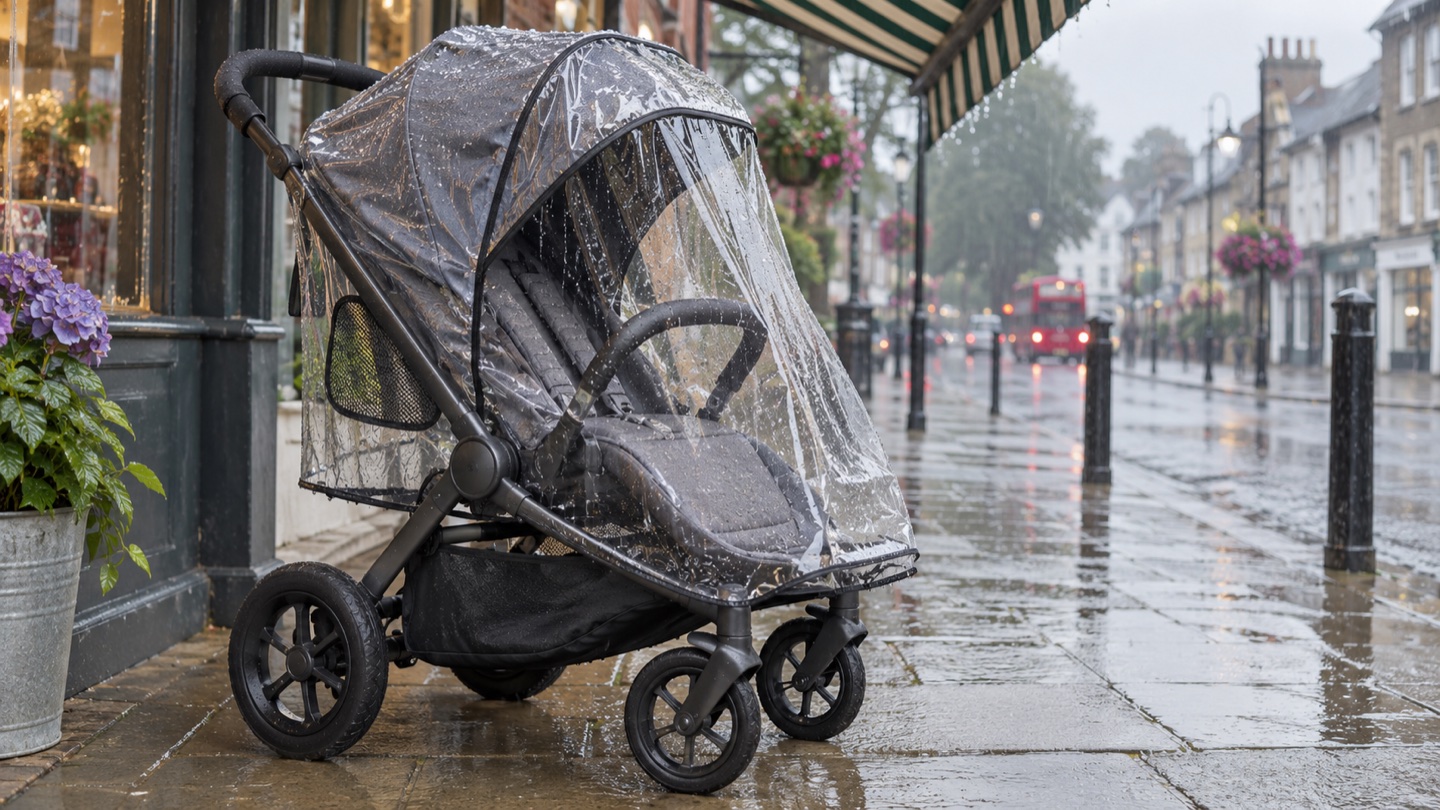
If your current buggy is awkward to use in the wet even with the right cover, our pushchairs for rainy UK weather guide looks at the frame, basket and fold. For a cover alone, use the seat shape as your starting point.
Pram and pushchair rain covers compared
| Cover | Best suited to | Check before ordering |
|---|---|---|
| Zamboo Universal Rain Cover with Zip | Single pushchair with a compatible hood | Front reach in the recline you use and where the lower straps land |
| Universal Rain Cover for Pushchair | Budget spare for a compatible single | Check opening and vent position against your own seat before buying |
| For Your Little One Carrycot Rain Cover | Horizontal carrycot on a 2-in-1 pram | Hood height, carrycot length and attachment points |
| Orzbow Double Pram Rain Cover | Side-by-side twin buggy | Outside width across both hoods and whether the hoods move independently |
| Graco Stadium Duo Raincover | That named tandem frame | Match the listing and your frame; don't assume it fits a similar tandem |
Universal describes the intended range of fits. It doesn't tell you whether a cover will reach the footrest with a tall toddler inside, clear a bumper bar or work with a seat turned towards you. A short measurement at home is more useful than a long list of brand names in a listing.

Zamboo Universal Rain Cover with Zip
Around £15
The zipped opening lets you get to the seat from the front without unfastening the whole cover. That helps if a mitten falls off just as you have reached the bus stop. Once the shower has passed, the cover still needs to come off rather than staying over the seat for the rest of the outing.
Good for: A compatible single buggy with a hood and a front you need to open regularly. Trade-off: The zip adds a seam and bulk; check the cover in both upright and reclined positions.
Check price on Amazon
For Your Little One Universal Carrycot Rain Cover
Around £15
This is cut for the longer, flatter profile of a carrycot. When you measure, open the hood first and include anything projecting at the foot end. Make sure the attachment does not pull the cover in towards your baby's face and that the vents stay unobstructed.
Good for: A compatible carrycot when its original cover has been lost or wasn't included. Trade-off: It is shaped for a carrycot, so plan for a different cover if you switch to a seat that needs one.
Check price on Amazon
Orzbow Double Pram Rain Cover
Around £16
This double cover is listed for side-by-side pushchairs. Measure across the outside edges of both hoods, then check front-to-back depth with both seats in the positions you normally use. If one child reclines while the other sits upright, see where the cover rests at the centre.
Good for: Two seats next to each other where a single cover is too narrow. Trade-off: A double cover takes up more room when folded and won't follow the stepped shape of a tandem.
Check price on Amazon
Raincover to Fit Graco Stadium Duo Tandem
Around £13
This is a replacement sold for the Stadium Duo's front-and-back seat layout. A tandem cover has to reach the front footrest and go over the rear seat without dragging across either child. Compare the product photos with your pushchair set up for two before ordering.
Good for: Families replacing the cover on a Graco Stadium Duo. Trade-off: It is a model-specific listing, so it isn't a sensible default for another Graco double or a travel system with two carrycots.
Check price on AmazonWhen to buy the manufacturer's cover
For a spare that will mostly live in the basket, a basic universal rain cover at around £8–£10 can make more sense than an extra branded cover. Compare the listing photos with your hood and footrest before ordering. If you use the cover most days, paying a little more for a zip you can reach and fasten without bending into the road may be the better deal.
For a compact fold, an unusual hood shape or a pushchair with a reversible seat, look up the official accessory before buying a universal version. If you have a YOYO, for example, Stokke's YOYO³ 6+ manual specifies an approved cover sold separately. Don't assume that a cover shaped for the 6+ seat will also fit a newborn pack.
Keep the same approach for a Baby Jogger City Mini: use the full model name, including GT or GT2 if applicable, rather than shopping from a listing that says only City Mini. For a Mamas & Papas travel system, check whether you need a cover for the pushchair seat, the carrycot or both. If you bought a bundle, look in the box or basket pouch first; buying a second cover can be unnecessary.
With a second-hand pushchair, ask the seller whether the original cover is included and have them show it attached. A cover that has gone stiff in a shed or split around the fastening can look intact folded. If a replacement isn't available, use the measurements below to narrow the options before paying for one.
How to measure for a universal rain cover
📋 Free Baby Holiday Packing Checklist
Enter your email and we'll send the free printable checklist straight to your inbox — every category, ready to tick off before every trip.
- Open the hood as you would in light rain. Measure across its widest point, including hinges if the cover needs to clear them.
- Measure from the top of the hood to the footrest, then check the depth over the bumper bar. Repeat with the seat reclined if your child often naps in that position.
- Identify where the cover can attach without interfering with the brake, wheels, folding mechanism or basket. If the listing doesn't show the straps clearly, ask the seller for a photo of the underside.
- Check the fit indoors with the pushchair empty. Try the front opening and make sure you can reach the brake normally, with no loose plastic near wheels or your child's face.
If two covers seem plausible, choose the listing that shows the same hood and seat shape as yours. A neat photograph of a cover laid flat is harder to judge than a side view with it fitted. If your child is close to outgrowing the buggy, give the footrest and toes more attention than the gap above the hood.
Recheck the fit if you turn the seat to face you. The handle may now sit close to the hood, leaving less space to fasten the upper edge. On a double, try the arrangement you use when only one child is riding too: you may have removed a seat or changed the angle of a hood. Don't stretch a cover between points that the instructions don't identify as attachments.
If you're replacing a cover that leaked, look at where the water came in. Drops around the hood can mean the top doesn't sit properly, while wet socks often mean the cover stops short of the footrest. Water in the basket is a separate issue. Put spare clothes inside a dry pouch instead of trying to seal the bottom of the whole pushchair with more plastic.
Ventilation, access and when to take it off
Look for proper vents or openings that stay clear when fitted. Transparent plastic isn't breathable simply because you can see through it. A front zip helps with access, but it doesn't replace the ventilation the manufacturer has designed into the cover. Never block vents or drape a second layer over them.
Use the cover for rain in line with the pushchair and cover instructions. Remove it when you go indoors or when the rain stops, and keep checking your child rather than relying on the air feeling cold outside. For warmer days, the Lullaby Trust's hot-weather guidance explains why covering a pushchair with a blanket or cloth is a poor way to shade a baby.
Strong winds are a different problem from showers. A loose flap catching in a wheel or a large cover acting like a sail makes a short walk harder. Secure a correctly fitted cover as instructed; don't add clips or cords to improvise a fit. Check Met Office warnings if you're planning a longer trip.
What to do with a dripping cover on the bus or train
Before the bus arrives, find the tab you need to release first and leave your dry storage pouch open in the basket. Once you're under shelter, shake off the worst of the water away from the queue, fold the wet sides towards one another and keep it separate from nappies or spare clothes. A simple washable wet bag helps when the original pouch is too small to use in a hurry.
Many covers need to come off before the frame folds. Practise in your hallway so you know where the cover will go when you're holding a child and reaching for the fold button. For longer trips, the UK train guide has more advice on station transfers, luggage and getting a buggy through a busy carriage.
A pushchair footmuff and pram gloves are separate extras for cold walks. Check that the rain cover still sits as designed when the footmuff is fitted, and that the gloves don't get tangled in any strap when you remove it. For an overnight trip, pack the cover near the top of the bag so it is handy on arrival; our Christmas travel checklist shows what else to keep within reach.
Cleaning and storing a clear rain cover
Wipe off mud with a soft damp cloth after the outing and follow the maker's instructions for anything more. Let both sides dry fully before packing it away. Folding a wet cover into a tight pouch for several days can leave it cloudy, creased or smelling damp just when you need it again.
Check the fastening, seams, windows and vents at the start of winter. A small tear around an attachment can grow when the cover is pulled on in cold weather. Replace a torn cover that won't stay safely in position; improvised ties are a poor fix near moving parts.
✈️ Free Baby Hand Luggage Checklist
Never forget the essentials. Enter your email and we'll send the free checklist straight to your inbox — one page, every category, ready before every flight.
Frequently Asked Questions
Will a universal rain cover fit any pushchair?
No. Compare hood width, seat orientation, footrest reach and the way it attaches. A universal cover for an upright single buggy can be entirely wrong for a carrycot or a double.
Do I need a different rain cover for my carrycot?
Often yes. Check the maker's instructions and any parts that came with the travel system. A carrycot-specific cover is designed for the flatter shape; a seat cover may sag or leave the ends exposed.
Can I use a pushchair rain cover in hot weather?
Don't use it for shade. Remove the rain cover when it isn't needed, and follow the manufacturer's advice and the Lullaby Trust's hot-weather guidance.
Can I use a rain cover with a newborn?
Choose one explicitly intended for the carrycot or newborn configuration you're using. Fit it as instructed, keep ventilation clear and supervise your baby. Don't use a loose plastic sheet as a substitute.
Can the pushchair fold with the rain cover on?
Check the manual; in many cases you should take it off. Folding can trap the cover in a hinge or stretch the fastenings, especially if the cover is wet and hard to gather.
Is a side-by-side cover the same as a tandem cover?
No. Side-by-side covers need width across both hoods, while tandem covers need more length and may be shaped for seats at different heights. Match the actual seating arrangement first.
What's the easiest way to clean a rain cover?
Wipe it down as the manufacturer recommends and let it dry open before putting it away. Avoid machine washing or applying sprays unless the care instructions say they are suitable.
Buy for the set-up you use today. The maker's cover is the easiest place to start; if you need a universal spare, measure the empty pushchair and make sure the vents and controls stay clear before you rely on it in a downpour.